TRUST DENTAL
@trustdentalcare

Category: Blog

Your blog category

  • Your Guide to Dental Crown Procedure Steps

    Your Guide to Dental Crown Procedure Steps

    Your Guide to Dental Crown Procedure Steps

    Getting a dental crown is a pretty straightforward process, but knowing what to expect can make all the difference. It generally boils down to two main appointments: the first to prepare your tooth and get a perfect mold, and the second to place your new, permanent crown. This whole procedure is a real workhorse in restorative dentistry, whether you need to fix a single tooth or it’s part of a bigger smile makeover with a Mexico dentist.

    The dental crown procedure steps are designed to give you a result that’s not just strong and functional, but looks completely natural. For patients seeking treatment in Tijuana, this procedure is often a key part of full mouth restorations, sometimes alongside veneers and crowns or even as the final restoration on dental implants.

    Your Smile Restoration Journey Explained

    Think of a dental crown as more than just a “cap.” It’s a custom-made restoration that brings a damaged tooth back to life, restoring its shape, size, strength, and appearance. For many of our patients who visit a Mexico dentist, crowns are a key part of the strategy. Sometimes it’s for a single cracked tooth, other times it’s a component of a full mouth restoration, working alongside veneers and crowns to build a beautifully uniform smile.

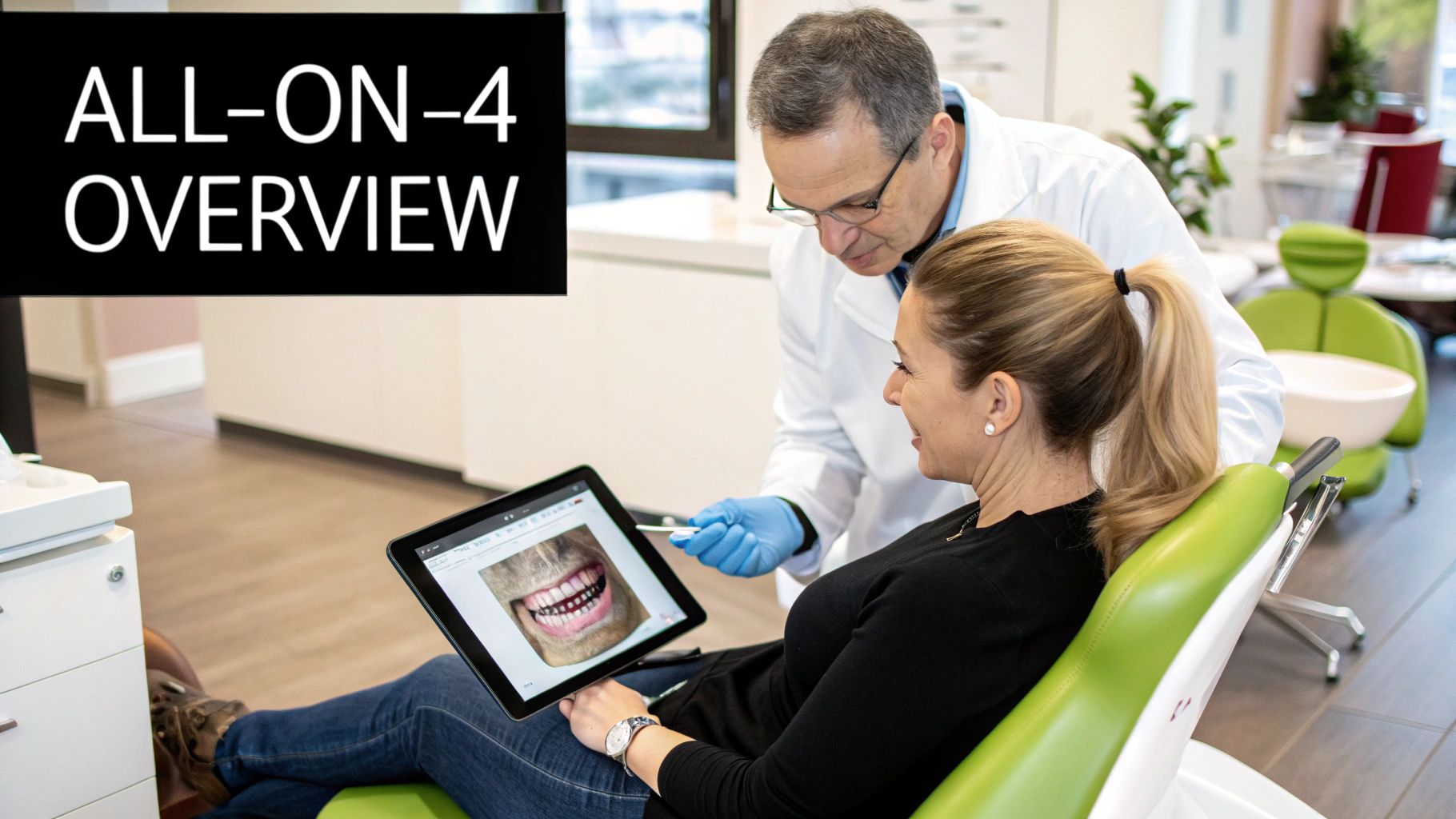
    Crowns are also the final, visible piece of a dental implant. Once the implant post is securely fused with your jawbone, a custom crown is attached, acting as your new tooth. It’s the same principle for more advanced treatments like All on 4 dental implants, where a full bridge of prosthetic teeth—basically a set of connected crowns—is anchored to just four implants to restore an entire arch.

    Dental Crown Procedure at a Glance

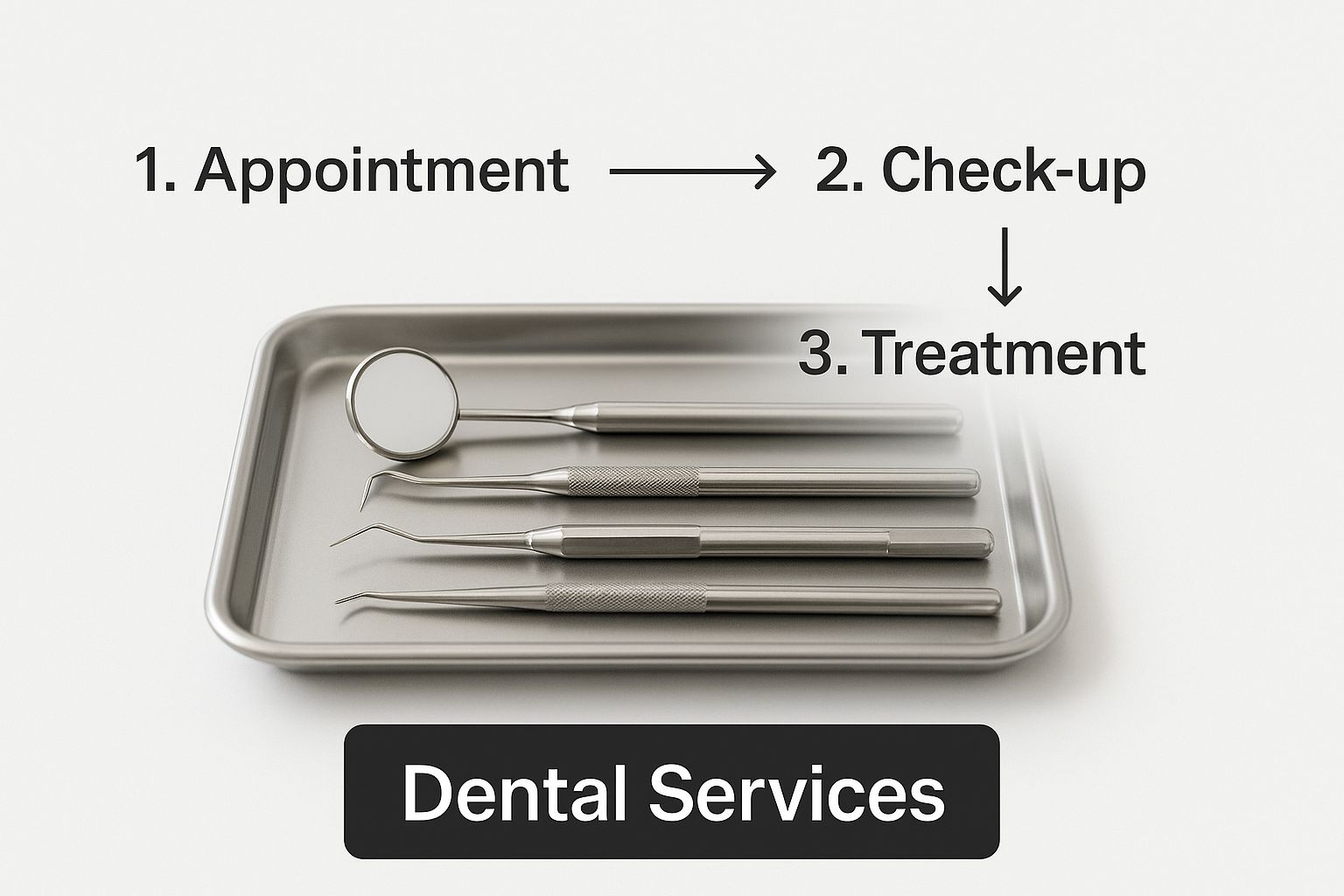
    To give you a clearer picture, here is a quick summary of the key stages involved in getting a dental crown in Tijuana, from the initial appointment with your Mexico dentist to the final fitting.

    StagePrimary GoalTypical Duration
    Initial ConsultationAssess tooth health and plan the treatment.30-60 minutes
    Tooth PreparationReshape the tooth and take an impression.60-90 minutes
    Temporary CrownProtect the prepared tooth while the permanent one is made.Placed in the same visit as preparation.
    Permanent Crown PlacementFit, adjust, and permanently cement the final crown.30-60 minutes

    This table simplifies the journey, but each step is performed with incredible precision to ensure a perfect, long-lasting result for your smile.

    Why Knowing the Process Matters

    So, why get into the details? When you understand what’s happening at each stage, it takes the mystery out of the process. This is especially true for patients traveling to Tijuana for their dental work. It builds confidence and helps you see the incredible skill that goes into creating your new tooth, whether it’s a single crown or part of a full mouth restoration.

    The demand for this kind of restorative work is booming. The global dental crown market is expected to grow from about USD 3.5 billion in 2023 to nearly USD 5.5 billion by 2032. It’s a testament to how effective and necessary these durable solutions are for modern dental care.

    This guide is your roadmap. We’ll walk you through everything, step by step, from the first hello to the final fitting. Whether you’re looking at a single crown, a full set of veneers and crowns, or treatments like All on 4 dental implants, we want you to feel informed and prepared.

    To see what options are available, take a look at our detailed guide on getting a high-quality dental tooth crown in Tijuana. It’s the best way to get ready for your treatment with a trusted dentist in Mexico.

    Laying the Foundation at Your First Visit

    Your first appointment for a dental crown is where the magic really begins. This visit is all about diagnosis and careful preparation, creating the perfect foundation for a crown that will look, feel, and function beautifully for years to come. Think of it as the blueprint for your new smile. A top-tier Mexico dentist will tell you this is the most critical phase, and they’ll never rush it.

    We always start with a comprehensive examination. Your Tijuana dentist will take a close look at the tooth itself and the surrounding gum tissue. Then come the diagnostics. This usually means digital X-rays, and in more complex situations, we might use a 3D CT scan. These images are invaluable—they let us see everything that’s going on beneath the surface, like the tooth’s root structure and the health of the bone holding it in place. This is an absolute must, especially if the crown is part of a plan for dental implants or a full mouth restoration.

    This initial assessment is thorough but efficient, giving us a clear path forward for your treatment plan.

    Image

    The infographic above illustrates just how we approach this diagnostic step. A complete evaluation can often be done in under an hour, so you’ll leave knowing exactly what to expect next.

    Preparing the Tooth for a Perfect Fit

    Once the diagnostics are done and we’ve agreed on the plan, the main event of the first visit starts: preparing the tooth. First things first, we numb the area with a local anesthetic so you won’t feel a thing. This is one of the most important dental crown procedure steps because it sets the stage for a flawless restoration.

    With the area numb, your dentist will gently remove any decayed or damaged parts of the tooth. Then, the tooth is skillfully reshaped, trimming it down on all sides. This might sound a little strange, but it’s essential for creating the space needed for the crown to slide on perfectly, sit right at the gum line, and match your bite without causing issues down the road.

    The art of reshaping a tooth is a delicate balance. A great Mexico dentist removes just enough of the old tooth to make room for the new crown, but not a millimeter more. The goal is always to preserve as much healthy tooth structure as possible to keep the core strong and stable.

    Capturing the Blueprint for Your Crown

    With the tooth prepped and ready, it’s time to take a highly detailed impression. This impression is the mold that your custom crown will be built from, so precision is key. Many modern clinics in Tijuana now use digital intraoral scanners for this, which instantly create a perfect 3D model of your tooth right on the screen.

    The traditional method using dental putty works great, too. In the hands of a skilled professional, both techniques give us exactly what we need. The goal is to capture every tiny contour of the prepared tooth and its neighbors. This ensures your final crown will have:

    • A perfect fit with a tight seal against the prepared tooth, leaving no gaps.
    • Correct contact points with the teeth on either side to prevent annoying food traps.
    • Proper alignment with the teeth it bites against for a natural and comfortable feel.

    To finish the appointment, we create a temporary crown and place it over your prepared tooth. This little placeholder is a big deal—it protects the sensitive tooth from hot and cold, prevents it from shifting, and lets you chew normally while your permanent crown is being crafted. You’ll walk out of your first visit comfortable and one step closer to your final, beautiful smile.

    Crafting Your Custom Crown in the Lab

    Image

    While you’re at home with your temporary restoration, the real magic is happening behind the scenes. Your unique digital scan or physical impression wings its way to a specialized dental lab, where highly skilled technicians get to work building your permanent crown. This is where the blueprint from your Mexico dentist starts its transformation into a functional piece of art.

    The whole fabrication process usually takes about one to two weeks, though this can vary based on the material we choose and the complexity of your case. Back in the chair, we prepared your tooth by reducing it by about 1-2 mm. The impressions taken right after are the master key for the lab’s work.

    A technician doesn’t just build a generic tooth—they are meticulously replicating your tooth. Using the detailed instructions we send them—covering everything from the precise shade to the subtlest contours—they ensure the final crown will blend in perfectly. For a single crown, this means a flawless match. For a full mouth restoration involving multiple veneers and crowns, it means creating a brand new smile that is harmonious, balanced, and stunning.

    Choosing the Right Material for Your Smile

    A huge part of this lab phase is picking the perfect material for the job. Not all crowns are created equal, and any top Tijuana dentist will tell you the choice depends on where the tooth is, how you bite, and what you want your smile to look like.

    • Porcelain-Fused-to-Metal (PFM): These are the reliable workhorses of dentistry. You get the strength of a metal base with a natural-looking porcelain layer on top.
    • All-Porcelain or All-Ceramic: When looks are everything, especially for front teeth, these are the go-to. They offer the absolute best and most natural color match.
    • Zirconia: This stuff is a powerhouse. It’s known for incredible strength and durability, making it a fantastic choice for molars that take a beating. It’s also a frequent player in the substructure of All on 4 dental implants because it’s so resistant to chipping.
    • E-max: This is a special type of all-ceramic crown that we love for its amazing, lifelike appearance. It transmits light just like a natural tooth, making it a star player for single crowns and veneers in cosmetic cases.

    The choice of material directly impacts how long your crown lasts and how it looks. We might recommend a zirconia crown for a back molar that handles heavy chewing, but for a front-tooth smile makeover, an E-max crown is often the hero.

    That temporary crown you’re wearing is more important than you might think. It’s held on with a special adhesive designed to be strong but also easy for us to remove later. If you’re curious about the specifics, you can dig into the world of temporary crown cement secrets in our detailed guide.

    Once your permanent crown is finished, inspected, and perfect, the lab ships it back to our office. That’s our signal that you’re ready for the final step in restoring your smile.

    Placing Your Permanent Crown for a Perfect Fit

    Image

    This is the appointment you’ve been looking forward to—the grand finale of your journey to a restored smile. When you come back to the clinic in Tijuana, your permanent crown, which has been meticulously crafted in the lab, will be waiting for you. This visit is all about dialing in that perfect fit and permanently bonding the crown to your tooth.

    First things first, your Mexico dentist will gently remove the temporary crown. That little placeholder did its job protecting your prepared tooth, but now it’s time for the real star of the show. Once the temporary is off, we give the underlying tooth a thorough cleaning and drying to create the ideal surface for its new, permanent partner.

    Your dentist will then carefully place the permanent crown on your tooth, but without any cement just yet. This initial “try-in” is one of the most critical dental crown procedure steps. It’s where the skill and precision of your Tijuana dentist really come into play.

    Verifying the Fit and Finish

    During this try-in, we’re checking several key factors to make sure the result is absolutely seamless. A good dentist doesn’t just stick the crown on and call it a day; we obsess over every last detail.

    • The Fit: The crown should slide on with a satisfying snugness, with no rocking or wiggling. Its edges, what we call the margins, have to meet the tooth perfectly to seal out bacteria.
    • The Bite: You’ll be asked to bite down on a very thin piece of colored paper. This articulating paper shows us exactly where the new crown touches the teeth on the opposite jaw. Your dentist will make microscopic adjustments until your bite feels completely natural and even.
    • The Contacts: We also check how the crown sits next to its neighbors. It needs to make contact just right—not so tight it’s uncomfortable, but not so loose that food can get trapped.
    • The Color: Your dentist will look at the crown’s shade under different lighting conditions to confirm it blends perfectly with your natural teeth.

    This detailed checking process is even more vital in complex cases. For patients getting a full mouth restoration with multiple veneers and crowns, or those receiving All on 4 dental implants, a perfectly balanced bite is non-negotiable for the long-term success of the entire treatment.

    “Once the patient and I are both 100% happy with the fit, feel, and look of the crown, we can move forward. We never proceed to final cementation until we’ve achieved a result that feels completely natural and looks invisible.”

    Cementing Your New Crown in Place

    With both you and the dentist satisfied that the fit is perfect, it’s time for the final step: permanently bonding the crown. Your dentist will apply a high-strength dental cement inside the crown and then place it firmly onto your tooth for the last time.

    We carefully clean away any excess cement that might squeeze out from the edges. Often, a special curing light is used to harden the cement almost instantly, forging an incredibly strong bond between the crown and your tooth.

    This final step secures your new restoration, making it a strong, functional part of your smile. For anyone curious about different cosmetic and restorative options, learning how to tell dental crowns and veneers apart can offer great insight into why a full-coverage crown was the ideal choice for you. You’ll walk out of the office with a new tooth that’s not just beautiful, but strong and ready for anything.

    Protecting Your Investment with Proper Aftercare

    So, your permanent crown is finally in place. While the main dental crown procedure steps are officially complete, your journey to making that new tooth last is really just beginning. Think of it this way: proper aftercare is what takes a perfectly good restoration and turns it into a great one that can serve you well for 15 years or more.

    Your new crown is incredibly tough, but it’s not invincible. It needs the same thoughtful care you give your natural teeth.

    The most critical spot to keep clean is the margin—that tiny, almost invisible seam where the edge of the crown meets your actual tooth. This little crevice is where plaque loves to hide out. If it’s not cleaned away consistently, you could end up with decay in the tooth underneath or some nasty gum inflammation.

    Perfecting Your Brushing and Flossing Technique

    To keep that margin pristine, you don’t need to scrub harder, just smarter. It’s all about precision.

    • Brushing: Grab a soft-bristled toothbrush and tilt it at a 45-degree angle toward your gum line. Use gentle, circular motions to clean the crown, giving extra love to that spot where the crown and gum meet.
    • Flossing: This is a big one. Avoid snapping the floss down hard between the teeth, which can jolt the crown and weaken its seal over time. Instead, gently slide the floss down. When you’re done, pull the floss out from the side instead of popping it back up.

    This careful technique becomes even more vital if you have more complex dental work. For patients who’ve invested in a full mouth restoration with multiple veneers and crowns or a system like All on 4 dental implants, keeping every restoration clean is the key to protecting the whole smile.

    A little sensitivity to hot or cold for a few days after your crown is placed is pretty common and should fade away on its own. What’s not normal is pain that sticks around. If you’re dealing with discomfort that won’t quit, it’s a good idea to understand the difference between myths and reality when it comes to pain after a dental crown. That will help you know when it’s time to give your dentist a call.

    Smart Dietary Choices and Habits

    For the first 24-48 hours after your crown is cemented, take it easy. Give that dental cement time to fully cure and harden to its maximum strength by avoiding super hard, sticky, or chewy foods.

    Long-term, you can pretty much treat your crown like any other tooth. A modern zirconia or E-max crown can handle just about anything you throw at it. That said, it’s just plain smart to avoid bad habits like chewing ice, biting your nails, or using your teeth as a tool to open packages. Those things are just as likely to damage your natural teeth as they are your new crown.

    Finally, don’t skip your regular check-ups with your Tijuana dentist. These visits are non-negotiable. They give your Mexico dentist a chance to professionally clean around your crown, check for any signs of wear, and spot potential problems before they escalate. This proactive care is what truly ensures your smile stays healthy and beautiful for decades to come.

    Common Questions About Dental Crowns in Tijuana

    Image

    It’s completely normal to have a list of questions when you’re thinking about dental work, especially when it involves a trip to another country. For patients considering treatment in Tijuana, getting clear, straightforward answers is the first step toward feeling confident in their decision.

    We’ve heard all the common questions over the years, from safety concerns to how long the results will last. Let’s walk through them so you feel fully prepared for this final, exciting stage of your smile transformation.

    How Long Does a Dental Crown from Mexico Last?

    This is always one of the first questions people ask, and for good reason—you’re making an investment in your health and appearance. With proper care, a high-quality crown from a reputable Mexico dentist can easily last for 15 years, and often much longer.

    Of course, the lifespan of a crown depends on a few key factors:

    • The Material Used: Modern materials like Zirconia and E-max are incredibly strong and known for their durability.
    • Your Oral Hygiene: Diligent brushing and flossing, paying special attention to the area where the crown meets the gum, is non-negotiable.
    • Personal Habits: Things like grinding your teeth (bruxism) or chewing on ice can damage both your natural teeth and your new crown.
    • Regular Dental Visits: Professional cleanings and check-ups with your Tijuana dentist are essential for long-term success.

    Is It Safe to Get Dental Work in Tijuana?

    Yes, it is absolutely safe—as long as you do your homework and choose an accredited, experienced clinic. The best dental practices in Tijuana follow the exact same strict sterilization and safety protocols you’d find in the U.S. In fact, many dentists here have a massive amount of experience with complex procedures like full mouth restorations.

    When it comes to advanced treatments like All on 4 dental implants, it’s not uncommon to find specialists in Tijuana who perform these procedures daily for international patients. They use the same world-class materials and technology, ensuring your treatment is both safe and successful.

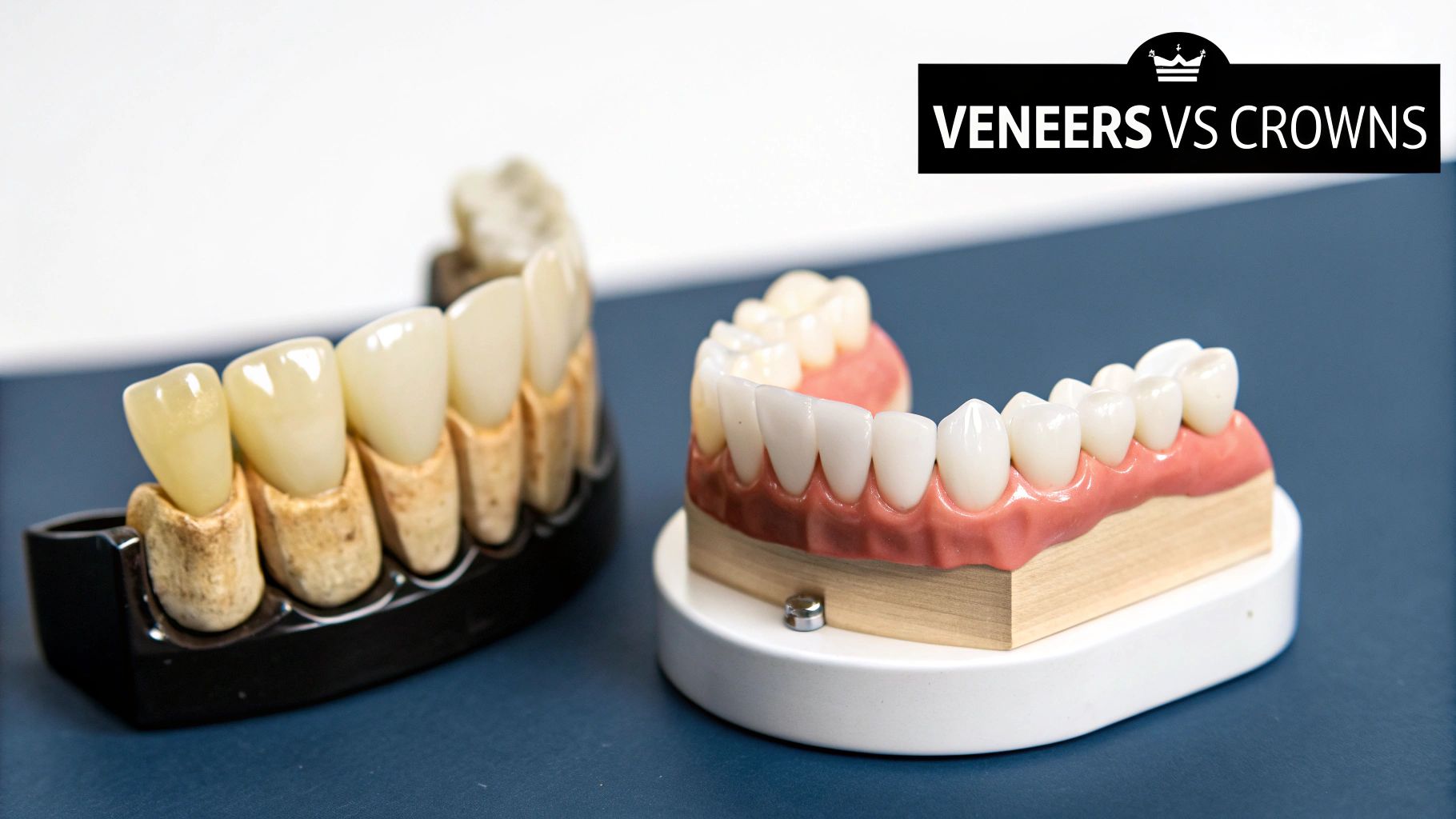
    What Is the Difference Between Veneers and Crowns?

    While they both play a huge role in creating stunning smile makeovers, veneers and crowns serve very different purposes. Knowing the difference helps you understand why your Mexico dentist might recommend one over the other.

    A veneer is an ultra-thin porcelain shell that is bonded to the front surface of a tooth. Think of it as a cosmetic enhancement—its main job is to improve the appearance of a tooth’s color, shape, or alignment.

    A crown, on the other hand, is a full “cap” that covers the entire tooth down to the gumline. It’s a restorative solution. It brings back a tooth’s original strength, size, and shape, offering both functional support and a beautiful appearance. When a tooth is too damaged for a veneer, a crown becomes the go-to solution. Crowns are also the final piece placed on top of dental implants. If you’re weighing your options for a missing tooth, it’s worth reading up on the 8 signs that you need dental implants.

    Can a Full Set of Crowns Be Done in One Trip?

    The timeline for a full mouth restoration involving veneers and crowns really hinges on the complexity of your case and the clinic’s setup. For most patients, this process requires two trips to Tijuana. The first visit is dedicated to preparing the teeth and taking precise impressions. The second trip, usually a week or so later, is for placing the permanent crowns after they’ve been custom-crafted in a dental lab.

    That said, some advanced clinics in Tijuana have their own in-house labs with CAD/CAM technology. This can sometimes compress the timeline, but it’s vital to have a realistic discussion about your specific treatment plan with your dentist in Mexico during your initial consultation.


    Ready to take the next step toward a stronger, more beautiful smile? The team at Trust Dental Care is here to guide you through every stage of your dental journey with expertise and compassion. Contact us today for a free consultation and discover how we can restore your smile with high-quality, affordable care in Tijuana.

  • How Long Do All On 4 Implants Last? A Definitive Guide

    How Long Do All On 4 Implants Last? A Definitive Guide

    How Long Do All On 4 Implants Last? A Definitive Guide

    When you’re considering a full mouth restoration, one of the first questions on your mind is probably, “how long do all on 4 implants last?” It’s a fantastic question. The short answer is that the titanium dental implants fused into your jawbone are built for the long haul, potentially lasting 20 years or even a lifetime.

    However, the beautiful arch of teeth attached to them—the part that does all the chewing and smiling—typically has a lifespan of 10 to 15 years because it faces daily wear and tear. This is a key aspect of any full mouth restoration.

    Understanding the Lifespan of Your New Smile

    Image

    When you invest in All-on-4 dental implants, you’re really getting a two-part system. Each component has its own expected lifespan, and thinking about it like a house makes it easier to understand.

    • The Implants (The Foundation): These are the four titanium posts that a surgeon places into your jaw. Titanium is biocompatible, which is a clinical way of saying your body doesn’t see it as a foreign object. Instead, your bone naturally grows around and fuses to the implants in a process called osseointegration. Once this happens, those dental implants are a permanent, stable part of you.

    • The Prosthesis (The Bridge): This is the full arch of teeth that we secure to those solid implants. It’s the part of your new smile that everyone sees and the part that handles all the hard work of chewing. Just like any high-use surface, it will naturally wear down over time. For many, this part of the full mouth restoration is the most exciting.

    To give you a clearer picture, let’s break down the longevity of each part of the system.

    All On 4 System Lifespan At a Glance

    The table below provides a quick summary of what you can expect from each component of your All on 4 restoration, from the rock-solid dental implants to the beautiful teeth they support.

    Component
    Material
    Average Lifespan
    Potential Lifespan with Optimal Care
    Titanium Implants
    Biocompatible Titanium
    20+ years
    Lifetime
    Acrylic Prosthesis
    High-Quality Dental Acrylic
    10-15 years
    15+ years
    Zirconia Prosthesis
    Solid Zirconia
    15+ years
    20+ years
    Abutments
    Titanium
    20+ years
    Lifetime

    As you can see, the core foundation is designed for incredible longevity. With the right care, your implants can genuinely last the rest of your life, while the visible bridge may need to be replaced after a decade or more, much like getting new tires for a car.

    Why Your Dentist’s Expertise Is Crucial for Longevity

    The long-term success of your new smile really hinges on the skill and experience of your dental team. When a specialist places the implants, they are setting the stage for decades of stability. Perfect placement isn’t just a goal; it’s a requirement for the entire system to last.

    This is why choosing a top Mexico dentist is so important. You’re not just getting a new set of teeth; you’re investing in a durable, long-term solution built on a foundation of expert care and precision. The research backs this up completely.

    Studies consistently show that dental implants have an incredible success rate of 90% to 95% after a decade.

    Even if the prosthetic bridge needs a tune-up or replacement down the road, the underlying dental implants almost always remain exceptionally stable with proper maintenance. The quality of both the surgery and the final prosthesis—whether it’s made from acrylic or a premium material like zirconia—directly impacts how long your smile will look and feel great.

    What Is The All On 4 Implant System?

    Image

    Before we can talk about how long All-on-4 implants last, we first need to get a clear picture of what they actually are. Think of it like building a sturdy bridge designed to last for decades. You wouldn’t just lay down the road; you’d start by anchoring incredibly strong pillars deep into the ground. The All-on-4 system is built on that very same idea.

    The “pillars” in this case are four strategically angled titanium dental implants. An experienced Mexico dentist places these small posts into your jawbone, where they begin to fuse with the bone itself. This amazing biological process, called osseointegration, creates an unshakeable foundation for your new smile.

    Then comes the “bridge”—your full-arch prosthesis. This isn’t just a set of individual teeth; it’s a complete, custom-crafted row of beautiful and functional teeth all connected as a single unit. This arch is then securely attached to those four solid implants, giving you a full mouth restoration. For a great starting point, you can find some general information about All On 4 Implants.

    Pillars vs. The Bridge: A Tale Of Two Lifespans

    This two-part design is the key to understanding the lifespan of the entire system. It’s why the implants and the prosthetic bridge are on two different timelines.

    The titanium implants, once they’ve fully integrated with your jaw, essentially become a permanent part of your anatomy. Tucked safely within the bone, they are shielded from the direct wear and tear of chewing. They are the silent, strong foundation built for the long haul.

    The prosthesis, on the other hand, is the workhorse. It takes on the daily grind of biting, chewing, and talking. It’s a lot like the tires on your car—incredibly durable, but they’re the part that meets the road and will eventually show wear. That’s why the bridge, whether it’s made from a high-grade acrylic or a premium material like zirconia, usually needs to be replaced after 10 to 15 years. The dental implants themselves, however, can last a lifetime. To dig deeper into this, you might be interested in checking out our guide on dental implants.

    Key Takeaway: The implants are the permanent foundation; the prosthetic bridge is the replaceable surface. Grasping this distinction is crucial for setting realistic expectations for your All on 4 dental implants.

    First introduced back in 1998, the All-on-4 system has built an incredible track record for reliability. One major clinical study followed patients for a decade and reported a remarkable cumulative prosthesis survival rate of 100% after ten years. This really underscores how critical a well-planned procedure by an expert Tijuana dentist is to building a smile that truly stands the test of time.

    Key Factors That Determine All On 4 Longevity

    So, how long do All on 4 implants really last? The answer isn’t a single number—it’s a result. Think of it like building a custom home. The final structure’s strength depends on the quality of the foundation, the skill of the builders, the materials they use, and how well you maintain it over the years.

    Your new smile works the same way. The longevity of your All on 4 dental implants is a direct outcome of a few critical elements working together. It’s a partnership between your body, your surgeon’s expertise, the materials in your new teeth, and your own daily habits.

    Your Health and Jawbone Quality

    Everything starts with the foundation—your jawbone. For dental implants to last a lifetime, they need something solid to anchor into. The density and overall health of your jawbone are absolutely crucial for creating a permanent, powerful bond with the titanium posts.

    This is where having an experienced Mexico dentist really pays off. They have seen it all when it comes to jawbone conditions and can expertly assess your unique situation. They use advanced 3D CT scans to map out your jaw, finding the strongest, densest bone to ensure your implants have a rock-solid base from day one.

    An experienced implant specialist in Tijuana won’t just guess where the best bone is. They use precise imaging to find the optimal spots, which dramatically increases the long-term stability and success of your full mouth restoration.

    This visual breaks down how different patient factors, from basic hygiene to bone structure, create the layers needed for a successful outcome.

    Image

    As you can see, it all starts with good oral hygiene, which is the cornerstone supporting healthy bone—the very thing your dental implants rely on.

    The Surgeon’s Skill and Precision

    Placing the implants is part art, part science, and arguably the most pivotal moment in the entire process. A great surgeon isn’t just drilling four holes. They’re performing a highly technical procedure, angling the implants with incredible precision to lock into the strongest sections of your jaw.

    This is not a job for a rookie. An expert Tijuana dentist specializing in full mouth restorations has done this procedure hundreds, if not thousands, of times. That level of experience is what ensures your new smile is built on a flawless foundation. If you’re weighing your options, it’s worth understanding how different systems work. You can explore a comparison of All-on-4 and All-on-6 implants to see which approach best fits your clinical needs for dental implants.

    Quality of the Prosthesis Materials

    The implants are the roots, but the prosthesis—your beautiful new arch of teeth—is what you’ll be using every single day. The material it’s made from has a massive effect on its durability and how long it will last before needing replacement.

    • Acrylic: This is a fantastic and more affordable option that looks beautiful and functions well. With good care, an acrylic bridge generally lasts 10-15 years.
    • Zirconia: This is the top-of-the-line choice. It’s a solid block of high-tech ceramic that’s incredibly strong and highly resistant to stains, chips, and wear. A zirconia bridge can easily last 15-20 years or even longer. Many full mouth restorations combine zirconia crowns with implants for the ultimate in aesthetics and strength.

    Leading clinics in Tijuana offer both, so you can pick the material that aligns with your budget and long-term vision. While zirconia costs more upfront, many patients find it’s worth the investment to avoid the cost and hassle of a future replacement.

    Your Long-Term Care and Maintenance

    After the surgery is done and your beautiful new teeth are in place, the person with the most influence over their lifespan is you. Your daily care is the single most important factor in making sure your dental implants last a lifetime. It’s simple, but it’s non-negotiable.

    This means brushing daily, using a water flosser to clean the hard-to-reach areas under your bridge, and showing up for your regular professional cleanings. This routine is what protects the gums and bone around the implants from plaque and inflammation. Neglecting your home care is the quickest way to put your entire investment at risk.

    To put it all together, here’s a quick look at how these factors can either extend or shorten the life of your All-on-4 restoration.

    Impact of Key Factors on All On 4 Lifespan

    Factor
    Positive Influence (Promotes Longevity)
    Negative Influence (Reduces Longevity)
    Bone Quality
    Dense, healthy jawbone allows for strong implant fusion (osseointegration).
    Significant bone loss or low density can compromise implant stability.
    Surgeon’s Skill
    Precise, strategic placement in the strongest bone maximizes support.
    Poor implant angle or placement can lead to uneven forces and failure.
    Prosthesis Material
    Durable materials like Zirconia resist wear, chipping, and staining for 15+ years.
    Softer materials like acrylic may require replacement in 10-15 years.
    Patient Maintenance
    Daily cleaning and regular check-ups prevent infection and inflammation.
    Poor hygiene leads to peri-implantitis, bone loss, and implant failure.
    Overall Health
    Good general health and controlled systemic conditions (e.g., diabetes).
    Uncontrolled diabetes, smoking, or autoimmune diseases slow healing.

    Ultimately, achieving a “forever smile” is a team effort. When a skilled surgeon, high-quality materials, and a diligent patient come together, the results can truly last a lifetime.

    How Prosthesis Materials Impact Durability

    Image

    When we talk about how long All-on-4 implants last, the material you choose for your new teeth—the prosthesis—plays a huge role. I often tell my patients to think of it this way: the titanium dental implants are the rock-solid foundation of your house. But the prosthesis? That’s the roof and walls. It’s the part that faces the elements every single day.

    Your choice here directly impacts not just how long your new smile will last, but also how it looks and what the long-term costs might be. This is the component that does all the heavy lifting—chewing, biting, and speaking. So, picking the right material is one of the most important decisions you’ll make with your dentist in Mexico.

    One of the great advantages of getting your full mouth restoration in Tijuana is the access you have to a whole range of world-class materials at prices that make sense. This gives you far more control over the final look and durability of your smile.

    Acrylic Over Titanium

    The most popular and budget-friendly option for an All-on-4 dental implants prosthesis is what we call a hybrid bridge. It’s made from a high-grade dental acrylic that’s bonded to a custom-made titanium frame.

    • How It’s Made: We start with a super strong but lightweight titanium bar that provides the core structure. Then, we meticulously craft and process beautiful, natural-looking acrylic teeth and gums over that frame.
    • Lifespan: This setup is incredibly reliable and can serve you well for 10 to 15 years with good home care. Over time, the acrylic teeth can wear down or stain, but the great news is they can often be repaired or even replaced without having to start from scratch.

    This is a fantastic and time-tested option that gives people beautiful, functional results. Just know that acrylic is a bit softer than your natural tooth enamel, so it will naturally show wear and tear sooner than some of the more premium materials.

    While acrylic is a proven and dependable choice, it’s essential to understand it’s a wearable component. Think of it as investing in high-quality running shoes—they are built to perform but will eventually need to be replaced after many miles of use.

    Monolithic Zirconia

    For patients who want the absolute best in strength, beauty, and longevity, monolithic zirconia is the undisputed champion. Zirconia is a type of ceramic so tough it’s often nicknamed “ceramic steel.”

    • How It’s Made: Your entire arch of teeth is sculpted from a single, solid block of zirconia using advanced CAD/CAM technology. This process creates a prosthesis with no seams, no joints, and no different materials to separate over time—it’s incredibly robust. It can then be hand-finished with porcelain to look indistinguishable from natural teeth, much like high-end veneers or crowns.
    • Lifespan: Zirconia is exceptionally resistant to chipping, staining, and wear. A zirconia bridge can easily last 15 to 20 years, and frankly, often lasts for the lifetime of the implants themselves.

    Top dental clinics in Tijuana have their own in-house labs with the sophisticated technology required to craft these premium restorations. Choosing zirconia for your All-on-4 dental implants is a significant investment upfront, but it pays off by extending the life of your smile and minimizing the need for future repairs.

    Clinical Success Rates and What They Mean for You

    https://www.youtube.com/embed/paiJZPYfPdM

    When you’re thinking about a major investment like a full mouth restoration, you need more than just promises—you want solid proof. So, the big question is, how long do All-on-4 implants last when you look at the real-world data? The evidence is overwhelmingly positive, with high success rates that give patients genuine confidence.

    Long-term studies have consistently proven how reliable All-on-4 dental implants truly are. This isn’t just a marketing claim; it’s backed by years of science and reinforces why so many people feel confident choosing this procedure with a Mexico dentist. The numbers tell a powerful story about durability.

    Implant Survival vs. Prosthesis Survival

    When you start digging into the research, you’ll see two key terms pop up: implant survival and prosthesis survival. It’s crucial to know the difference.

    • Implant Survival Rate: This is all about the titanium posts that are surgically placed and fuse with your jawbone. Clinical data shows these dental implants have a survival rate well above 95% over a 10-15 year period, and for many people, they last a lifetime. This is the permanent foundation of your new smile.
    • Prosthesis Survival Rate: This refers to the bridge of teeth—the part you actually see and chew with. While very durable, this part is subject to daily wear and tear. Think of it like high-end dental work such as veneers or crowns; it’s built to perform but may need to be replaced after a decade or more.

    Understanding this distinction helps set realistic expectations. The foundation is built to be permanent, while the visible smile is a high-performance part that might eventually need some attention down the road.

    The Data Backs It Up

    These high success rates aren’t just based on short-term results. One impressive retrospective study followed patients who had All-on-4 treatment in their upper jaw. The findings? A cumulative implant survival rate of 96.2% over an average follow-up of 15 years.

    That figure is powerful. It means that in a real clinic, with real patients, more than 96 out of 100 dental implants were still working perfectly after a decade and a half. That’s an incredible testament to how reliable this system is.

    This high degree of predictability is a huge reason why patients are willing to travel to Tijuana. They seek out expert dentists who can deliver these outstanding results, providing a world-class solution that is backed by years of clinical proof.

    Of course, the journey to a new smile comes with a lot of questions. To help you feel fully informed, we’ve put together a guide that walks you through the entire process. You can read our detailed article answering common All-on-4 questions to get the clarity you need. Being armed with the right information empowers you to make the absolute best decision for your health and your future.

    Common Questions About All On 4 Longevity

    Even after digging into the specifics of materials, surgical techniques, and success rates, it’s completely natural to still have a few questions buzzing around. When you’re looking at a life-changing treatment like a full mouth restoration, you deserve total peace of mind. Let’s tackle some of the most common questions we hear from patients about how long All on 4 dental implants really last.

    Getting clear, straight-up answers is the only way to feel truly confident in your decision. We’ll tie everything back to the core theme here: the incredible value you get by choosing an experienced Mexico dentist for your care.

    Can All On 4 Implants Last a Lifetime?

    This is the big one, isn’t it? The answer is a hopeful “yes,” but there’s an important distinction to make. The four titanium dental implants themselves—the parts that fuse directly into your jawbone—are absolutely engineered to last a lifetime. Once osseointegration is complete, they become a permanent part of your body.

    The part that does the daily work, your beautiful new bridge of teeth (the prosthesis), is a different story. Think of it like a set of high-performance tires on a car. It’s incredibly durable and built for the long haul, but it won’t last forever. This part generally needs replacement every 10-15 years, though a premium material like Zirconia can often push that timeline even further. The real key to lifelong success is your commitment to fantastic oral hygiene and regular check-ups at a trusted Tijuana dental clinic.

    Do All On 4 Dental Implants in Mexico Have a Warranty?

    They sure do. Any reputable dental clinic in Tijuana will back their All on 4 dental implants with a solid warranty. It’s a direct signal of their confidence in their surgical skill and the quality of the materials they use. A good warranty will typically cover the implant posts for several years, protecting you in the very rare case that an implant fails to integrate with your jawbone.

    It’s important to know that these warranties almost always depend on you following your aftercare plan, especially attending regular professional cleanings. The prosthesis itself, much like cosmetic veneers or crowns, usually has its own, shorter warranty that covers defects in the material. Always ask your Mexico dentist for the specific warranty details in writing before you begin treatment.

    What Happens If One of the Four Implants Fails?

    First off, take a deep breath—implant failure is incredibly rare. With a skilled surgeon at the helm, success rates are consistently above 95%. But in the unlikely event a dental implant doesn’t bond properly with the bone, it’s not a disaster. An experienced surgeon can typically remove it with a simple, straightforward procedure.

    After a healing period, your dentist can usually place a new implant, sometimes a slightly larger one or in a slightly different spot, to keep your full mouth restoration perfectly stable. This is where experience really counts. An expert All on 4 dentist in Tijuana knows how to manage these rare bumps in the road, protecting the long-term health and success of your new smile. Knowing what to look for is half the battle, and you can learn more about the 8 signs that you need dental implants to stay informed.

    Does the Lower Cost in Tijuana Mean Lower Quality?

    This is a critical point, and the answer is a firm “no.” The reason All on 4 dental implants are so much more affordable in Tijuana has nothing to do with cutting corners on quality. It’s all about economics—lower operating costs, business overhead, and general cost of living compared to the U.S.

    Top-tier Tijuana dentists are using the exact same world-class implant brands (like Nobel Biocare), premium materials (like solid Zirconia for crowns and bridges), and advanced technologies you’d find in the best U.S. clinics. You get a durable, high-quality full mouth restoration built to last, all at a price that makes this life-changing care accessible.


    Ready to explore a permanent solution for your smile with the confidence of a lifetime guarantee? At Trust Dental Care, our U.S.-licensed dentists specialize in creating beautiful, long-lasting All on 4 restorations. Schedule your free consultation today!
  • 6 Dental Implant Failure Signs to Watch for in 2025

    6 Dental Implant Failure Signs to Watch for in 2025

    6 Dental Implant Failure Signs to Watch for in 2025

    Dental implants, including advanced options like All on 4 dental implants, represent a significant investment in your health and confidence. Whether you’re considering a single implant or a full mouth restoration with crowns and veneers, understanding how to protect your smile is crucial. Many patients seek affordable, high-quality care from a Tijuana dentist or other clinics in Mexico, and while success rates are high with experienced professionals, being proactive about aftercare is non-negotiable.

    Knowing the early dental implant failure signs is the most powerful tool you have for ensuring a lasting result. Recognizing a subtle warning sign can mean the difference between a simple, quick adjustment and a more complex, costly intervention. This guide is designed to empower you with that knowledge. We will detail the specific symptoms you must not ignore, from persistent pain and implant looseness to changes in your gums or bite. By understanding these critical signs, you can take swift action to protect your investment and maintain the healthy, beautiful smile you deserve for years to come. We’ll explore what these warnings mean and outline the immediate next steps you should take.

    1. Severe or Persistent Pain

    While some degree of discomfort and soreness is a normal part of the healing process after dental implant surgery, this initial pain should gradually subside. However, severe or persistent pain that lasts beyond the first 7-14 days is a significant red flag and one of the most immediate dental implant failure signs. This type of pain is distinct from typical post-operative soreness; it may be a deep, throbbing ache, a sharp, shooting sensation when you bite, or a constant pain that disrupts your daily life and doesn’t improve with standard pain medication.

    Severe or Persistent Pain

    This prolonged pain often indicates an underlying problem, such as an infection at the implant site, nerve impingement, or a failure of the implant to integrate with the jawbone (osseointegration). Ignoring it can lead to more complex issues, making early intervention critical.

    Understanding the Difference: Normal vs. Abnormal Pain

    It’s crucial to distinguish between expected healing discomfort and a genuine warning sign.

    • Normal Post-Surgical Pain: Typically peaks within the first 48-72 hours and steadily decreases. It is manageable with the prescribed pain relievers and should be mostly gone within one to two weeks.
    • Abnormal Pain (A Sign of Failure): This pain might appear weeks or even months after your procedure. It may feel like it’s worsening instead of improving or appear suddenly after a period of being pain-free. This is not a normal part of healing for procedures like All-on-4 dental implants or single implants.

    Actionable Steps for Managing and Reporting Pain

    If you experience persistent or escalating pain, immediate and structured action is necessary.

    • Keep a Pain Diary: Document the pain’s intensity (on a scale of 1-10), what it feels like (throbbing, sharp, dull), and when it occurs (e.g., when chewing, at night). This provides your Tijuana dentist with valuable data to diagnose the problem.
    • Contact Your Dentist Immediately: Do not wait for your scheduled follow-up. Persistent pain beyond two weeks is not normal. A sudden, severe spike in pain should be treated as a dental emergency. You can learn more about how to handle urgent dental situations by exploring information on dental emergencies.
    • Avoid Self-Medicating: Do not simply increase your dose of over-the-counter pain relievers to mask the symptom. This can hide the severity of the underlying issue and delay necessary treatment.

    Whether you received a full mouth restoration in Mexico or a single implant locally, persistent pain is a universal sign that requires professional evaluation to protect your investment and your oral health.

    2. Implant Mobility or Looseness

    A properly integrated dental implant should feel completely stable and immovable, functioning just like a natural tooth root. Therefore, any detectable movement, wobbling, or looseness of the implant post or the crown attached to it is one of the most definitive dental implant failure signs. This mobility indicates a severe problem, such as a failed osseointegration process where the implant never fused with the jawbone, or a mechanical complication with the implant components.

    Implant Mobility or Looseness

    The feeling can be subtle at first but often becomes more noticeable over time. A healthy implant, whether part of a full mouth restoration or a single tooth replacement, should feel rock-solid. Looseness signifies that the foundational support of the implant is compromised, requiring immediate professional attention to prevent further bone loss or damage.

    Understanding the Difference: Implant vs. Crown Looseness

    It’s vital to determine what exactly is moving, as the cause and treatment can differ significantly.

    • Loose Crown/Abutment: Sometimes, the crown or the connecting piece (abutment) may become loose while the implant post itself is still solidly fused to the bone. This is a mechanical issue, often a simple fix like tightening a screw, and is not a sign of implant failure.
    • Loose Implant Post: If the entire implant fixture moves within the jawbone, this signals a failure of osseointegration. This is a much more serious issue and often requires removal of the implant. This type of mobility is a critical warning sign for patients with All-on-4 dental implants as well as single implants.

    Actionable Steps for Managing and Reporting Mobility

    If you detect any movement in your implant, you must act quickly to address the root cause.

    • Avoid Applying Force: Immediately stop chewing on the affected side and avoid pushing on the implant with your tongue or fingers. Applying pressure can worsen the situation and cause additional bone loss.
    • Contact Your Dentist Immediately: A loose implant is considered a dental emergency. Contact your Tijuana dentist or local provider without delay. Do not wait for it to “tighten up” on its own, as this will not happen.
    • Do Not Attempt Self-Repair: Never try to tighten, adjust, or glue the crown or implant yourself. You can cause irreparable damage to the implant components or your surrounding tissues. A professional evaluation is necessary to diagnose the problem correctly. You can discover more about the intricacies of the procedure in this complete guide to dental implants.

    Whether your dental work was done in Mexico or elsewhere, a mobile implant is a universal sign that the foundation of your dental restoration is at risk and requires immediate expert care.

    3. Swelling and Inflammation Around the Implant Site

    While some initial swelling is a normal reaction to the surgical procedure, it should peak within the first few days and then steadily resolve. However, persistent or recurring inflammation around the gum tissue of a dental implant is a critical warning sign. This is one of the most common dental implant failure signs, indicating a deeper problem that requires immediate professional attention. The affected area may appear puffy, red, and feel warm or tender to the touch, signaling an active inflammatory response long after the initial healing period has passed.

    Swelling and Inflammation Around the Implant Site

    This kind of late-stage swelling often points to peri-implantitis, an inflammatory disease similar to gum disease that affects the tissues surrounding a dental implant. If left untreated, peri-implantitis can lead to the progressive loss of the supporting jawbone and the ultimate failure of the implant itself. It is a serious concern for any type of implant, from a single tooth to a complex full mouth restoration.

    Understanding the Difference: Normal vs. Abnormal Swelling

    Knowing what to expect during healing helps you identify problems early. It’s vital to distinguish between normal post-op effects and a true warning sign.

    • Normal Post-Surgical Swelling: Expected after surgery, this swelling is most noticeable in the first 2-3 days and gradually subsides over the next week. It responds well to cold compresses and is part of the body’s natural healing process.
    • Abnormal Swelling (A Sign of Failure): This inflammation may appear weeks, months, or even years after the implant was placed. It can be persistent or seem to come and go. The gum tissue around the implant crown might look puffy or bleed easily during brushing, even with good hygiene.

    Actionable Steps for Managing and Reporting Inflammation

    If you notice ongoing or new swelling around an implant, you must take proactive steps to address it.

    • Maintain Scrupulous Oral Hygiene: Gently but thoroughly clean the area around the implant crown. Use soft-bristled brushes and any special tools recommended by your dentist to remove plaque without causing further irritation. Your commitment to dental care is crucial for long-term success. You can explore additional information on maintaining your oral health and smile at Trust Dental Care’s dental care tips.
    • Contact Your Dentist Promptly: Report any persistent or recurring swelling to your Tijuana dentist immediately. This is not a “wait and see” situation. A professional evaluation is needed to diagnose the cause, which could range from a simple hygiene issue to advanced peri-implantitis.
    • Avoid Irritants: Steer clear of smoking, alcohol, and hard or crunchy foods that could aggravate the inflamed tissue while you await your dental appointment.

    Whether you received All-on-4 dental implants in Mexico or a single implant elsewhere, abnormal swelling is a universal signal that your oral health and implant investment are at risk.

    4. Pus or Discharge from the Implant Area

    The presence of any fluid discharge, especially pus, coming from the gum tissue surrounding your dental implant is a definitive and serious warning sign. This discharge, known as suppuration, is a clear indicator of an active bacterial infection. The fluid may appear white, yellow, or be tinged with blood, and it is often accompanied by a foul taste or bad breath. This is one of the most critical dental implant failure signs because it points directly to peri-implantitis, an inflammatory condition that attacks the bone supporting the implant.

    Pus or Discharge from the Implant Area

    An infection at the implant site means your body is actively fighting bacteria that can destroy the bone-to-implant bond (osseointegration). If left untreated, this infection will lead to bone loss, implant loosening, and ultimately, the complete failure of the implant. Prompt professional intervention is essential to save the implant and prevent the infection from spreading.

    Understanding the Difference: Normal vs. Abnormal Discharge

    It’s vital to recognize what constitutes a dangerous discharge versus normal post-surgical fluids.

    • Normal Post-Surgical Fluid: In the first 24-48 hours after surgery, a small amount of reddish or pinkish fluid (saliva mixed with a little blood) is normal. This is not pus and should resolve quickly.
    • Abnormal Discharge (A Sign of Failure): The appearance of thick, opaque, white or yellow fluid at any time, particularly weeks or months after the procedure, is a major red flag. This pus indicates a deep-seated infection that requires immediate treatment, whether for a single implant or a complex full mouth restoration.

    Actionable Steps for Managing and Reporting Discharge

    If you notice pus or any unusual discharge around an implant, you must act swiftly and methodically.

    • Document the Issue: Take clear, well-lit photos of the area to show your dentist. Note the color, consistency, and any associated symptoms like swelling or a bad taste. This visual evidence is invaluable for your Tijuana dentist to make a remote or initial assessment.
    • Gentle Rinsing Only: You can gently rinse your mouth with a warm salt water solution (1/2 teaspoon of salt in 8 ounces of warm water) to help clean the area. However, do not attempt to squeeze, poke, or press on the gums to express the pus, as this can force the infection deeper into the tissue.
    • Contact Your Dentist Immediately: The presence of pus is a dental emergency. Do not wait for it to resolve on its own. Contact your dental clinic right away to report the symptom. Timely antibiotic therapy and professional cleaning are often necessary to control the infection and save your investment, especially for comprehensive treatments like All-on-4 dental implants.

    5. Gum Recession Around the Implant

    While minor changes in gum contours are expected as your mouth heals and adapts, significant gum recession around a dental implant is a serious concern. This is when the gum tissue pulls away, exposing more of the dental crown or, in advanced cases, the metallic implant post itself. This is a critical dental implant failure sign because healthy gums should form a tight, protective seal around the implant.

    Progressive gum recession often points to underlying inflammation, such as peri-implantitis, a destructive disease similar to gum disease that affects implants. It can also be caused by poor oral hygiene, excessive brushing force, or biomechanical stress from an improperly placed implant. This issue compromises both the aesthetics and long-term stability of the implant.

    Understanding the Difference: Normal vs. Abnormal Recession

    It’s vital to differentiate between normal tissue remodeling and a developing problem that requires intervention.

    • Normal Gum Maturation: Following implant placement, especially with All-on-4 dental implants, the gum tissue will naturally settle and mature around the new restorations. This is a subtle, stable process that concludes once healing is complete.
    • Abnormal Recession (A Sign of Failure): This involves a continuous, noticeable pulling back of the gums over weeks or months. The gum line around the implant may appear significantly lower or asymmetrical compared to adjacent natural teeth, and you might see the dark, metallic edge of the implant post. This progressive loss of tissue is a clear warning sign.

    Actionable Steps for Managing and Reporting Gum Recession

    If you notice your gums receding from your implant, taking proactive steps is crucial to prevent further damage and potential implant loss.

    • Refine Your Brushing Technique: Immediately switch to a soft-bristled toothbrush and use gentle, circular motions. Aggressive brushing can traumatize the delicate gum tissue and accelerate recession. Ensure you are cleaning thoroughly but not forcefully.
    • Contact Your Dentist Promptly: Schedule an appointment with your dental professional in Mexico or your local provider. They need to assess the cause, which could range from an infection to a problem with the implant’s position. Early diagnosis of issues like cysts or inflammation is key; you can explore related gum issues and learn more about gingival health.
    • Discuss Treatment Options: Depending on the diagnosis, your Tijuana dentist may recommend specialized treatments. These could include deep cleanings (periodontal therapy), adjustments to your prosthesis, or even a gum grafting procedure to restore the lost tissue and protect the implant.

    Whether you’ve invested in a complex full mouth restoration or a single implant, healthy gums are non-negotiable for success. Addressing recession early is the best way to safeguard your smile and your health.

    6. Difficulty Chewing or Changes in Bite

    A successful dental implant should function just like a natural tooth, allowing you to eat, speak, and smile with complete confidence. When you suddenly experience difficulty chewing, jaw fatigue, or a sensation that your bite has changed, it is a crucial warning and one of the most common dental implant failure signs. This isn’t just a matter of comfort; it points directly to potential problems with the implant’s stability or the prosthetic crown attached to it. The issue may present as an inability to bite into hard foods, a feeling that the implant crown is “high” and hits first, or a general awkwardness when your teeth come together.

    These symptoms can indicate that the implant has failed to integrate with the jawbone, has become loose, or that the final restoration (the crown) was not positioned correctly. Ignoring these changes can lead to damage to the implant, opposing teeth, or even the temporomandibular joint (TMJ) due to an imbalanced bite.

    Understanding the Difference: Normal Adjustment vs. A Warning Sign

    It is vital to distinguish between the initial adjustment period and a genuine mechanical or biological problem.

    • Normal Adjustment Period: After a new crown is placed on an implant, it’s common to have a brief period of adaptation. Your bite might feel slightly different for a few days as your mouth gets used to the new tooth. This feeling should resolve quickly.
    • Abnormal Bite Changes (A Sign of Failure): This involves a new or worsening sensation of discomfort when chewing. You might notice you’re subconsciously avoiding one side of your mouth or that your jaw feels tired after meals. This is a red flag for both All-on-4 dental implants and single implants and requires immediate professional assessment.

    Actionable Steps for Bite-Related Issues

    If you notice any persistent changes in your chewing ability or bite alignment, taking methodical steps is essential for a proper diagnosis.

    • Document the Specifics: Note what actions trigger the sensation. Does it happen with all foods or only hard or crunchy ones? Does the crown feel high all the time or just when you bite down? This detailed feedback is invaluable for your Tijuana dentist.
    • Temporarily Adjust Your Diet: Avoid putting excessive pressure on the implant. Stick to a soft diet and avoid hard, crunchy, or sticky foods until you can be evaluated. This prevents further stress on a potentially compromised implant.
    • Schedule an Evaluation Immediately: Do not wait to see if the problem will resolve on its own. A misaligned bite or a loose implant will not fix itself and can cause more significant damage over time. Contact your dental clinic in Mexico to schedule an appointment for a bite adjustment or implant evaluation.

    A proper bite is fundamental to the long-term success of any full mouth restoration. If chewing feels wrong, it’s a clear signal that something needs to be addressed to protect your new smile. When considering options, it is helpful to explore all avenues; you can learn more about different tooth replacement options and what to expect from each.

    Key Signs of Dental Implant Failure Comparison

    IssueImplementation Complexity 🔄Resource Requirements ⚡Expected Outcomes 📊Ideal Use Cases 💡Key Advantages ⭐
    Severe or Persistent PainLow – patient monitoringLow – patient self-reportingEarly detection of implant failure, prevents complicationsPost-implant surgery beyond 2 weeksEasily recognizable; prompts timely action
    Implant Mobility or LoosenessModerate – requires clinical examModerate – professional checkupDefinitive diagnosis of implant failure; requires urgent careRoutine dental exams; when mobility noticedClear, objective sign; allows early intervention
    Swelling and InflammationLow – visible symptomLow to moderate – patient careEarly indicator of infection or peri-implantitisPersistent gum swelling post-surgeryVisible and monitorable; manageable if early
    Pus or Discharge from ImplantModerate – clinical assessmentHigh – urgent professional careConfirms active infection; necessitates aggressive treatmentPresence of discharge or bad odor around implantClear infection marker; guides immediate treatment
    Gum Recession Around ImplantModerate – clinical evaluationModerate – ongoing professional careCan be stabilized if treated early; may require surgical interventionVisible or progressing gum recessionEarly visual sign; responds to therapy
    Difficulty Chewing or Bite ChangesModerate – functional assessmentModerate – dental adjustmentIdentifies mechanical issues; improves function and comfortChanges in bite or chewing functionFunctional indicator; can guide corrective care

    Next Steps: Partnering with Your Dentist for a Lasting Smile

    Understanding the potential dental implant failure signs is your first and most powerful line of defense in protecting your investment in a healthy, functional smile. Throughout this guide, we’ve detailed the critical warning signs, from persistent pain and implant mobility to gum inflammation and difficulty chewing. Recognizing these symptoms early is not about causing alarm; it’s about empowering you to take swift, decisive action.

    Ignoring a loose implant or dismissing ongoing swelling can turn a manageable issue into a complex problem, potentially leading to bone loss or the complete loss of the implant. The key takeaway is that your vigilance, combined with professional expertise, is the formula for long-term success. Your dental implant is a sophisticated medical device, and like any advanced technology, it requires proper monitoring and care.

    Your Action Plan: From Recognition to Resolution

    If you experience any of the symptoms discussed, your immediate priority is to contact a dental professional. Do not wait for the problem to worsen. Early diagnosis is crucial for salvaging the implant and preventing more invasive and costly treatments down the line. A specialist can determine the root cause, whether it’s an infection like peri-implantitis, a mechanical issue with the abutment or crown, or a failure of the implant to integrate with the jawbone (osseointegration).

    For patients who have invested in significant restorative work, such as All on 4 dental implants or full mouth restorations, this proactive approach is even more critical. These complex procedures require specialized care and maintenance. Seeking a consultation with a dentist experienced in these treatments is non-negotiable.

    The Advantage of Expert Care in Mexico

    For many patients in the U.S. and Canada, accessing this level of specialized care can be prohibitively expensive. This is where exploring options with a Mexico dentist, particularly in a trusted hub like Tijuana, becomes a strategic advantage. Clinics in Tijuana are renowned for providing high-quality, affordable solutions for complex cases, including salvaging failing implants and performing intricate full mouth restorations with veneers and crowns.

    By partnering with a reputable Tijuana dentist, you gain access to:

    • Advanced Diagnostics: Top clinics utilize 3D CBCT scanning to get a precise, comprehensive view of the implant, bone, and surrounding tissues, which is essential for accurate diagnosis.
    • Specialized Expertise: Many dentists in Mexico are U.S.-licensed or have extensive training in complex implantology, ensuring you receive a world-class standard of care.
    • Cost-Effective Solutions: The ability to address dental implant failure signs or plan a complete smile makeover becomes financially attainable, without compromising on the quality of materials or the level of professional skill.

    Ultimately, the goal is to maintain the beautiful, confident smile you worked hard to achieve. Being an informed and proactive patient is your greatest asset. By recognizing the signs of trouble and partnering with a trusted dental team, whether locally or in a specialized center like Tijuana, you are taking the most important step toward ensuring your dental implants last a lifetime.


    Are you concerned about your dental implant or considering a full mouth restoration? The U.S.-licensed specialists at Trust Dental Care in Tijuana are experts in diagnosing and treating complex implant cases, using advanced technology to ensure the best possible outcomes. Contact Trust Dental Care today to schedule a consultation and take the first step toward securing your lasting smile.

  • Dental Implant Healing Timeline: A Complete Guide for Patients in Tijuana

    Dental Implant Healing Timeline: A Complete Guide for Patients in Tijuana

    Dental Implant Healing Timeline: A Complete Guide for Patients in Tijuana

    While the entire dental implant healing process takes several months, the first 24 to 72 hours are without a doubt the most critical. Think of it as the foundation for your entire smile journey. How you care for yourself in these first few days directly sets the stage for a smooth, successful recovery. The main goal here is simple: protect the surgical site and let your body do its natural work.

    Your First 72 Hours After Implant Surgery

    The minute your procedure is finished, your body kicks into high gear to start healing. This initial 72-hour window is arguably the most vital part of your recovery, whether you’ve just received a single implant or a more complex treatment like All on 4 dental implants. The care you provide now has a massive impact on the long-term success of your investment.

    Imagine the surgical area is like freshly poured concrete—it needs time to set without being disturbed. Your top priority is to protect the blood clot that forms over the implant. This clot is nature’s perfect bandage, shielding the delicate area from bacteria and creating the framework for new tissue to grow.

    What to Expect Right After Surgery

    It’s totally normal to experience a few predictable side effects after the procedure. A good Mexico dentist will walk you through detailed post-op instructions, but knowing what’s coming can help ease any anxiety.

    • Bleeding: A little bit of oozing or light bleeding is common for the first 24 hours. Your dentist will likely have you bite down on a gauze pad, which applies gentle pressure to help stop the bleeding and allow that all-important clot to form.
    • Swelling: Your body’s natural response to surgery is inflammation, which means swelling is part of the deal. It usually gets a bit worse for the first two to three days, peaking around the 48 to 72-hour mark before it finally starts to go down.
    • Discomfort: You’re going to feel some discomfort once the anesthetic wears off. The good news? Most patients say it’s less intense than a tooth extraction and can be easily managed with medication.

    Immediate Post-Op Care Checklist

    To make things easier, here’s a quick-reference table for navigating those crucial first three days. Following these guidelines is your best bet for a complication-free recovery.

    TimeframeWhat to ExpectKey Actions to Take
    First 24 HoursMinor oozing, peak numbness wearing off, initial discomfort.Rest completely. Gently bite on gauze to control bleeding. Apply ice packs for 20 mins on, 20 mins off. Take pain medication as prescribed.
    24-48 HoursSwelling may increase. Discomfort should be manageable with medication.Continue with ice packs and rest. Stick to soft, cool foods like yogurt or smoothies. Avoid hot liquids.
    48-72 HoursSwelling peaks and begins to subside. Bruising may appear.Transition to warm (not hot) soft foods. Start gentle warm salt water rinses if your dentist advised it. Continue to avoid straws and smoking.

    Think of this checklist as your roadmap to getting through the most sensitive part of the healing process.

    The Dos and Don’ts for the First Three Days

    To give your implant the best chance of success, you absolutely have to follow a few ground rules. These steps are non-negotiable for preventing issues like infection or the implant failing to integrate.

    Do:

    • Take it easy! Rest is your best friend. Avoid any strenuous activity or exercise.
    • Keep applying ice packs to your cheek in 20-minute intervals. This is a game-changer for minimizing swelling.
    • Stick to a diet of soft foods. Think yogurt, smoothies, mashed potatoes, and applesauce.
    • Take all your prescribed medications on schedule, especially antibiotics and pain relievers.

    Don’t:

    • Spit, rinse forcefully, or use a straw. Any of these can create suction in your mouth and dislodge that protective blood clot.
    • Smoke or drink alcohol. Both are terrible for healing and can seriously compromise your results.
    • Poke the surgical site with your tongue or fingers. Just leave it alone.
    • Eat anything hot, spicy, or crunchy that could irritate the area.

    By managing this short period carefully, you’re creating the perfect environment for your dental implants to start bonding with your jawbone. These first few days are a small hurdle on the path to a lifetime of confident smiles. For a broader look at the entire process, feel free to check out our complete guide on everything you need to know about dental implants.

    The First Two Weeks Soft Tissue Recovery

    Image

    Once you’ve made it through those critical first few days, you’re officially entering the next phase of your dental implant healing timeline. For the first two weeks, your body’s energy shifts from damage control to actively healing the soft tissue around your new implant. You’ll start to see real progress as the initial swelling and bruising finally begin to subside.

    Think of it like this: the heavy digging and planting are done, and now you’re just nurturing the garden. The incision from the surgery will start to knit itself closed, and your gums will begin to form a tight, protective seal around the implant post. This is a crucial step to keep bacteria out.

    Visible Signs Of Healthy Healing

    It’s completely normal to be a little obsessive about checking on the surgical site. A quick, gentle look can give you a lot of peace of mind. Here’s what you want to see:

    • Reduced Swelling: The puffiness in your gums and cheek should go down a little more each day.
    • Color Change: That angry-looking red from the surgery will start to fade into a much healthier, light pink.
    • Incision Closing: The edges of the incision will look like they’re coming together, appearing less raw and more like a healing line.

    This is your body hard at work regenerating those soft tissues. It’s an absolutely essential stage that creates the foundation for the deeper bone healing to come, whether you’ve had a single implant or a full set of All on 4 dental implants.

    Oral Hygiene And Diet Progression

    Your main job right now is keeping your mouth clean without messing with the healing process. Any skilled Mexico dentist will give you a detailed list of do’s and don’ts, but some general rules always apply.

    A gentle saltwater rinse is your best friend. Just mix a half-teaspoon of salt into a cup of warm water and use it two to three times a day to keep things clean and reduce bacteria. Don’t swish aggressively! Just tilt your head and let the water gently fall out of your mouth.

    You can also start brushing your other teeth like you normally would, just be sure to give the surgical site a wide berth. When it comes to food, you can start to branch out a bit.

    • Mashed potatoes
    • Scrambled eggs
    • Soft, well-cooked pasta
    • Steamed fish

    Stay far away from anything hard, crunchy, spicy, or sticky. The last thing you want is to irritate the gums or get a piece of food stuck in there. For many people, traveling for care in a place like Tijuana helps them focus solely on recovery, away from the stress of daily life. Plus, the savings can be significant—it’s worth exploring the average cost of dental implants to see how much more accessible the treatment can be.

    The Stitch Removal Milestone

    Sometime between day 7 and day 14, you’ll likely have a follow-up visit. If your dentist used non-dissolvable stitches, they’ll be removed at this appointment. It’s a very quick and painless process, and it marks a huge milestone. It means your gums have healed enough to stay closed on their own, officially closing the first major chapter of your recovery.

    The Hidden Healing: Osseointegration Explained

    Once the initial swelling goes down and your gums start to feel normal, the most important part of your dental implant healing timeline gets underway. This stage is a silent one, happening deep inside your jawbone, but it’s where the real magic happens. We call this process osseointegration—the biological fusion of the titanium implant post with your living bone.

    Think of it like a young tree putting down deep, strong roots. It’s a gradual, powerful process that doesn’t happen overnight, but it’s what gives a dental implant its incredible, lifelong stability. This is the very reason implants are the gold standard for replacing missing teeth, whether it’s for a single tooth or as the anchor for a full set of All on 4 dental implants.

    The Science Behind Bone Fusion

    Osseointegration is a truly amazing biological event. When the biocompatible titanium post is placed in your jaw, your body doesn’t treat it like a foreign object. Instead, your own bone cells start to grow right onto and into the implant’s specially designed surface, locking it in place as if it were part of you.

    This remarkable fusion creates a bond so strong that the implant can handle all the biting and chewing forces of a natural tooth root. For anyone getting full mouth restorations with implant-supported crowns or veneers, this is the bedrock of their entire new smile.

    The image below shows just how the implant becomes one with the jawbone over time.

    Image

    As you can see, it’s not just a surface-level connection. It’s a deep, structural integration that locks your new tooth in for good.

    Why Patience Is Your Greatest Ally

    This “hidden healing” phase is the longest part of the journey, and you absolutely have to be patient. Osseointegration, the fusion of a dental implant with the jawbone, usually takes somewhere between 3 to 6 months. The exact timing really depends on personal factors like your bone quality and overall health. For instance, someone with great bone density might be fully fused closer to three months, while a person who needed a bone graft first will likely need more time. You can learn more about these varying healing stages on internationalplus.net.

    During this period, it’s critical to avoid putting any pressure on the implant. Any top Mexico dentist will tell you this again and again. Chewing on the implant before it’s fully integrated is like wiggling a brand-new fence post before the concrete has set—you risk disrupting that delicate fusion and could even cause the implant to fail.

    “Think of the osseointegration period as a quiet, protected construction phase for your new smile. Your jawbone is working hard behind the scenes to build a lifelong foundation. The best thing you can do is let it work undisturbed.”

    Following your dentist’s diet and care instructions during these months is non-negotiable. This is especially true for patients who travel to Tijuana for their dental work, as you want to make sure your investment in the procedure pays off with a successful, lasting result.

    What Helps And What Hurts Osseointegration

    Certain habits and conditions can make a huge difference in how quickly and how well your implant fuses with the bone.

    • Positive Influences:

      • Good Oral Hygiene: Keeping the implant site clean is crucial for preventing infections that could stop bone from growing.
      • A Nutrient-Rich Diet: Your body needs the right building blocks, like calcium and Vitamin D, to create strong new bone.
      • Following Post-Op Rules: Sticking to the plan and avoiding pressure gives the implant the best possible chance to succeed.
    • Negative Influences:

      • Smoking: This is the #1 enemy of osseointegration. It restricts blood flow, slows down healing, and is a leading cause of implant failure.
      • Certain Health Conditions: Uncontrolled diabetes, for example, can seriously impair your body’s ability to heal.
      • Premature Loading: Placing the final crown too soon puts stress on the implant before it’s strong enough to handle it.

    Understanding this vital stage helps you see why a skilled dentist is so meticulous about planning your treatment timeline. Those quiet months of healing are what ultimately lead to a strong, stable, and confident smile that can last a lifetime.

    What Factors Influence Your Healing Timeline

    There’s no single, universal answer to how long your dental implant healing will take. Think of it less like a rigid train schedule and more like a personal road trip—while the destination is the same, your specific route and timing will be all your own. Several key factors can either put you in the fast lane to recovery or add a few detours, and understanding them from the start helps set clear, realistic expectations.

    A successful implant needs a solid foundation, just like a house. In this case, your overall health is the bedrock. Your body’s ability to heal efficiently, manage inflammation, and grow new tissue all comes down to your general wellness. The condition of your jawbone itself is, of course, another massive piece of the puzzle.

    Your Health and Habits Matter

    Your body’s built-in repair system is directly influenced by your health and daily lifestyle. It’s a simple truth: a patient in great health will almost always bounce back faster than someone managing underlying conditions or engaging in habits that get in the way of healing.

    • Overall Health: Things like autoimmune disorders or medications that suppress the immune system can put the brakes on your body’s natural healing powers.
    • Bone Density: A strong, dense jawbone gives the implant a stable anchor to fuse with. This makes for a much quicker and more predictable process. If a bone graft is needed first, that will naturally add more time to your total journey.
    • Oral Hygiene: This one is non-negotiable. Keeping the area meticulously clean is your best defense against infections that could derail the entire healing process.

    A good Mexico dentist will dive deep into these factors during your initial consultation. This isn’t just a formality; it’s a critical step to build a treatment plan that works with your body, not against it, whether you’re getting one implant or a complete full mouth restoration.

    Smoking and Diabetes: The Two Big Hurdles

    When it comes to healing, two factors really stand out as major obstacles: smoking and diabetes. Both can throw a wrench in the works and require extra care and attention to ensure your implant is successful.

    Smoking is probably the single biggest roadblock to a smooth recovery. It constricts your blood vessels, which is like putting a clamp on the fuel line to the surgical site. This chokes off the supply of oxygen and nutrients your tissues desperately need to repair themselves and for the bone to fuse. Research shows that smokers have a 2–3 times higher risk of implant failure. You can discover more insights about recovering from dental implants on hiossen.com to see the hard data behind these risks.

    Uncontrolled diabetes is another serious challenge. When blood sugar levels are high, it can impair circulation and weaken your immune system. This double-whammy makes the area more prone to infection and drags out the healing time significantly.

    How Procedure Complexity Shapes Your Timeline

    Finally, the scale of your dental work plays a huge role. The recovery from a single, straightforward implant looks very different from a more involved restoration.

    Procedure TypeTypical Healing FocusKey Timeline Consideration
    Single Dental ImplantHealing is concentrated on one specific spot.Osseointegration is usually straightforward, taking about 3-4 months in a healthy jaw.
    All on 4 Dental ImplantsHealing happens at four strategic implant sites at once.You get a temporary set of teeth right away, but the bone underneath still needs 4-6 months to fully lock in all four implants.
    Full Mouth RestorationThis is the most complex scenario, often combining multiple dental implants with crowns, veneers, or bone grafts.This requires a carefully phased approach. The timeline is the longest, often spanning 6-12 months to make sure every single component heals perfectly.

    Patients looking into extensive treatments like All on 4 dental implants in Tijuana really benefit from working with dentists who specialize in these complex cases. They know how to map out a clear, stage-by-stage plan that respects the healing time needed for each part of the restoration.

    To get a feel for what might be the best fit for your own smile, you can explore our guide on the different dental implant options we offer. By understanding all these variables, you and your dentist can team up to create a treatment plan that’s both realistic and set up for success.

    Placing Your Final Crown Or Prosthesis

    This is it—the final and most exciting chapter in your dental implant healing timeline. After months of your body working its magic behind the scenes, the osseointegration process is finally complete. Your implant isn’t just a post in your jaw anymore; it’s a rock-solid, permanent part of you, ready and waiting to support a beautiful new tooth.

    All your patience is about to pay off. For anyone who has undergone a major transformation, like getting All on 4 dental implants or a full mouth restoration in Tijuana, this moment feels especially triumphant. Now, we move from the foundational work to the finishing touches that bring your smile back to its full, functional glory.

    Attaching The Abutment

    Before your final crown can be placed, we need to add a small but crucial connector piece called an abutment. The best way to think about it is like this: the implant is the deep, sturdy foundation, and the abutment is the framework that allows us to build the house—your new crown—on top.

    To get this done, your Mexico dentist will perform a quick, minor procedure. A small incision is made in the gum tissue to reveal the top of the implant. The abutment is then screwed securely into place, and the gums are carefully shaped around it to create a natural-looking contour. Any discomfort is usually minimal and fades within a few days as your gums heal around the new component.

    Crafting And Placing Your Final Restoration

    With the abutment ready, you’re on the home stretch. Your dentist will take incredibly precise digital impressions of your mouth, which are then sent off to the dental lab. This is where skilled technicians get to work crafting your final restoration, whether that’s a single porcelain crown, a bridge, or a full-arch prosthesis for an All on 4 dental implants case.

    This is where artistry and technology really come together. Top clinics in Tijuana often have their own in-house dental labs, using sophisticated CAD/CAM technology to design and mill restorations with unbelievable accuracy. This doesn’t just guarantee a perfect fit; it ensures the color, shape, and even the subtle translucency are a perfect match for your natural teeth or new veneers.

    At your final visit, the custom-made restoration is tried in. Your dentist will meticulously check the fit, your bite, and the overall look before permanently securing it to the abutment. The moment it’s locked in, your smile transformation is complete. You can finally see, feel, and use your new tooth just as you would a natural one.

    Completing an All on 4 dental implants procedure is particularly rewarding, marking the culmination of a truly life-changing journey. If you’re curious about what this process involves, you can dive deeper into our in-depth guide on All-on-4 dental implants. When that final bridge is placed, it restores so much more than teeth—it brings back confidence and a whole new quality of life. Whether it was for one tooth or a full set, this final step signals the successful end of your implant journey and the start of a lifetime with a healthy, complete smile.

    Long-Term Care For A Lifetime Of Success

    Image

    Getting through the dental implant healing timeline is a huge milestone. You’ve made it past the surgery and the all-important osseointegration phase. Now what? Your focus needs to shift from healing to simple, long-term maintenance. This is how you’ll make sure that beautiful new smile—and the investment you made in it—lasts for the rest of your life.

    Think of your dental implants like a classic car. They’re built to go the distance, but they still need regular tune-ups to keep running smoothly. While implants themselves can’t get cavities, the gums around them are still susceptible to inflammation and infection if you don’t look after them. That’s why great daily hygiene is the absolute bedrock of long-term success.

    Daily Care For Dental Implants

    Caring for implants is a lot like caring for natural teeth, but with a couple of important tweaks. The main goal is to keep the area around the implant post, right where it meets the gum line, totally free of plaque and bacteria. This is even more crucial for bigger restorations like All on 4 dental implants or a full mouth restoration.

    Your daily routine should look something like this:

    • Brushing Twice Daily: Stick with a soft-bristled toothbrush and a gentle, low-abrasive toothpaste. Make sure you get all the surfaces of the implant crowns and give some extra attention to the gum line.
    • Flossing Daily: For single implants, regular floss will do the trick. If you have All on 4 dental implants or a dental bridge, you’ll need some specialized tools to clean underneath the restoration.
    • Consider Specialized Tools: A water flosser (like a Waterpik) can be a real game-changer. It shoots a stream of pressurized water to blast away food and plaque from those tough-to-reach spots, which is ideal for keeping full-arch implants sparkling clean.

    Making these simple habits part of your everyday life is the single best thing you can do to protect your gums and the jawbone holding your implants in place.

    Maintaining excellent overall oral health is paramount for the long-term success and integration of your dental implants. Beyond the implant site, factors like the materials used in other dental work can also impact your systemic health; for instance, understanding the potential challenges associated with the Dangers of Mercury Tooth Fillings can be insightful.

    The Role Of Professional Check-Ups

    No matter how meticulous you are with your home care, professional cleanings and check-ups are simply not optional. Visiting your Mexico dentist for routine appointments, usually every six months, gives them a chance to professionally clean your implants and spot any potential issues before they become real problems.

    During these visits, your dental team in Tijuana will:

    1. Carefully examine the health of your gums around each implant.
    2. Check the stability of your implants, crowns, and veneers to make sure everything is tight and secure.
    3. Take X-rays from time to time to confirm the bone supporting the implant is still healthy and strong.
    4. Give you a thorough cleaning using special instruments designed not to scratch or damage the implant surfaces.

    Think of these appointments as your insurance policy. They protect your investment. When you combine diligent at-home care with professional oversight, you’re setting yourself up for a healthy, functional, and gorgeous smile that can last for decades.

    Frequently Asked Questions About Implant Healing

    It’s completely normal to have a ton of questions as you navigate your recovery. You’re not alone! Below, we’ve put together some straightforward answers to the most common things patients ask us about the dental implant healing timeline, especially for those coming to see a Mexico dentist.

    When Can I Eat Normally After A Dental Implant?

    Patience is your best friend when it comes to your diet post-surgery. You’ll need to stick to a soft-food-only menu for the first one to two weeks. This is non-negotiable—it gives the area the protection it needs to heal properly.

    After your follow-up appointment, your Mexico dentist will evaluate your healing and let you know when it’s safe to start slowly adding firmer foods back in. But even then, you have to be careful not to chew directly on the implant site for a few months. That gives the all-important osseointegration process the time it needs to work its magic, undisturbed.

    Is It Normal For My Implant To Feel Slightly Loose At First?

    This is a really important distinction. The implant post itself—the part that’s surgically placed into your jawbone—should never, ever feel loose. If you feel any movement from the post, you need to call your dentist in Tijuana right away. It could be a sign that the implant isn’t integrating with the bone correctly.

    Now, what you might feel is a tiny bit of movement from the healing cap or abutment, which is the small piece attached on top of the implant. While this is less of an emergency, you should still give your dentist a call just to make sure everything is sitting exactly as it should be.

    The success of your full mouth restoration or single implant all comes down to a stable, immobile post. Any wiggle from the implant itself is a red flag that needs immediate attention to protect your new smile.

    How Long Does The Pain Last After Dental Implant Surgery?

    Most patients are genuinely surprised by how manageable the discomfort is. The worst of it usually happens in the first three days, and people often say it’s less intense than the pain after a tooth extraction.

    Your dentist will likely give you a prescription or recommend an over-the-counter pain reliever, which does a great job of managing the discomfort. Most people only need it for a couple of days right after surgery before they start feeling back to normal.

    What Is The Healing Timeline For All On 4 Dental Implants?

    The healing journey for All on 4 dental implants is a bit different. The initial healing of your gums and soft tissues is pretty similar to a single implant, taking about one to two weeks. The real work, osseointegration, is happening below the surface. That still takes 3-6 months for the four implants to fuse permanently with your jawbone.

    Here’s the big win with the All on 4 system: you walk out with a temporary, but totally fixed, set of teeth the very same day as your surgery. This means you can eat (soft foods!), speak, and smile with confidence while that critical bone fusion happens. It’s one of the biggest benefits of getting this advanced treatment from a top Mexico dentist. For more in-depth answers, you can check out our detailed article covering the top FAQs about dental implants in Tijuana.


    Experience the difference of world-class dentistry in Tijuana Mexico at Trust Dental Care – your trusted partner for a radiant and healthy smile at an affordable price.

  • 6 Essential Dental Implant Recovery Tips for 2025

    6 Essential Dental Implant Recovery Tips for 2025

    6 Essential Dental Implant Recovery Tips for 2025

    Getting dental implants is a significant step towards restoring your smile and confidence. Whether you’ve opted for a single tooth replacement, a full set of All on 4 dental implants, or a comprehensive full mouth restoration with crowns and veneers, the success of your procedure heavily relies on the post-operative care you provide. Many patients travel to find an expert Mexico dentist in Tijuana for these advanced procedures, seeking both quality and affordability. However, the journey doesn’t end when you leave the clinic.

    The initial weeks following your surgery are critical for osseointegration, the process where the implant fuses with your jawbone. Properly managing this healing period is essential to minimize complications and ensure the long-term stability and function of your new smile. This guide offers a collection of proven, actionable dental implant recovery tips to help you navigate this phase with confidence. By following these structured recommendations from a top Mexico dentist, you can ensure your investment in your oral health pays off for years to come.

    While this article focuses specifically on dental procedures, understanding the universal principles of healing can be incredibly beneficial. For a more comprehensive understanding of general principles that guide a smooth recovery after any surgical procedure, you can refer to our comprehensive guide to post-surgical recovery. Now, let’s explore the specific steps for a successful dental implant recovery in Tijuana.

    1. Follow Strict Post-Surgical Care Instructions

    Your journey to a restored smile doesn’t end when you leave the dental chair. In fact, the most critical phase for the success of your new dental implants begins immediately after surgery. Adhering precisely to your oral surgeon’s post-operative care instructions is the single most important factor in ensuring a smooth recovery and successful osseointegration, the process where the implant fuses with your jawbone. These instructions are not generic suggestions; they are a personalized roadmap tailored to your specific procedure, whether it was a single implant or a full mouth restoration like an All on 4 in Mexico.

    Why It’s Crucial for Healing

    Following your care plan minimizes complications such as infection, excessive swelling, and implant failure. These guidelines are designed to protect the delicate surgical site, manage discomfort effectively, and create the optimal environment for healing. Skipping a dose of antibiotics or rinsing too vigorously can introduce bacteria or dislodge the crucial blood clot, setting back your recovery timeline significantly, especially after receiving your dental implants from an expert Mexico dentist.

    Key Insight: Your personalized post-op plan is your primary tool for a successful outcome. Think of your surgeon as the architect of your new smile and their instructions as the blueprint for building a strong foundation.

    To help you stay on track, consider these practical tips:

    • Set Medication Alarms: Use your phone to set recurring alarms for every dose of prescribed antibiotics and pain medication. This ensures consistent levels in your system, which is vital for preventing infection and managing pain.
    • Prepare Your Recovery Kit: Before your surgery, assemble all necessary supplies. This includes ice packs, gauze, prescribed mouthwash, and pre-made soft foods like yogurt, smoothies, and soups.
    • Keep a Simple Journal: Note your symptoms, medication times, and any questions you have for your follow-up appointment. This helps you track your progress and communicate effectively with your Mexico dentist.

    This timeline illustrates the major phases of your early recovery, highlighting the importance of following your specific care instructions at each stage.

    The infographic clearly shows how care protocols evolve, from intensive initial management to long-term maintenance, underscoring why strict adherence in the first two weeks is paramount. Whether you received your treatment from a local provider or a specialized Tijuana dentist, these principles are universal. To understand more about the entire process, you can learn more about everything you need to know about dental implants at trustdentalcare.com.

    2. Maintain Optimal Oral Hygiene with Modified Techniques

    While it may seem counterintuitive to clean around a fresh surgical site, maintaining excellent oral hygiene is a cornerstone of successful dental implant recovery. The goal isn’t to aggressively scrub the new implant but to keep the rest of your mouth exceptionally clean. This prevents harmful bacteria from migrating to the vulnerable area, which could cause an infection and jeopardize the entire osseointegration process. It’s a delicate balance between protecting the healing tissues and ensuring a hygienic environment for them to thrive in, particularly after getting dental implants in Tijuana.

    A person gently brushing their teeth near a dental implant site with an ultra-soft toothbrush.

    Why It’s Crucial for Healing

    A clean mouth is a healthy mouth, and this is never more true than after surgery. The protocols recommended by leading bodies like the American Dental Association are designed to reduce the bacterial load without disturbing the implant site. Gentle rinsing and careful brushing of adjacent teeth remove food particles and plaque that could otherwise fuel an infection. For patients undergoing extensive work like a full mouth restoration or All on 4 dental implants, this step is paramount to protect the significant investment made in their new smile.

    Key Insight: Your mouth is an ecosystem. By keeping the healthy parts of the ecosystem clean, you create a supportive environment that allows the surgical site to heal without the threat of a secondary infection.

    Here are some modified techniques to keep your mouth clean without harming your new implant:

    • Gentle Salt Water Rinses: Starting 24 hours after surgery, rinse your mouth gently with a warm salt water solution (1/2 teaspoon of salt in 8 ounces of water) 3-4 times a day, especially after meals. Do not swish vigorously; instead, tilt your head side to side to let the solution flow over the area.
    • Strategic Brushing: You can and should brush your other teeth normally. For the first few days, completely avoid the surgical site. After that, you can use an extra-soft manual toothbrush to very gently clean the tops of the healing abutments or temporary veneers and crowns, being careful not to touch the gumline.
    • Focus on Tongue Cleaning: A significant amount of bacteria resides on the tongue. Use a tongue scraper or the back of your toothbrush to gently clean your tongue daily, which helps reduce the overall bacterial count in your mouth.

    Following these dental implant recovery tips ensures the surgical site remains pristine. In the long term, maintaining this level of care is essential. Professional cleanings become even more important for patients with dental implants, whether from a local clinic or a Tijuana dentist. To better understand the role of professional care, you can find out more about what a dental cleaning in Tijuana entails at trustdentalcare.com.

    3. Control Swelling and Pain Through Strategic Ice Application

    Managing post-operative swelling and discomfort is a cornerstone of a comfortable dental implant recovery. Inflammation is the body’s natural response to surgery, but excessive swelling can increase pain and slow down the healing process. Strategic cold therapy is your most effective tool during the initial 48-72 hours to minimize these effects and create an optimal environment for your new implant to begin its integration journey. Whether you’ve had a single implant or a full mouth restoration in Mexico, proper ice application is a universal key to a smoother recovery.

    An individual applying a cold pack wrapped in a towel to their cheek to reduce swelling after dental implant surgery.

    Why It’s Crucial for Healing

    Cold therapy, or cryotherapy, works by constricting blood vessels in the affected area. This reduces blood flow, which in turn minimizes swelling, inflammation, and bleeding. It also has a numbing effect on nerve endings, providing natural pain relief that can reduce your reliance on medication. For patients undergoing extensive procedures like All on 4 dental implants, controlling this initial inflammation is vital for comfort and for allowing the delicate tissues around the surgical sites to heal without undue stress.

    Key Insight: Think of ice as a preventative measure, not just a reactive one. By applying it consistently from the moment you get home, you actively manage swelling before it peaks, leading to significantly less discomfort in the days that follow.

    Consider these practical tips for effective cold therapy:

    • Follow the 15/15 Rule: Apply a cold pack to the outside of your face over the surgical area for 15 minutes, then remove it for 15 minutes. This prevents tissue damage from over-exposure to cold while maintaining the therapeutic benefits.
    • Use a Protective Barrier: Never apply ice or a frozen pack directly to your skin. Wrap it in a thin, soft towel to prevent ice burn and ensure comfortable application.
    • Elevate Your Head: When resting or sleeping, use an extra pillow or two to keep your head elevated above your heart. Gravity will help drain fluids away from your face, reducing overnight swelling.
    • Prepare in Advance: Have multiple gel packs or bags of frozen peas (which conform well to the face) ready in the freezer. This allows you to rotate them and always have a cold one available.

    After the initial 48-72 hours, your Tijuana dentist may recommend switching to warm compresses. Heat helps to promote blood circulation, which can aid in healing and reduce any residual stiffness or bruising.

    This video further explains the role of hot and cold therapy in post-surgical care. By mastering this simple but effective technique, you take active control of your comfort, making your dental implant recovery tips work for you and supporting the long-term success of your investment.

    4. Adopt a Soft Food Diet to Protect the Implant Site

    Proper nutrition is a cornerstone of healing, but after dental implant surgery, your diet must also protect the delicate surgical site. Adopting a temporary soft food diet is one of the most effective dental implant recovery tips to ensure your implant integrates successfully. Chewing hard, crunchy, or sticky foods can exert pressure on the new implant, potentially causing it to shift, dislodging the protective blood clot, or irritating the surrounding gum tissue. This careful dietary approach provides your body with the necessary nutrients for repair without jeopardizing the stability of your new full mouth restoration.

    A bowl of creamy soup next to a glass of smoothie, representing soft food options suitable for dental implant recovery.

    Why It’s Crucial for Healing

    Your diet directly impacts the healing environment in your mouth. Hard foods can cause physical trauma to the implant site, while small, sharp food particles like seeds or nut fragments can get lodged in the wound, leading to inflammation or infection. A soft food diet minimizes mechanical stress, allowing the osseointegration process to proceed undisturbed. This is especially vital for patients undergoing extensive procedures like a full mouth restoration or All on 4 implants, where multiple sites are healing simultaneously.

    Key Insight: Think of your diet as a protective shield for your investment. The right foods fuel your recovery from the inside out, while the wrong foods can actively work against it. Protecting the site is just as important as the surgery itself.

    Follow these practical tips to navigate your post-surgery diet successfully:

    • Plan and Prep Ahead: Before your surgery in Tijuana, prepare and freeze single-serving portions of soft meals like soups, mashed potatoes, and stews. This makes mealtime effortless when you are focused on resting.
    • Focus on Nutrient Density: Prioritize foods rich in protein and vitamin C, which are essential for tissue repair and collagen formation. Scrambled eggs, Greek yogurt, and protein shakes are excellent choices. As you gradually introduce soft foods, consider preparing simple yet satisfying options that provide essential nutrients without straining your healing implant site. An excellent choice can be found among easy and delicious hemp protein smoothie recipes.
    • Chew Strategically: When you do start chewing, consciously use the side of your mouth opposite the implant site. This simple habit significantly reduces pressure on the healing area.
    • Avoid Straws and Extreme Temperatures: Do not use straws for at least the first week, as the suction can dislodge the vital blood clot. Also, consume foods and drinks at a lukewarm or cool temperature to avoid sensitivity and irritation.

    5. Eliminate Tobacco and Alcohol Consumption

    One of the most impactful dental implant recovery tips you can follow is to completely cease all tobacco and alcohol consumption. While it may seem like a major lifestyle adjustment, it is a non-negotiable step for safeguarding your investment, particularly if you’ve undergone a complex procedure like a full mouth restoration or All on 4 implants in Mexico. These substances directly interfere with your body’s fundamental healing mechanisms, creating a hostile environment for the new dental implants.

    Why It’s Crucial for Healing

    Tobacco, in any form including smoking and vaping, constricts blood vessels. This significantly reduces blood flow to your gums and jawbone, depriving the surgical site of the oxygen and nutrients essential for tissue repair and bone growth. Alcohol, on the other hand, dehydrates your body, slows down cell regeneration, and can interfere with the effectiveness of prescribed medications. Both substances severely compromise your immune system, making you more susceptible to post-operative infections that could lead to implant failure. Studies consistently show that smokers experience implant failure rates two to three times higher than non-smokers.

    Key Insight: Think of tobacco and alcohol as direct antagonists to osseointegration. Eliminating them removes a major obstacle, giving your body the best possible chance to build a strong, lasting bond with your new implant.

    To successfully navigate this challenge, consider these actionable strategies:

    • Plan Ahead: If possible, begin your cessation journey at least two to four weeks before your scheduled surgery. This gives your body time to start recovering and dramatically improves your healing potential from day one.
    • Seek Support: Use this as an opportunity for a permanent lifestyle change. Consider nicotine replacement therapies (patches, gum) under your doctor’s guidance, or find healthy alternatives like chewing sugar-free gum or using a stress ball to manage cravings.
    • Create a Safe Environment: Avoid situations where you might be tempted to smoke or drink. This includes staying clear of secondhand smoke, as it can still negatively impact your healing tissues.

    The principles of creating an optimal healing environment are universal, whether you’re managing your recovery locally or after treatment from a specialized Tijuana dentist. This concept is similar to how patients with other systemic conditions must manage their health for successful dental outcomes. To understand more, you can learn about managing oral health with underlying conditions at trustdentalcare.com.

    6. Attend All Follow–up Appointments and Monitoring

    Your direct involvement in your recovery doesn’t stop once you’ve navigated the initial days after surgery. A crucial component of ensuring the long-term success of your dental implants is consistent, professional oversight. Attending every scheduled follow-up appointment is not merely a suggestion; it’s an essential part of the treatment process that allows your dental team to monitor healing, catch potential issues early, and ensure your implant is integrating correctly with your jawbone. These check-ups are vital, whether you’ve had a single implant or a full mouth reconstruction with an All on 4 in Mexico.

    Why It’s Crucial for Healing

    Follow-up appointments provide your dentist with a clear window into the osseointegration process. While you may feel perfectly fine, underlying issues like minor infections or improper healing can occur without obvious symptoms. These visits allow your Tijuana dentist to assess the surgical site, check the stability of the implant, and make any necessary adjustments to your care plan. Skipping these appointments can turn a minor, easily correctable issue into a major complication that could jeopardize the entire implant.

    Key Insight: Think of your follow-up visits as quality control checks for your new smile. They are your best defense against silent complications and a proactive step toward guaranteeing the durability and success of your investment.

    To get the most out of these critical appointments, follow these practical tips:

    • Schedule in Advance: Before you even leave the clinic after your initial surgery, schedule all your required follow-up visits. This puts them on your calendar immediately and prevents you from forgetting.
    • Prepare Your Questions: Between visits, keep a running list of any questions or concerns you have. Are you experiencing a new sensation? Is a certain food causing discomfort? This ensures you don’t forget to ask during your limited time with the Mexico dentist.
    • Document Your Progress: Note any changes, positive or negative, in a journal. Mentioning specific details, like “mild throbbing on the left side after eating soup on Tuesday,” is far more helpful than saying “it hurt a little last week.”
    • Bring Your Medication List: Always have a current list of all medications you are taking, including over-the-counter drugs and supplements, as they can impact healing.

    These appointments are a cornerstone of post-operative care, forming a bridge between the initial surgical phase and the long-term enjoyment of your restored smile. You can learn more about what to expect during these visits and why routine check-ups are so important for your oral health by exploring the value of regular dental check-ups at trustdentalcare.com.

    6 Key Dental Implant Recovery Tips Comparison

    ItemImplementation Complexity 🔄Resource Requirements ⚡Expected Outcomes 📊Ideal Use Cases 💡Key Advantages ⭐
    Follow Strict Post-Surgical Care InstructionsHigh 🔄🔄🔄 (requires strict discipline, medication schedules)Moderate ⚡ (medications, monitoring supplies)Significantly reduced infection risk, minimized complicationsCritical post-surgery phase (first 7–14 days, ongoing for months)Ensures optimal healing and implant integration; lowers failure rate
    Maintain Optimal Oral Hygiene with Modified TechniquesMedium 🔄🔄 (learning new brushing/flossing techniques)Low ⚡ (soft toothbrush, rinses, interdental tools)Prevents infection, maintains gum health, reduces inflammationThroughout healing phase (2–4 weeks), long-term maintenanceReduces implant rejection risk; promotes tissue regeneration
    Control Swelling and Pain Through Strategic Ice ApplicationLow 🔄 (simple but requires consistent timing)Low ⚡ (ice packs, timers)Reduced swelling and pain, accelerated initial healingImmediate post-surgery period (first 48–72 hours)Natural pain relief; decreases bruising; improves patient comfort
    Adopt a Soft Food Diet to Protect the Implant SiteMedium 🔄🔄 (requires meal planning and texture adjustments)Moderate ⚡ (nutrient-rich soft foods)Prevents mechanical damage, supports faster tissue healingEarly recovery (1–2 weeks strict, gradual return over weeks)Supports healing via nutrition; minimizes discomfort during eating
    Eliminate Tobacco and Alcohol ConsumptionHigh 🔄🔄🔄 (challenging behavioral change)Low ⚡ (cessation aids may be needed)Increased implant success from ~85% to 95-98%, faster healingPatients with habits affecting healing, pre- and post-surgeryDramatically improves implant survival and reduces complications
    Attend All Follow-up Appointments and MonitoringMedium 🔄🔄 (requires scheduling and compliance)Moderate ⚡ (clinic visits, imaging)Early detection and management of complications; optimized successEntire healing and maintenance period post-implantProfessional oversight ensures timely intervention and peace of mind

    Trust Your Smile’s Future to Expert Care in Tijuana

    Embarking on a journey to restore your smile with dental implants is a significant, life-enhancing decision. As we’ve detailed, the surgical procedure itself is only part of the equation. The true foundation for long-term success is built during the recovery period. Mastering these dental implant recovery tips isn’t just about managing discomfort; it’s about actively safeguarding your investment and ensuring the osseointegration process unfolds perfectly, creating a permanent, stable base for your new teeth.

    Your commitment to aftercare is the bridge between a successful surgery and a lifetime of confident, functional smiles. Each tip we’ve covered, from modifying your oral hygiene to adopting a temporary soft food diet, plays a critical role in this delicate biological process. Think of your recovery not as a passive waiting game, but as an active partnership with your body. By controlling swelling, preventing infection, and protecting the surgical site, you are directly contributing to the remarkable fusion of titanium and bone.

    Key Pillars of a Successful Recovery

    The most impactful takeaways from your recovery journey can be summarized by three core principles:

    • Protection: Shielding the implant site from physical stress (hard foods, aggressive brushing) and chemical irritants (tobacco, alcohol) is non-negotiable. This is especially vital for complex procedures like All on 4 dental implants or a full mouth restoration with veneers and crowns.
    • Cleanliness: Maintaining a pristine oral environment without disturbing the healing tissues prevents infection, a leading cause of implant failure. Gentle rinsing and careful brushing of adjacent teeth are your primary tools.
    • Patience: Healing takes time. Resisting the urge to rush back to normal activities or dietary habits allows your body the uninterrupted time it needs to heal properly. Attending all follow-up appointments with your Mexico dentist provides professional oversight and peace of mind.

    Ultimately, the quality of your recovery is directly proportional to the quality of care you receive from the start. A premier clinic in Tijuana will not only perform an exceptional surgery but also equip you with a detailed, personalized recovery roadmap. They will be your partners, available to answer questions and monitor your progress, ensuring you feel supported every step of the way. Beyond the immediate recovery, planning for your long-term oral health is key. Understanding options like una guía sobre precios y coberturas de seguros dentales can help safeguard your smile’s future.

    Your new smile represents a new chapter of health, confidence, and freedom. By diligently applying these proven dental implant recovery tips, you are writing a successful final page to your treatment story, ensuring your results are as durable and beautiful as you envisioned.


    Ready to transform your smile with a team that supports you from your first consultation through your final recovery check? Contact Trust Dental Care in Tijuana. Our U.S.-licensed dentists specialize in advanced procedures like All on 4 and full mouth restorations with dental implants, veneers, and crowns, providing world-class care and comprehensive recovery guidance. Book your free consultation today!

  • Is Dental Work Cheaper In Mexico? A Guide to Tijuana Dentists

    Is Dental Work Cheaper In Mexico? A Guide to Tijuana Dentists

    Is Dental Work Cheaper In Mexico? A Guide to Tijuana Dentists

    Absolutely. For anyone in the U.S. staring down a massive dental bill, the idea of getting work done in Mexico isn’t just a casual thought—it’s often a potential lifeline. The short answer is yes, dental work is significantly cheaper in Mexico, and the savings can be staggering, often ranging from 50% to 70% compared to what you’d pay at home.

    For major procedures like All on 4 dental implants or a full mouth restoration with veneers and crowns, we’re talking about saving tens of thousands of dollars. A reputable Mexico dentist, especially in a city like Tijuana, makes these life-changing treatments affordable. This guide will break down exactly what those savings look like without ever compromising on quality.

    The Final Verdict On Dental Work Costs In Mexico

    Let’s be direct. For Americans facing overwhelming dental costs, the financial benefits of crossing the border for treatment are undeniable, especially for high-ticket procedures. A full mouth restoration or a set of dental implants can feel completely out of reach in the United States, but in a city like Tijuana, a top-tier Mexico dentist makes it an affordable reality.

    Now, I know what you might be thinking. Cheaper must mean lower quality, right? Not at all. This isn’t about cutting corners; it’s about a different economic reality. The operational costs—from rent to salaries—are simply lower here. Many of the best clinics in Tijuana are run by dentists who trained in the U.S. and use the exact same premium materials and technology you’d find in a high-end American practice for your veneers or crowns. The only real difference is the final price you pay.

    Quick Cost Snapshot US vs Mexico Dental Work

    To really put the price difference into perspective, let’s look at some numbers for the most common procedures. When people travel to a Tijuana clinic for dental implants, all on 4 dental implants, or a full mouth restoration, they’re getting world-class care from a Mexico dentist for a fraction of the cost.

    Here’s a quick look at what that means for your wallet:

    ProcedureAverage US CostAverage Mexico Cost (Tijuana)Potential Savings
    Single Dental Implant (Titanium)$3,000 – $5,000$750 – $1,200~75%
    All on 4 Dental Implants (per arch)$20,000 – $28,000$8,500 – $11,500~60%
    Full Mouth Restoration (Crowns)$30,000 – $60,000$9,000 – $15,000~70%
    Porcelain Veneer (per tooth)$1,200 – $2,500$350 – $550~75%

    These aren’t just small discounts; they represent a fundamental shift in what’s possible for your dental health. As you can see, the savings on even a single procedure can easily cover the entire cost of your trip, making it a smart financial decision for anyone needing comprehensive dental work.

    Understanding Why A Tijuana Dentist Costs Less

    Image
    When people ask, “Is dental work really cheaper in Mexico?” the answer is always a clear and simple yes. But the question that truly matters is why. The sticker shock of U.S. dental prices often leads patients to assume that a lower cost must mean a sacrifice in quality, but that couldn’t be further from the truth. The savings come from fundamental economic differences, not a compromise on your care.

    The biggest factor is the lower cost of living in Mexico, which directly impacts the overhead for a Tijuana dentist. Think about it: expenses like office rent, staff salaries, and utilities are just a fraction of what a clinic in the U.S. has to cover. This lean operational model allows top-tier clinics to invest in the very same high-quality materials and advanced technology you’d find in the States, all while passing incredible savings on to their patients.

    Key Financial Differences Explained

    Beyond general operating costs, the entire financial structure for a Mexico dentist is built differently. In the United States, the final price of any procedure gets inflated by a complicated mess of insurance company negotiations, massive administrative billing departments, and huge marketing budgets. Mexican clinics, on the other hand, typically operate on a direct-pay system, cutting out the expensive middlemen and simplifying the whole financial process.

    This direct-to-patient approach is crucial to understand. The savings aren’t coming from using cheaper, inferior materials for dental implants or crowns. Instead, the value is created by a more efficient, less bloated business model. You’re paying for expert dental work, not for layers and layers of administrative fat.

    This is exactly why major procedures like all on 4 dental implants or a full mouth restoration with veneers and crowns become so much more attainable. In fact, it’s one of the main reasons so many Americans head south to a Tijuana dentist. For example, a single dental implant that could easily run you up to $5,000 in the U.S. might cost as little as $1,000 in Mexico. This kind of cost advantage is consistent across nearly every treatment, from veneers to complex oral surgeries. You can discover more about these affordable dental care options in Mexico and see just how much you can save.

    Ultimately, the lower prices reflect a smarter, leaner approach to providing world-class dental care. By understanding that clinics can offer premier services because their core costs are inherently lower, patients can feel confident in their decision. It creates a win-win scenario where you receive exceptional treatment without the staggering price tag you’d expect to see north of the border.

    Cost Breakdown For Implants, Crowns, And Full Restorations

    When people ask, “is dental work cheaper in Mexico?” the answer becomes crystal clear once you look past the generalities and start itemizing the cost of major procedures. The real financial power of choosing a Mexico dentist truly shines with complex treatments like dental implants, All-on-4 dental implants, and full mouth restorations using crowns or veneers. These are the kinds of procedures that are often financially out of reach in the U.S., but in Tijuana, they become a realistic and accessible option.

    The price difference isn’t just a minor discount—it’s a completely different cost structure. In the States, a single implant procedure has layers of fees: the surgeon’s time, the titanium post, the abutment, the final crown, and hefty lab markups. Each piece adds to the total, quickly pushing the price past $5,000. Head down to Tijuana, and you’ll find the same high-quality components, often from identical top-tier brands like Straumann or Nobel Biocare, are sourced more affordably and put together with much lower overhead. The result? The total price for dental implants drops dramatically.

    Comparing High-Value Dental Procedures

    To really put this into perspective, let’s break down the most popular treatments that bring people across the border. We’re not talking about minor fillings here; these are life-changing restorations that carry the heaviest price tags back home. The savings on procedures like full mouth restorations or All on 4 dental implants alone can easily top $20,000 or more, making the trip to a Mexico dentist an obvious financial win.

    The most jaw-dropping savings come from comprehensive work. A full mouth restoration with porcelain veneers might run you over $25,000 in a major U.S. city. With a top Tijuana dentist, that same smile makeover can be done for under $9,000. This isn’t about finding a “cheap” fix; it’s about getting the same excellent care at a price that actually makes sense.

    To show you exactly where the savings come from, I’ve put together a table that breaks down the costs side-by-side.

    Detailed Cost Comparison For Major Dental Procedures

    Here’s a granular look at how the numbers stack up for some of the biggest dental treatments. This table directly compares the price ranges you’d likely see in a U.S. clinic versus what you can expect to pay at a reputable clinic in Tijuana.

    Component / ProcedureTypical US Price RangeTypical Tijuana Price RangeExample Savings
    Single Dental Implant (Post, Abutment, Crown)$3,500 – $6,000$950 – $1,500~75%
    All on 4 Dental Implants (Per Arch)$22,000 – $30,000$8,500 – $12,000~60%
    Full Mouth Restoration (28 Zirconia Crowns)$35,000 – $60,000$12,000 – $16,000~70%
    Full Mouth Restoration (20 Porcelain Veneers)$25,000 – $40,000$7,000 – $9,500~70%

    As you can see, the savings aren’t just marginal—they are substantial, making world-class dental work affordable.

    The image below gives a great visual summary of key quality metrics, comparing patient satisfaction, international accreditation, and dentist experience between the U.S. and Mexico.

    Image

    This data proves an important point: while the costs are significantly lower, key quality benchmarks like patient satisfaction and dentist expertise remain incredibly high at well-regarded Mexican clinics. If you want to dive deeper into the pricing for cosmetic treatments specifically, you can learn more about how much veneers cost and see a detailed breakdown. Ultimately, this financial accessibility gives you the freedom to choose the best solution for your health and confidence without being held back by sky-high prices.

    Evaluating The Quality And Standards Of Mexican Dentistry

    Image

    It’s one of the first questions people ask: “is dental work cheaper in mexico?” And it’s often followed by a skeptical assumption that lower prices must mean a big drop in quality. Let’s tackle this myth head-on, because the reality at top-tier clinics in Tijuana is just the opposite.

    A leading Mexico dentist isn’t just competing on price. They’re competing on quality, technology, and sheer expertise, often matching or even surpassing the standards you’d find back in the U.S. for procedures like dental implants, All on 4 dental implants, and full mouth restorations.

    In fact, many of the best dentists practicing in border cities like Tijuana received their advanced training and certifications from respected American and European universities. It’s common for them to be members of professional groups like the American Dental Association (ADA), which means they’re committed to the same high ethical and care standards you’d expect from your dentist at home.

    Identical Materials And Advanced Technology

    When it comes down to the actual materials used for dental implants, crowns, or veneers, there’s no difference. Premier clinics in Tijuana source the exact same FDA-approved, globally recognized brands that any high-end U.S. practice would use.

    • Dental Implants: This means leading brands like Straumann and Nobel Biocare, which are the gold standard for reliability and long-term success.
    • Crowns and Veneers: You’ll find premium materials like E.max and Zirconia, chosen for their incredible strength and natural, life-like appearance.

    The crucial takeaway is this: The materials used for your full mouth restoration are identical, and the skills of the dentists are often comparable or even superior due to their specialized focus. The savings come from a different economic structure, not from cutting corners on your health and safety.

    This dedication to quality also applies to their equipment and safety protocols. Reputable clinics are armed with the latest technology, like 3D CT scans for pinpoint accuracy in implant placement and in-house labs that produce prosthetics for All on 4 dental implants faster and more precisely. You’ll also find strict, documented sterilization practices are a non-negotiable priority, ensuring a safe and pristine environment for every single patient.

    You can find out more about why dental implants in Tijuana are a high-quality, reliable option.

    The explosive growth of dental tourism in Mexico is proof of this quality. The industry was valued at a massive $491.9 million in 2023 and is only expected to climb, with dental implants leading the charge. This growth isn’t just about the price tag; it’s built on a foundation of consistently positive results and thrilled patients who spread the word, building international trust. The evidence is clear: choosing a top Mexico dentist is a smart path to world-class dental care that doesn’t break the bank.

    How To Plan Your Dental Trip To Tijuana

    Image

    Knowing that dental work is cheaper in Mexico is one thing, but actually planning the trip is what turns those potential savings into reality. The good news is that organizing your journey to a Tijuana dentist for major work like dental implants or a full mouth restoration is surprisingly straightforward once you know the steps.

    It all starts from the comfort of your own home with a virtual consultation. We make it easy for you to send over your dental records, any existing X-rays, and even photos of your teeth. With this information, our dental team can put together a precise treatment plan for your crowns or veneers and give you a detailed, transparent quote before you even think about packing a bag. No surprises, just clear expectations.

    Once you’re happy with the plan, the logistics are simple. You’ll just need a valid passport or passport card to get back into the U.S. After that, it’s all about getting to the border.

    Getting To And Across The Border

    The journey to your Mexico dentist is a well-trodden path. The San Ysidro Port of Entry, which connects San Diego to Tijuana, is the busiest land border crossing in the world for a reason—and thousands of dental patients use it every day without a hitch.

    You’ve got a few convenient ways to make the crossing:

    • Driving Across: You can absolutely drive your own car into Mexico. Just make sure you have Mexican auto insurance squared away beforehand.
    • Parking and Walking: Many of our patients find it easier to park on the U.S. side and simply walk across. It’s often quicker, and top clinics like ours are just a short stroll from the entry point.
    • Clinic Shuttle Service: To make things even smoother, premium clinics like Trust Dental Care offer a complimentary shuttle. We can pick you up from the San Diego airport or right at the border and take you directly to the clinic and your hotel.

    One of the best perks you can get from a certified medical clinic is a medical lane pass. This special pass lets you use a dedicated, much faster lane when you drive back into the U.S. It dramatically cuts down your wait time and makes the whole return trip feel effortless.

    Accommodations And The Overall Experience

    Beyond the incredible cost savings, the sheer accessibility of a top-tier Tijuana clinic adds so much value. Cities across Mexico have become hubs for modern dental facilities staffed by English-speaking professionals. Many offer all-inclusive packages that bundle your treatments, hotel stays, and transportation into one simple price. With patients saving up to 70% on a huge range of procedures compared to U.S. prices, it’s easy to see why the trip is so worthwhile.

    In fact, in 2024 alone, more than 6,000 U.S. patients crossed into just one border town for dental care. That number speaks for itself.

    Reputable clinics will even help you book your hotel, often securing discounts at comfortable, vetted accommodations nearby. This integrated approach to dental tourism in Mexico handles all the little details for you. It means you can focus on what matters: your treatment. Whether you’re here for All-on-4 dental implants, a full mouth restoration with veneers or crowns, you can relax, get the care you need, and head home with a restored smile and thousands of dollars back in your pocket.

    Common Questions About Dental Work In Mexico

    Deciding on major dental work is a big deal. When you add crossing the border into the mix, it’s only natural to have a few questions. You already know is dental work cheaper in mexico, but feeling truly confident in your choice is what really matters.

    We’ve heard all the questions over the years, and we want to tackle them head-on. Below, we’re answering the most common concerns patients have before coming to a Tijuana clinic for treatments like dental implants or a full mouth restoration. Our goal is to give you straight, honest answers so you can feel completely at ease.

    Is It Safe To Get Dental Work In Tijuana?

    Let’s start with the big one. This is easily the most common concern we hear, and it’s a perfectly fair question. The short answer is yes, it’s overwhelmingly safe, especially when you choose a reputable clinic in the established medical zones. These areas of Tijuana are built around welcoming thousands of American and Canadian patients every single year.

    Top-tier clinics take patient safety incredibly seriously. Many even offer their own shuttle services to bring you directly from the border or your hotel to the clinic, so you never have to worry about getting around. Once you step inside, you’ll find the safety protocols and sterilization standards are just as strict—if not more so—than what you’d expect back home. By picking a proven Mexico dentist, you’re choosing a professional and secure medical environment.

    Do Mexico Dentists Guarantee Their Work?

    Absolutely. Any Mexico dentist worth their salt will stand firmly behind their work, particularly for major investments like All on 4 dental implants, crowns, and veneers. At a leading clinic in Tijuana, you should always expect to receive a written guarantee or warranty for your treatment. This is your peace of mind, knowing your investment in a full mouth restoration is protected for the long haul.

    For instance, it’s standard practice for top clinics to offer a lifetime guarantee on dental implants and a multi-year warranty (often five years or more) on restorative work like crowns and bridges. This commitment isn’t just a piece of paper; it’s a sign of a clinic’s confidence in their materials, skill, and your long-term success.

    This guarantee ensures that if any issue arises due to the materials or the craftsmanship, the clinic will make it right. It’s one of the clearest signals separating the best clinics from all the rest.

    How Do I Pay For My Dental Treatment?

    Clinics in Tijuana understand they’re serving international patients, so they make the payment process as simple as possible. While every Mexico dentist is a little different, most reputable providers give you a few flexible ways to pay.

    Here are the most common options:

    • Cash (USD): Paying with cash is always an option. Sometimes, you might even get a small discount since it saves the clinic on credit card processing fees.
    • Credit Cards: You can almost always use major credit cards like Visa, MasterCard, and American Express.
    • Financing Plans: Many clinics work with third-party medical financing companies. This allows you to break down the cost of something big like a full mouth restoration into more manageable monthly payments.

    Before you even book your trip, the clinic’s patient coordinator should walk you through all the options so there are no surprises. There are many compelling reasons why dental work in Mexico is a smart choice, and this kind of flexibility is a big one.

    What If I Need Follow-Up Care?

    Great question. A solid aftercare plan is a non-negotiable part of the service from any quality Mexico dentist. Procedures like All on 4 dental implants aren’t a one-and-done deal; they require follow-up visits, and the best clinics in Tijuana have this process down to a science.

    Your treatment plan will clearly map out the entire timeline, including how many visits you’ll need. For small adjustments or routine check-ups, clinics can often coordinate with a trusted dentist closer to your home. When it’s time for a major follow-up step—like placing your permanent new teeth after your dental implants have healed—the clinic will help you schedule your return trip, making it just as easy as your first visit. This ongoing support is what ensures your treatment is a complete success and your new smile is built to last.


    Are you ready to explore how a world-class smile is more affordable than you think? At Trust Dental Care, our U.S.-licensed dentists specialize in life-changing procedures like All-on-4 dental implants, full mouth restorations, and cosmetic veneers, all at a fraction of U.S. prices. Contact us today for your free, no-obligation consultation!

  • How to Afford Dental Implants on Any Budget

    How to Afford Dental Implants on Any Budget

    How to Afford Dental Implants on Any Budget

    Let’s be honest—that moment you see the price for dental implants can be a real shock. It’s easy to feel like a healthy, confident smile is completely out of reach. But I’m here to tell you it’s closer than you think. This guide is all about real, practical ways to afford this life-changing dental work, and yes, that includes looking at incredible options like a Mexico dentist. We’ll walk through everything from navigating insurance to financing, and I’ll show you how a top dentist in Tijuana can make all the difference.

    Your Guide to an Affordable Smile Transformation

    Image

    The “sticker shock” from a dental implant quote is the biggest hurdle for most people. It doesn’t matter if you’re looking at a single tooth replacement or a full-arch solution like All on 4 dental implants; the numbers can feel intimidating. The first step to conquering that feeling is to understand why it costs what it does. Once you break it down, finding a path forward that fits your wallet becomes much clearer.

    Breaking Down the Costs

    So, what are we actually talking about here? In the United States, a single dental implant can easily run you anywhere from $3,000 to $4,500. That number can swing pretty wildly based on where you live, the quality of materials your dentist uses, and just how complex your personal situation is.

    It’s tempting to compare that figure to the lower upfront cost of dentures or bridges, but that’s not the full story. Dental implants are built to last for decades—often a lifetime with the right care. This isn’t just a temporary fix; it’s a permanent solution. That incredible durability means you get to sidestep the endless cycle of replacements, relining, and adjustments that come with other options.

    Planning Your Financial Approach

    No matter what procedure you’re considering—be it a full mouth restoration with veneers and crowns or an implant-supported denture—a solid financial game plan is non-negotiable. Knowing your numbers is what separates a stressful experience from a smooth one. To get a handle on your finances for a major investment like this, you really need to get back to basics. A great starting point is learning how to budget money effectively to build that strong foundation.

    To help you see the possibilities, let’s map out the main strategies for making dental implants affordable.

    Key Strategies for Affording Dental Implants

    Here’s a quick overview of the financial pathways we’ll explore to make your new smile a reality.

    StrategyWhat It InvolvesBest For
    Budgeting & SavingsCreating a dedicated savings plan and cutting non-essential spending.Those who can plan a few months to a year in advance.
    Dental InsuranceMaximizing existing coverage or finding a plan that covers implants.Individuals with PPO plans or those who can purchase supplemental insurance.
    Financing & LoansUsing third-party financing, personal loans, or in-house payment plans.People who need the procedure sooner and can manage monthly payments.
    Dental TourismTraveling to a reputable Mexico dentist in Tijuana for significant savings on dental implants.Anyone looking to cut costs by 50-70% without sacrificing quality.

    Each of these paths offers a way forward, and many people find success by combining two or more of them.

    By looking beyond local prices and exploring all available options—including financing, insurance, and premier dental destinations like Tijuana—a restored smile becomes an attainable goal rather than a distant dream.

    Unlocking Your Dental Insurance and Health Savings

    Navigating dental insurance can feel like trying to solve a puzzle with half the pieces missing. It’s a common frustration. Most standard policies have a knee-jerk reaction to dental implants, often classifying them as a “cosmetic” procedure and denying coverage outright.

    But this is where a little persistence and know-how can save you a serious amount of money.

    Don’t just accept the first “no” as the final word. Instead, you need to dig into your policy to see what it actually covers. I’ve seen many cases where insurance will pay for individual parts of the implant journey, even if they won’t cover the whole thing.

    For instance, your plan might cover a percentage of necessary tooth extractions. Or maybe it will help with the bone graft required to strengthen your jaw for the implant. These related procedures add up, and getting even partial coverage chips away at your total out-of-pocket cost, making that final bill far less intimidating.

    Maximizing Your Benefits

    Here’s the most important move you can make: request a pre-authorization or pre-determination of benefits from your insurance company before any work begins. Your dental office can submit a detailed treatment plan that breaks down every single step, from the initial consult to the final crown placement.

    This forces your insurer to give you a written statement detailing exactly what they will and will not pay for. It’s a simple, proactive step that completely removes the guesswork and protects you from any nasty surprise bills down the road. This is non-negotiable when planning for major work like All on 4 dental implants or a full mouth restoration with veneers and crowns.

    If you want a deeper dive into what those procedures involve, our guide on the average cost of dental implants is a great resource that breaks down all the factors.

    Pro Tip: When you’re on the phone with your insurance provider, specifically ask if your plan includes an “alternative benefit” clause. This is a fantastic loophole. It means they might pay an amount equal to a less expensive, covered treatment (like a traditional bridge), and you can apply that cash directly toward the cost of your implant.

    Many PPO plans also have out-of-network benefits. This is incredibly valuable if you’re thinking about seeing a Tijuana dentist. You would simply pay the clinic upfront and then submit a detailed receipt—called a “factura” in Mexico—to your insurance company for reimbursement. The savings can be absolutely huge.

    Tapping into Tax-Free Health Accounts

    Beyond your insurance policy, your Health Savings Account (HSA) or Flexible Spending Account (FSA) are two of your best tools for managing costs. These accounts are designed to let you set aside pre-tax dollars specifically for medical and dental expenses.

    This isn’t just a savings account; it’s a direct discount on your care. Here’s a quick breakdown:

    • HSA (Health Savings Account): If you have a high-deductible health plan, you can open an HSA. The money you put in is tax-deductible, it grows tax-free, and you can withdraw it tax-free for qualified expenses. It’s a triple tax advantage.
    • FSA (Flexible Spending Account): This is an account offered by your employer. You contribute pre-tax money directly from your paycheck, which lowers your overall taxable income for the year.

    When you use these funds for your dental implants, you’re essentially paying with money that the government never got to tax. This translates to an immediate 20-30% savings, depending on your personal tax bracket. It’s one of the smartest and most effective ways how to afford dental implants without having to rely entirely on loans or insurance.

    Financing Your Implants with Smart Payment Plans

    Image

    So, you’ve maxed out your insurance benefits and used up your HSA or FSA funds. What now? It’s completely normal to still have a significant out-of-pocket cost, especially for a transformative procedure like All-on-4 dental implants. This is where smart financing comes in.

    Don’t let that initial sticker shock discourage you. Think of financing as a tool—it transforms an overwhelming figure into a series of predictable, manageable monthly payments. It’s a standard and effective way to get the world-class care you need now, not years down the road.

    The demand for dental implants is absolutely soaring, which tells you just how valuable they are. The market was valued at around $6.7 billion and is projected to hit $10.48 billion by 2030. This isn’t just a trend; it’s a reflection of how life-changing implants are for restoring smiles and confidence, which in turn fuels the need for better payment options.

    In-House vs. Third-Party Financing

    Most dental offices, including many top-tier Mexico dentist clinics in Tijuana, understand the financial hurdles patients face. They almost always have solutions ready. Generally, you’ll encounter two main paths: in-house payment plans or financing through a third-party medical lender.

    • In-House Payment Plans: These are offered directly by the dental clinic. They’re great because they often break down the total cost over a few months without charging interest. The catch? They usually require a larger down payment and have shorter repayment terms.
    • Third-Party Lenders: Think of companies like CareCredit or LendingClub, which specialize in healthcare financing. Their big advantage is flexibility. They offer much longer repayment periods—from 6 months up to several years—and frequently run 0% interest promotions.

    Let’s say you’re getting a full mouth restoration with veneers and crowns. A third-party lender might be perfect, giving you the breathing room of a lower monthly payment. But if you just have a smaller remaining balance to cover, a straightforward in-house plan could be ideal.

    Before applying, it’s always a good idea to get a handle on your credit. A quick way to prepare is to understand the three credit bureaus and see what they look at to determine eligibility.

    When you’re looking at financing, don’t just focus on the monthly payment. I always tell my patients to look closer. What’s the interest rate after the 0% intro period ends? It can be surprisingly high. Also, be sure to ask about any hidden application fees or penalties for paying it off early.

    Choosing the Right Financing Plan

    So, how do you pick the right plan? It really boils down to your personal budget and the total cost of your treatment.

    Before you sign on the dotted line, run through a few honest questions:

    • Can I realistically pay off the entire balance during the 0% interest promotional window?
    • Does this monthly payment fit into my budget without causing a new source of stress?
    • What is the total amount I’ll pay over the life of the loan, including all the interest?

    Taking the time to weigh these factors will help you confidently choose a plan that gets you that dream smile without creating a new financial nightmare.

    We’ve put together a comprehensive guide that breaks down all the financing options for dental implants available to our patients. It’s worth a read

    The Tijuana Dentist Advantage for Affordable Care

    When you’re staring down a five-figure quote for dental work, the idea of a full mouth restoration can feel completely out of reach. But what if the best financial strategy isn’t another high-interest loan or a maxed-out credit card, but a short trip south of the border? This is the reality for thousands of Americans who discover that a Tijuana dentist can provide the exact same high-quality care, including All on 4 dental implants, for a fraction of the U.S. price.

    This isn’t about cutting corners on your health; it’s a smart financial move based on simple economics. In the States, dentists are saddled with enormous overhead—from sky-high malpractice insurance and administrative costs to exorbitant commercial real estate. A Mexico dentist in a city like Tijuana has significantly lower operating expenses. They can pass those savings directly to you without ever compromising on the quality of materials, technology, or their own specialized training.

    This chart really puts the different financial paths into perspective when you’re figuring out how to pay for something like dental implants.

    Image

    As you can see, while saving up or financing are always options, the sheer cost difference you get with a Tijuana dentist dramatically shrinks the financial mountain you have to climb.

    Vetting Your Tijuana Dentist for Peace of Mind

    The secret to a fantastic experience is doing your homework. I can tell you from experience that the best clinics in Tijuana are just as good as—and sometimes even better equipped than—their U.S. counterparts. When you’re looking for the right Mexico dentist for your dental implants, this is what you need to zero in on:

    • Look for Specialist Credentials: Does the dentist belong to respected organizations like the American Academy of Cosmetic Dentistry (AACD)? A U.S. license is an even bigger plus.
    • Dig into Verified Patient Reviews: Don’t just read the glowing testimonials on their website. Go to Google, Yelp, and other independent sites to see unfiltered feedback from actual patients.
    • Ask About Advanced Technology: Top-tier clinics in Tijuana invest heavily in their tools. You want to hear that they use things like 3D CT scans for surgical precision and have their own in-house lab for crafting custom veneers and crowns quickly.
    • Confirm Material Quality: Make sure the clinic uses globally recognized, FDA-approved brands for things like dental implants. This ensures they’re safe and built to last.

    Here’s a pro tip: A reputable Tijuana dental clinic will be an open book about their specialists’ training, the specific materials they use for All on 4 dental implants, and their sterilization methods. If a clinic gets cagey or avoids these questions, that’s a major red flag. Walk away.

    The Real-World Cost Difference

    The numbers don’t lie. Seeing savings of 50-70% on major dental work is pretty standard. Let’s look at a common scenario to see how this plays out in the real world.

    The table below gives you a snapshot of estimated costs for common procedures. It clearly shows how choosing a dentist in Tijuana can lead to substantial savings compared to staying in the U.S.

    Cost Comparison US vs Tijuana Dentist

    ProcedureAverage US CostAverage Tijuana CostPotential Savings
    Single Dental Implant$3,000 – $5,000$900 – $1,500~$3,000 (65%)
    All-on-4 Implants (per arch)$20,000 – $30,000$8,000 – $12,000~$15,000 (60%)
    Porcelain Crown$1,200 – $2,000$450 – $600~$1,000 (68%)
    Full Mouth Restoration$45,000 – $80,000+$15,000 – $25,000~$40,000+ (70%)

    These figures highlight why dental tourism has become such a viable solution for so many people. The savings are not just numbers on a page; they’re life-changing.

    These aren’t just abstract figures; they represent the difference between finally getting the care you need and putting it off for another year. For many of my patients, this is the only practical answer for how to afford dental implants. This financial breathing room often means they can opt for superior, permanent solutions like All on 4 dental implants instead of settling for removable dentures. Suddenly, your budget unlocks a level of dental care you didn’t think was possible.

    To get an even more detailed picture, you can read more about the benefits of getting dental implants in Mexico and see how the numbers really stack up.

    Creating Your Full Mouth Restoration Plan

    Image

    When you’re looking at a single dental implant, the cost is one thing. But when you’re facing a full mouth restoration—maybe with veneers and crowns, or even a full All on 4 dental implants system—the scale of it can feel overwhelming.

    I’ve seen it time and time again: patients get stuck on the total number and can’t see a path forward. The key is to stop thinking of it as one giant, impossible expense. Instead, you need a smart, strategic plan that breaks the entire process down into manageable phases that work with your budget, not against it.

    A good plan is your roadmap. It turns a financial mountain into a series of smaller, climbable hills, letting you schedule procedures in a way that makes the best use of your money over time.

    Phasing Your Treatment for Financial Success

    So, how do you do it? The most powerful strategy we use with patients is phasing the treatment. We work together to figure out what’s most urgent and tackle that first, then we schedule the rest over a timeline you’re comfortable with.

    This approach is especially effective when you bring your dental insurance into the picture. Most insurance plans have an annual maximum—that magic number they’ll pay out each year. Once January 1st hits, that limit resets.

    Here’s a real-world example: we can schedule your initial work, like extractions and implant placements, towards the end of the year to use up this year’s benefits. Then, once the new year starts and your benefits are renewed, you come back for the final crowns or permanent bridge. Just like that, you’ve unlocked two full years of insurance benefits for one comprehensive restoration plan. It’s a game-changer.

    We dive deeper into this and other powerful cost-saving techniques in our guide on ways to save big on dental work in Tijuana.

    By treating your restoration as a project with distinct stages, you regain control over the timeline and the budget. This is how you make a high-value procedure like All on 4 dental implants fit into your financial life, rather than letting it dictate your finances.

    The Power of Bundling at a Tijuana Dentist

    Now, let’s talk about where coming to a Tijuana dentist really magnifies your savings. Phasing your treatment is a smart move no matter where you are, but clinics in Mexico take it to another level, especially when you need a lot of work done.

    When a Mexico dentist maps out your full mouth restoration, they can often bundle all the different services—dental implants, veneers, crowns, you name it—into a single, discounted package price. This is something you rarely see in the U.S.

    The demand for dental implants is skyrocketing globally. The market is projected to jump from $4.79 billion to a staggering $8.17 billion by 2032. This isn’t surprising; people recognize the life-changing benefits of implants. Still, for most, the cost is the biggest hurdle. By looking at all your options, including dental tourism to Tijuana, you can finally access the care you need.

    By choosing a clinic in Tijuana for this kind of comprehensive work, you’re not just getting a lower price on each individual procedure. You’re unlocking significant discounts on the entire package. It’s this one-two punch of strategic phasing and bundled pricing that makes a complete, beautiful smile makeover a goal you can actually reach.

    Common Questions About Affording Dental Implants

    Even after running the numbers and exploring your options, it’s natural to have a few questions still buzzing in your head. Making a major decision about your health and finances is a big deal. Real confidence comes from getting clear, straightforward answers.

    Let’s walk through some of the most common questions we hear from patients figuring out how to afford dental implants, especially when they’re considering a Tijuana dentist.

    Is It Safe to Get All on 4 Dental Implants in Tijuana?

    Absolutely. But safety isn’t about geography; it’s about the quality and standards of the clinic you choose. A top-tier Mexico dentist in Tijuana often operates with the exact same—and sometimes even more advanced—standards as a clinic in the U.S.

    The real key to a safe and successful outcome is doing your homework. Here’s what you should be looking for:

    • Accreditations and Licensing: Prioritize clinics where the specialists hold U.S. licenses or are active members of respected organizations like the American Academy of Cosmetic Dentistry.
    • Verified Patient Reviews: Don’t just rely on the clinic’s website. Dig into independent platforms like Google Reviews to see honest, unfiltered feedback from real patients.
    • FDA-Approved Materials: A trustworthy clinic will be completely transparent about using globally recognized, high-quality materials for your dental implants and crowns.

    When a clinic ticks all these boxes, you can feel confident that you’re receiving world-class care that is both safe and effective. For a deeper dive, we’ve put together a comprehensive list answering all your big questions about dental implants in Tijuana from our top FAQs.

    How Much Can I Realistically Save on a Full Mouth Restoration in Mexico?

    The savings are genuinely significant—it’s one of the biggest draws for patients traveling for care. You can realistically expect to save anywhere from 50% to 70% on major procedures like a full mouth restoration with veneers and crowns from a dentist in Tijuana.

    It’s crucial to understand this price difference isn’t due to a drop in quality. The savings come from the lower cost of living and running a business in Mexico. A procedure that might cost you $50,000 in the U.S. could be in the $15,000 to $20,000 range in Tijuana.

    This massive price reduction doesn’t just make the procedure possible; it often means you can afford a higher standard of care—like a permanent All on 4 dental implants system—that might have been out of reach back home.

    Will My US Dental Insurance Cover Treatment from a Mexico Dentist?

    This is a huge question, and the answer is very often “yes.” It all boils down to the specifics of your insurance plan.

    Many PPO (Preferred Provider Organization) insurance plans include “out-of-network” benefits, and these can typically be used for international dental care. The process is usually pretty straightforward:

    1. You pay the Tijuana dentist directly for your treatment.
    2. The clinic provides you with a detailed, itemized receipt (sometimes called a “factura”).
    3. You submit this paperwork to your insurance company, and they reimburse you according to your plan’s out-of-network coverage rates.

    Your best first step is to call your insurance provider directly. Ask them specifically about your coverage for “out-of-network” or “international” dental work. Getting that confirmation upfront will give you total peace of mind before you schedule your visit to a Mexico dentist.


    Ready to explore how you can achieve your dream smile without breaking the bank? At Trust Dental Care, our team of U.S.-licensed specialists is here to create a personalized, affordable treatment plan just for you, whether you need dental implants, a full set of veneers and crowns, or All on 4 dental implants. Get your free, no-obligation consultation today and see how much you can save.

    Get a Free Quote and Start Your Journey

  • Cost of Veneers in Tijuana | Affordable Smile Makeover Options

    Cost of Veneers in Tijuana | Affordable Smile Makeover Options

    Cost of Veneers in Tijuana | Affordable Smile Makeover Options

    So, what’s the bottom line? To put it simply, the cost of veneers in Tijuana is a world away from what you’d pay in the United States, often starting around $550 per tooth. This isn’t just a small discount; it’s a game-changing price difference that puts a full smile makeover within reach for so many people.

    Suddenly, treatments that seemed like a luxury—like a full mouth restoration—become a realistic option for what just a handful of veneers might cost you back home. An expert Mexico dentist can handle everything from simple veneers to complex cases involving dental implants and crowns.

    The Real Cost of a New Smile in Tijuana

    Let’s be honest, when it comes to cosmetic dentistry, the price tag is usually the first and biggest hurdle. For a lot of Americans, that picture-perfect smile feels completely unattainable because of the staggering costs. But just a short trip across the border, a top-tier Mexico dentist can deliver the exact same results, and often even better, for a fraction of the price.

    This isn’t about finding a “cheap” option or cutting corners on quality. It’s about getting access to world-class dental care in Tijuana without the inflated price tags common in U.S. dental practices.

    The savings really start to add up when you think beyond a single tooth. For a full set of veneers, the money you save is often enough to cover your travel, your hotel, and the entire procedure, with plenty left over. That’s why Tijuana has become such a hot spot not just for veneers, but for more complex treatments like a full mouth restoration with crowns or even advanced solutions like All on 4 dental implants.

    Tijuana vs USA Veneer Cost Comparison Per Tooth

    To really see the difference, it helps to put the numbers side-by-side. The gap in cost between a Tijuana clinic and a U.S. clinic for the same high-quality veneer is pretty shocking.

    Veneer TypeAverage Cost in TijuanaAverage Cost in USAPotential Savings
    Porcelain Veneer$550$900 – $2,500Up to 70% or more
    Composite Veneer$350$800 – $1,500Up to 75% or more
    Zirconia Veneer$650$1,000 – $2,500Up to 70% or more

    As you can see, we’re not talking about minor savings here. This is the kind of price difference that makes a complete smile transformation a truly achievable goal.

    This is exactly why thousands of people make the trip for their dental work. They’re seeking out an expert Mexico dentist who can handle everything from a single veneer to complex cases that combine veneers with dental implants to completely rebuild a smile, ensuring it looks amazing and functions perfectly.

    Image

    A full set of veneers—often seen as a major luxury purchase in the U.S.—becomes a practical and smart investment in Tijuana. Many of our patients are amazed to find they can get a complete set of 10 or even 20 veneers for less than what 4 to 6 would have cost them north of the border.

    You can learn more about how these veneer prices compare and see for yourself. The value is just incredible.

    What Determines Your Veneer Price in Tijuana?

    Image

    Trying to understand why the cost of veneers in Tijuana can differ so much from one person to the next is the first step toward feeling great about your treatment plan. It’s a lot like commissioning a custom piece of furniture—the final price comes down to the quality of the wood you pick and the skill of the craftsman who puts it all together. Your smile is exactly the same; it’s a completely unique project with its own set of needs.

    The biggest ticket item on your quote will almost always be the material you choose for the veneers themselves. This is the very foundation of your new smile. Beyond that, the clinic’s philosophy and their approach to incorporating cosmetic dentistry services also shape the final number you see.

    Material Choices: Porcelain vs. Composite

    Your choice between porcelain and composite resin is the main event when it comes to cost. Porcelain veneers, which include premium materials like E-Max or Zirconia, are the top-tier option. They deliver incredible durability and have a natural, translucent look that beautifully mimics real tooth enamel, making them the go-to for a jaw-dropping full mouth restoration.

    Composite veneers, on the other hand, are a more budget-conscious alternative. For these, a skilled Mexico dentist applies a tooth-colored resin directly onto your teeth and sculpts it by hand. While they look fantastic and can save you a significant amount of money, they aren’t as resistant to stains or as long-lasting as their porcelain cousins.

    Ultimately, the decision comes down to balancing your long-term goals with your immediate budget. Porcelain is a one-time investment for a decade or more of beauty, while composite gives you a brilliant aesthetic boost at a lower upfront cost.

    The Dentist’s Expertise and Technology

    The experience level of your Mexico dentist and the technology they use in their clinic are also massive parts of the price equation. A highly-credentialed dentist who has specialized training in cosmetic procedures—including complex cases that might involve dental implants and crowns—simply brings a higher level of artistry and precision to the table.

    Top clinics in Tijuana also invest heavily in advanced equipment that makes the entire experience better and the final results more predictable. These tools directly influence how well your veneers look and fit:

    • CAD/CAM Technology: This tech lets us design your smile on a computer and mill your veneers and crowns right here in the clinic. It means a flawless, custom fit in much less time.
    • 3D CT Scans: These are absolutely essential for detailed planning, especially if veneers are just one part of a bigger treatment plan that includes All on 4 dental implants or other dental implants work.

    Choosing a clinic in Tijuana with this level of tech and an expert team ensures your investment isn’t just affordable—it’s world-class. If you want to dive deeper into what affects your final quote, you can explore our in-depth guide on veneer costs. It will give you an even clearer picture of what to expect.

    Planning a Full Mouth Restoration in Mexico

    Image

    For many people, fixing just one or two teeth isn’t the end goal. They’re dreaming bigger—of a complete smile transformation that looks, feels, and functions beautifully. This is where a full mouth restoration comes into play, and it’s an area where a skilled Mexico dentist can deliver truly incredible value.

    This isn’t just about placing a few veneers; it’s a comprehensive process to design a brand-new smile that is harmonious and stunning, often combining veneers with crowns and dental implants.

    Imagine getting that dream smile for the same price you’d pay for just a handful of veneers back home. That’s not a fantasy; it’s the reality for thousands of people who travel to Tijuana for dental work. The boom in dental tourism here is built on the amazing affordability of these larger cosmetic cases. It’s common to find all-inclusive packages for a full set of 16 to 20 veneers costing between $8,800 and $10,999—a price that already includes all the necessary diagnostics and planning. To put that in perspective, the same work in the U.S. can easily soar past $30,000. You can get a better sense of how clinics create these Tijuana dental packages online to see the savings for yourself.

    Full Mouth Veneer Package Cost Tijuana vs USA

    For most people, a full smile makeover means treating all the teeth visible in a wide smile. Looking at the cost difference for a full set of veneers truly highlights the value of getting treatment in Tijuana.

    Here’s a quick breakdown of what you can expect to pay for a complete veneer package in Tijuana versus the United States:

    Treatment PackageEstimated Cost in TijuanaEstimated Cost in USATotal Savings
    Full Set (10) Veneers$4,500 – $5,500$15,000 – $25,000$10,500 – $19,500+
    Full Set (20) Veneers$8,800 – $11,000$30,000 – $50,000$21,200 – $39,000+

    As you can see, the savings aren’t just minor—they are substantial. For the price of a comprehensive full mouth restoration in Tijuana, you might only be able to afford a few veneers in the US, making a full transformation feel out of reach. In Mexico, it’s an attainable goal.

    What Exactly Is a “Full Set” of Veneers?

    When we talk about a “full set,” we don’t literally mean every single tooth in your mouth gets a veneer. It’s a bit of a shorthand. We’re really talking about the teeth that show when you have a big, natural smile.

    This could be the “social six” (the six most prominent teeth on top and bottom), but for a truly seamless and wide smile, it often means placing 8, 10, or even 20 veneers in total.

    A top Tijuana dentist specializing in cosmetic work won’t just pick a number out of thin air. They’ll do a careful analysis of your smile, considering things like:

    • Your Smile Width: How many teeth are actually visible when you laugh or give a full grin?
    • Your Aesthetic Goals: Are you looking for a subtle, natural enhancement or a brilliant, camera-ready “Hollywood” smile?
    • Your Current Dental Health: They’ll assess the condition of your existing teeth to see if other treatments, like crowns or dental implants, might be needed in combination with veneers.

    The most powerful transformations happen when cosmetic artistry meets functional dentistry. It’s not just about covering teeth; it’s about building a smile that is both beautiful and structurally sound for years to come.

    Combining Treatments for a Complete Smile Makeover

    Often, a full mouth restoration involves more than just veneers. An expert Mexico dentist really shines when creating a single, comprehensive plan that tackles all of a patient’s needs at once. This is where you see true mastery, especially in complex cases.

    For instance, you might have healthy front teeth that are perfect for veneers, but you also have a missing tooth and a cracked molar. Instead of juggling multiple appointments and specialists back home, a Tijuana clinic can bundle these procedures into one efficient and cohesive treatment plan.

    This could mean placing veneers on your front teeth, protecting the back molar with a super-strong zirconia crown, and filling the gap with a dental implant. This bundled approach is far more affordable and convenient than getting each procedure done separately, especially compared to US prices. It’s a strategy also used with treatments like All on 4 dental implants, where one full arch is restored with implants and the opposing arch gets veneers for a perfectly matched, beautiful smile.

    Bundling Treatments for Maximum Savings

    Think of your smile not as individual teeth, but as a complete system. Sometimes, getting that perfect, confident look means doing more than just placing veneers. The smartest and most effective way to tackle a big transformation is to bundle procedures together—a strategy where a truly skilled Mexico dentist shines. This is where the cost of veneers in Tijuana becomes just one piece of a much bigger, more valuable puzzle.

    This approach is all about creating a single, unified treatment plan that hits both your cosmetic goals and fixes any underlying functional problems. When you combine treatments, you don’t just save a ton of time in the dental chair; you also unlock some serious financial savings. It’s common for clinics in Tijuana to offer package deals for bundled work, which brings world-class dental care within reach for more people.

    Powerful Treatment Combinations

    A great Tijuana dentist is like a master architect for your smile. They don’t just stick things on teeth; they skillfully combine different treatments to build a result that’s not only gorgeous but also engineered to last. For a full mouth restoration, veneers are often the star of the show, but they need a strong supporting cast to handle everything at once.

    Some of the most common—and most effective—combinations include:

    • Veneers and Crowns: This is the classic one-two punch for a smile makeover. Veneers are perfect for beautifying the front “social six” teeth that everyone sees, while ultra-strong zirconia or porcelain crowns are used on the back molars to protect and reinforce them for heavy-duty chewing.
    • Veneers and Dental Implants: If you have gaps from missing teeth, this combination is an absolute game-changer. A dental implant permanently fills the space left by a lost tooth, and then veneers are placed on the neighboring teeth to create a perfectly seamless and natural-looking smile.
    • Veneers and All on 4 Dental Implants: For patients who need a whole new set of teeth on the top or bottom, this is the premier solution. The All on 4 dental implants technique can restore an entire arch, while the other arch can get custom veneers for a perfectly matched, harmonious smile.

    The real magic happens when a Mexico dentist looks beyond just covering teeth. They design a smile where cosmetic enhancements and structural repairs work together, creating a beautiful result that is also strong and healthy for the long term.

    This integrated approach isn’t just a trend; it’s the foundation of modern cosmetic dentistry in Tijuana.

    The Financial Advantage of Bundling

    Choosing to bundle treatments isn’t just about getting things done faster. It’s a powerful financial strategy. When you commit to multiple procedures under one comprehensive plan, clinics can offer significant discounts compared to what you’d pay for each service separately. This is especially true for bigger projects like a full mouth restoration. If you’re thinking about a complete transformation, you can learn more about how a smile makeover in Tijuana is designed and priced to get you the most bang for your buck.

    The savings really add up, and they come from a few key places. For one, lab fees for creating things like crowns and veneers can be consolidated. Second, your dentist’s time is used much more efficiently across fewer, longer appointments. Finally, the clinic saves on administrative and material costs. All those savings are passed directly on to you, making what might seem like an impossibly complex and expensive project with dental implants surprisingly affordable.

    Your Step-by-Step Dental Trip Itinerary

    Turning the thought of getting affordable veneers into a real-life plan is actually much simpler than most people imagine. With a little bit of planning, your trip to Tijuana can be smooth, safe, and completely free of stress.

    Let’s walk through it, from your very first Google search all the way to driving home with a brand-new smile. Here’s how you can plan your dental trip like a seasoned pro.

    The journey starts with finding the right Mexico dentist. You’ll want to look for clinics that showcase their work with extensive online galleries, detailed patient testimonials, and transparent information about their specialists and the technology they use. A big clue to a clinic’s quality is seeing reviews for complex procedures like dental implants or a full mouth restoration. If they can nail those, you know they have a serious level of expertise.

    Once you’ve narrowed down your list, the virtual consultation becomes your most critical planning tool. This is where you get to ask all your questions and really get a feel for the clinic’s personality and professional approach.

    The Virtual Consultation

    Think of the virtual consultation as your personal strategy session with the dental team. During this call, you’ll send over some photos of your current smile and talk openly about the look you’re hoping to achieve.

    A top-notch Tijuana clinic will use this time to map out a preliminary treatment plan and give you an initial estimate for the cost of veneers in Tijuana. This is a great time to ask about full mouth restoration options that may include crowns or dental implants.

    Here are some essential questions you should have ready for the call:

    • What materials do you recommend for me, and why?
    • Can you share some before-and-afters of patients with similar cases?
    • What’s the complete timeline for my treatment, from the first appointment to the last?
    • What are my payment options? Do you offer any financing plans?

    This conversation really sets the stage for your entire trip. A clinic that is transparent and thorough in their consultation is a huge green flag that you’re in professional, trustworthy hands.

    Handling Travel and Logistics

    With your treatment plan locked in, it’s time to sort out the travel details. The good news is that most reputable clinics in Tijuana are experts at this and often help their international patients with travel arrangements to make everything seamless.

    Many clinics offer complimentary shuttle services, picking you up from the San Diego airport or right at the border crossing and taking you directly to their office or your hotel. They usually have partnerships with nearby hotels that are safe, comfortable, and well-acquainted with hosting dental patients. This completely removes the guesswork and makes navigating a new city feel easy.

    If you want to feel even more confident, our comprehensive guide on dental tourism in Tijuana, Mexico offers a safe and affordable dental treatment is a great resource.

    A great dental experience isn’t just about what happens in the chair. It’s about feeling supported and secure from the moment you decide to get treatment. A clinic in Tijuana that helps with logistics shows a deep commitment to patient care.

    Finally, confirm your payment method. Most clinics take major credit cards, and some will have financing plans available. Get all these details sorted out before you travel so there are no surprises. By following these simple steps, you can ensure your journey to a new smile—whether it’s with veneers, crowns, or even All on 4 dental implants—is as smooth as it is rewarding.

    Is Cheaper Dental Work a Smart Investment?

    Image

    It’s the question we get all the time: if the cost of veneers in Tijuana is so much lower, does that mean you’re sacrificing quality? Let me put that concern to rest. The answer is a hard no.

    The incredible savings have nothing to do with cutting corners on materials or patient care. Instead, it comes down to the simple economics of lower operational costs—things like rent, insurance, and salaries are just more affordable here.

    A top-tier Mexico dentist works with the exact same premium, world-class materials you’d find in a high-end cosmetic practice in the U.S. We’re talking about beautiful, German-engineered E-Max porcelain for veneers and incredibly strong zirconia for crowns.

    Quality and Technology Without Compromise

    Believe me, leading clinics in Tijuana don’t skimp on technology. They invest heavily in the same advanced equipment as their American counterparts. This includes state-of-the-art CAD/CAM systems that digitally design and mill restorations for a perfect fit, along with 3D CT scanners for precision planning—a must for more complex cases like dental implants.

    Choosing a reputable Mexico dentist isn’t about finding a “cheaper” option. It’s about making a smart, high-value investment in your smile with a professional who delivers exceptional results without the inflated price tag.

    When you’re looking at a big out-of-pocket expense like dental work, you have to think about the long-term value. A key part of that is understanding the cost advantage that comes from a different economic environment.

    Procedures like a full mouth restoration or even All on 4 dental implants in Tijuana deliver world-class results designed to last for decades. If you’re curious about more complex treatments, you can learn more about getting dental implants in Tijuana.

    Ultimately, the secret is choosing an experienced, well-credentialed dentist. That’s how you ensure your investment pays off for years to come.

    Common Questions About Tijuana Veneers

    Thinking about getting veneers is exciting, but it naturally comes with a lot of questions. Let’s walk through some of the most common things patients ask when considering getting their new smile in Tijuana.

    How Long Does a Full Mouth Restoration Take?

    You might be surprised at how fast a complete smile makeover can happen. For a full mouth restoration with veneers, you’re typically looking at just two visits over a span of 5-7 days.

    Your first appointment is all about preparation—getting your teeth ready and taking precise digital scans. Then, after your custom veneers are milled, you come back for the second visit to have them permanently fitted. It’s a remarkably quick process for a Tijuana dentist.

    Is It Safe to Get Veneers in Mexico?

    Yes, it’s absolutely safe—as long as you do your homework and pick a highly reputable clinic. A top Mexico dentist follows the exact same stringent safety and sterilization protocols you’d find in the best U.S. practices.

    When you’re researching, look for clinics with lots of genuine patient reviews, modern equipment like 3D CT scanners for dental implants, and dentists with credentials from well-known dental associations. For a deeper dive, check out our guide on how to choose the right clinic for your veneers in Tijuana.

    What if I Also Need Dental Implants?

    That’s a very common scenario, and it’s something expert dentists in Tijuana handle all the time. They are masters at creating a single, comprehensive treatment plan that addresses all your needs.

    If your case requires dental implants or even All on 4 dental implants, those will be placed first. Once that area has healed properly, your veneers are then designed to blend in perfectly, creating one seamless, beautiful smile.

    A key benefit of choosing a premier Tijuana clinic is their ability to handle complex cases. Combining veneers with crowns or dental implants for a full mouth restoration is a standard procedure, not a rare exception.

    What Payment Methods Are Accepted?

    You’ll find that most clinics in Tijuana are quite flexible. They typically accept all major credit cards, bank transfers, and cash. Many also work with third-party financing companies to make the cost of veneers in Tijuana even more accessible.

    The best advice? Always confirm all the payment options during your virtual consultation. This helps you plan ahead and ensures there are no surprises when you arrive.


    Ready to transform your smile with a trusted, expert team? At Trust Dental Care, we combine artistry with advanced technology to deliver stunning results at a price you can afford. Contact us today for your free virtual consultation!

  • Veneers Cost Mexico: Affordable Smile Makeovers Guide

    Veneers Cost Mexico: Affordable Smile Makeovers Guide

    Let's be honest, the idea of a perfect, dazzling smile often feels like a dream reserved for movie stars. In the U.S., that dream comes with a Hollywood-sized price tag, where a single veneer can easily set you back thousands of dollars. But what if that dream was just a short trip away?

    Many people are discovering that heading south of the border to a city like Tijuana for dental work isn't just about saving money—it's about getting world-class care from a top Mexico dentist without the financial anxiety. Here, a single veneer can cost between $200 and $600, which translates to a staggering savings of 70% or more. Suddenly, a full mouth restoration with veneers doesn't seem so out of reach.

    This guide will give you the straight talk on the costs, so you can see for yourself why so many are making the trip for procedures ranging from veneers to All on 4 dental implants.

    Image

    As you can see, the numbers speak for themselves. The savings are massive, and we're talking about the same high-quality materials and professional care you'd expect back home, whether you're getting veneers or dental implants.

    How Is The Price So Different?

    The cost gap is genuinely mind-boggling. When you start comparing the numbers side-by-side, it’s easy to see why dental tourism in Tijuana is booming.

    To put it into perspective, a high-quality porcelain veneer that costs around $450 in a top Tijuana clinic could run you upwards of $2,500 per tooth in the United States. That's not a small difference; it's the kind of savings that can completely change what's possible for your smile.

    Let's break it down even further.

    Veneers Cost Mexico vs USA (Per Tooth)

    The table below gives you a clear, at-a-glance look at what you can expect to pay. It’s a powerful illustration of the value you get by choosing a Mexico dentist.

    Veneer TypeAverage Cost in MexicoAverage Cost in the USAPotential Savings
    Porcelain$450 – $600$2,000 – $2,500Up to 82%
    Composite$200 – $350$800 – $1,500Up to 77%
    Zirconia$500 – $650$2,000 – $2,500Up to 80%

    Seeing the numbers laid out like this really drives the point home. The potential to save thousands, even on a single tooth, is a game-changer.

    This affordability isn't just for a single veneer, either. It opens the door to more extensive cosmetic work that many people only dream of. A full mouth restoration with veneers and crowns, something that is often financially crippling in the U.S., becomes a realistic and achievable goal with a Mexico dentist.

    It’s all about getting the confidence-boosting smile you want without having to drain your life savings to do it. For a deeper dive into the specifics, you can check out our guide on how much do veneers cost. This incredible price difference is the main reason so many people are happily crossing the border for their dental care.

    Why World Class Dental Work Costs Less in Mexico

    Image

    It’s the first question on everyone's mind: how can the veneers cost in Mexico be up to 70% lower without some kind of catch? It’s a fair question, and the answer has nothing to do with cutting corners. It’s all about simple economics.

    The lower price tag you see is a direct result of Mexico's economic landscape, not a reflection of subpar care, cheap materials, or old technology.

    Think of it this way. A gourmet meal in New York City costs a lot more than the exact same meal prepared by a chef of equal skill in a smaller town. The ingredients are identical, the talent is the same, but the rent, wages, and local business costs are worlds apart. This is the exact same principle at play with dentistry in Mexico.

    A Tijuana dentist runs their practice in an economy where the cost of living, business expenses, and even professional salaries are significantly lower than in the United States. This simple fact allows them to offer the same world-class treatments at a price that’s actually attainable.

    The Economic Advantage of a Mexico Dentist

    The savings really boil down to a few key financial factors. These advantages allow top clinics to pour money into the best technology and materials while still keeping the final bill manageable for patients. You aren't paying for bloated operational costs; you're just paying for the dental work itself.

    This economic reality is what makes something like a full mouth restoration with veneers and crowns a real possibility. A procedure that might feel like a financial fantasy in the U.S. suddenly becomes a concrete option in Mexico.

    Here’s a quick look at why that high-quality care is so much more affordable:

    • Lower Operational Costs: Everything from the rent for a modern clinic and staff salaries to utilities and administrative expenses is substantially lower in Mexico. Those savings get passed right on to you.
    • Reduced Cost of Living: Dentists and their teams can enjoy a fantastic quality of life without the staggering living expenses common in the U.S. This means their professional fees don't need to be nearly as high.
    • No Insurance Hurdles: A huge chunk of U.S. dental pricing is built around endless negotiations with insurance companies and the administrative headaches that come with them. In Mexico, the direct-to-patient model slices away these expensive layers.

    High-Tech Care Without the High Price Tag

    Let's be clear: lower costs do not mean old-school, outdated tech. It's actually the opposite. The fierce competition for international patients in places like Tijuana has forced the best clinics to invest heavily in the latest and greatest equipment.

    Many of the leading clinics have their own in-house labs equipped with CAD/CAM technology. This allows them to design and mill custom veneers, crowns, and bridges with incredible speed and precision.

    This means a Mexico dentist can often provide same-day restorations—a premium service that usually carries a shocking price tag in the U.S. They're using the exact same globally recognized brands and FDA-approved materials you’d find at your dentist back home.

    For anyone thinking about more extensive work, this is an absolute game-changer. Procedures like All on 4 dental implants demand incredible skill and advanced technology. In Mexico, you can find specialists who do these procedures every single day, using top-tier implant systems, all without the terrifying cost.

    It’s this perfect blend of expertise, technology, and affordability that makes the trip so worthwhile. To get a better feel for the whole experience, you can take a closer look at our guide to dental tourism in Tijuana.

    Calculating Your Full Mouth Restoration in Mexico

    Image

    Fixing one or two chipped teeth can certainly boost your confidence. But for a truly life-altering change, nothing compares to a full mouth restoration. This is the path for anyone dreaming of a complete smile overhaul, where every visible tooth is perfected to create a seamless, brilliant look. We're not just talking about a couple of veneers here; this is a total cosmetic redesign of your smile using veneers and crowns.

    A full smile makeover typically means placing 16 to 20 veneers or crowns on both your upper and lower teeth. The whole point is to achieve perfect symmetry, color, and shape across your entire smile. In the U.S., a project like this is a massive financial undertaking, often costing as much as a new luxury car. But when you look at the veneers cost in Mexico, the entire picture changes.

    A Patient's Journey to a New Smile in Tijuana

    Let's walk through a real-world scenario. Imagine Sarah, who spent years feeling self-conscious about her smile because of stains, uneven wear, and a few crooked teeth. She went to her local dentist in the U.S. and was quoted over $35,000 for a full set of 20 porcelain veneers. That number was simply out of the question.

    Feeling a bit hopeless but not ready to give up, Sarah started researching dental work in Tijuana. She found a highly-rated Mexico dentist and set up a virtual consultation. After sending some photos and talking through her goals, the clinic mapped out a full restoration plan: 20 top-tier E-max veneers for just under $9,000. That’s an incredible 74% savings.

    On her first trip, the dental team took digital scans, prepped her teeth, and placed a beautiful set of temporary veneers. Just a few days later, she was back in the chair to have her final, custom-made porcelain veneers permanently bonded. The result? A complete transformation. Sarah walked out with the stunning, natural-looking smile she'd always dreamed of, all for a fraction of the U.S. price tag.

    Beyond Veneers: Other Full Mouth Restoration Options

    While a full set of veneers is a game-changer for many, it isn't the only tool in the toolbox. A true full mouth restoration is about fixing whatever problems exist, and sometimes that goes deeper than just the surface. For people dealing with missing teeth, serious decay, or major structural issues, other procedures are often needed.

    This is where you can really see the skill of a top Mexico dentist in Tijuana. They are experts at blending different treatments to get the best possible result, both functionally and aesthetically.

    • Dental Crowns: When a tooth is too damaged for a veneer, a full-coverage crown is the answer. It restores the tooth's shape and strength while matching the shade of your new veneers flawlessly.
    • Dental Implants: Got a missing tooth? A dental implant acts as a permanent, artificial root to support a new crown. It's the gold standard for replacing a single tooth during a smile makeover.
    • All-on-4 Dental Implants: For those missing most or all of their teeth on the top or bottom, All on 4 dental implants are a remarkable solution. This technique uses just four strategically placed implants to anchor an entire arch of beautiful, permanent teeth.

    It’s the huge price difference between the U.S. and Mexico that puts these comprehensive treatments within reach. In the States, a single porcelain veneer runs anywhere from $900 to $2,500. In Mexico, you can get the same high-quality work done for $250 to $600 per tooth. This affordability turns a full mouth restoration from a distant dream into a realistic plan. You can explore a more in-depth analysis of veneer pricing to see exactly how these savings add up.

    Key Takeaway: A full mouth restoration in Mexico is about more than just veneers. It's a holistic process where your Mexico dentist might use a combination of veneers, crowns, and even advanced solutions like All on 4 dental implants to rebuild your smile from the ground up—all for a price that won't break the bank.

    Finding a Trusted Dentist in Tijuana and Beyond

    Choosing where to get your veneers done is about so much more than just the veneers cost in Mexico. It's about putting your smile, one of your most important assets, into the hands of a professional you can genuinely trust. The right clinic isn't just a detail—it's the single most important factor in your entire dental journey.

    Let's walk through how to vet and select a top-tier Mexico dentist, focusing on the world-renowned dental hub of Tijuana.

    The idea of heading to another country for dental work can seem a little intimidating at first, but it's an incredibly well-traveled path. A staggering 780,000 Americans make the trip to Mexico for dental care every single year. Cities like Tijuana and Los Algodones (often called "Molar City") have built incredible reputations for dental tourism because they have a high concentration of excellent clinics and truly skilled dentists. You can learn more about the high standards of care in Mexico and see for yourself why so many people feel confident making the trip.

    Your Checklist for Choosing the Right Clinic

    When you're searching for a dentist, especially for a big transformation like a full mouth restoration with veneers and crowns, you need a solid game plan. Not all clinics are created equal. Use this checklist to cut through the noise and find a practice that truly stands out.

    A premier clinic should have:

    • Verifiable Dentist Credentials: Look for dentists who trained at recognized institutions. It's a huge plus if they have U.S. education or are members of respected groups like the American Academy of Cosmetic Dentistry.
    • Extensive Patient Galleries: A great dentist is proud of their work and wants to show it off. Don't just look for one or two photos; ask to see comprehensive before-and-after galleries and videos of real patients who’ve had veneers, crowns, and even dental implants.
    • Modern Technology: The best clinics invest in their craft. This means using advanced tools like CAD/CAM systems for crafting same-day restorations, 3D CT scanners for precision implant placement, and digital smile design software. This tech isn't just for show—it leads to more precise, better-looking results.
    • A Clear Guarantee: What happens if something needs an adjustment? Ask about the clinic’s guarantee on their work. A reputable practice will always stand by their results and offer a solid guarantee on treatments like veneers and All on 4 dental implants.

    Questions to Ask During Your Consultation

    Your first consultation, whether it's over a video call or in person, is your time to interview the clinic. This is your chance to make sure they're the right fit for you. Don't hold back—this is about your health and your investment.

    Come ready with a list of questions to feel completely confident in your decision. For a deep dive into what you should be asking, check out our dedicated guide on how to choose a dentist in Tijuana.

    To get you started, here are a few absolute must-asks:

    1. What brands and materials do you use? Get specific. Ask about the brands of porcelain (like E-max or Zirconia) and the implant systems they prefer. You want to hear names that are FDA-approved and recognized worldwide.
    2. Do you have an in-house dental lab? A clinic with its own lab is a huge advantage. It usually means faster turnaround times for your new smile, much tighter quality control, and quicker, more seamless adjustments for your veneers or crowns.
    3. Who will be performing my procedure? You want to confirm that a specialist will be handling your case—a cosmetic dentist for veneers or an implantologist for dental implants.
    4. Can you provide a detailed, all-inclusive quote? Make sure the price you're given is the final price. It should cover everything: consultations, temporary veneers, the final restorations, and any follow-up adjustments. No surprises.

    Expert Insight: The best Mexico dentist will be completely transparent and patient, happy to sit down and answer every single one of your questions. They get it—trust is the absolute foundation of a great dental tourism experience, especially for life-changing work like a full mouth restoration. If a clinic ever seems cagey or rushes you through your questions, take that as a major red flag and keep looking. Your peace of mind is what matters most.

    What to Expect on Your Dental Trip to Mexico

    So, you’re thinking about getting veneers in Mexico. The idea might seem a little daunting at first, but you'll find it's a surprisingly streamlined process, fine-tuned for international patients like you. The journey to a brilliant new smile often kicks off from the comfort of your own home with a simple phone call or email.

    Most reputable clinics in places like Tijuana have this down to a science. You'll start with a virtual consultation, sending over some photos of your teeth and chatting with a treatment coordinator or a Mexico dentist about what you’re hoping to achieve. This first conversation is crucial. It allows them to map out a preliminary plan—whether that’s a couple of veneers or a full mouth restoration—and give you a clear, upfront cost estimate.

    From Consultation to Your First Appointment

    Once you give the green light and book your trip, the clinic will lay out a clear timeline for you. Getting veneers typically involves two main visits, usually scheduled a few days apart. This gap is essential, as it gives their lab technicians the time they need to meticulously craft your custom porcelain restorations.

    Here’s how it usually unfolds:

    1. Arrival and Initial Appointment: On your first visit, the team gets to work. They'll take high-tech digital scans or traditional impressions of your teeth. Then, the dentist will gently prepare your teeth by removing a wafer-thin layer of enamel. This step is key to making sure your final veneers fit perfectly without looking bulky or unnatural.
    2. Temporary Veneers: You won't walk out with exposed, prepped teeth. Far from it. The dentist will fit you with a set of high-quality temporary veneers. These look great and keep your teeth protected while the real magic happens back at the lab.
    3. The Final Fitting: A few days later, you’ll be back in the chair for the main event. Your temporary veneers come off, and your permanent, custom-made ones are securely bonded into place. The dentist will spend time checking your bite and making tiny adjustments to ensure the fit is flawless and feels completely natural.

    Managing Logistics and Payments

    One of the biggest perks of choosing a top-tier Mexico dentist is the built-in support system. Clinics in Tijuana, for example, are pros at helping with travel logistics. Many will offer hotel recommendations or even provide a complimentary shuttle service to pick you up right from the border.

    When it’s time to pay, you’ll find the process is refreshingly transparent. You pay the clinic directly, and most offer flexible options like cash, credit card, or even financing plans. This is a huge reason the veneers cost in Mexico is so much lower—they cut out the expensive administrative middlemen common in U.S. insurance networks.

    If you’re planning a bigger transformation, like combining veneers with dental implants or going for an All on 4 solution, the clinic will create a comprehensive treatment plan that breaks down every single step and cost. This helps you budget your money and your time without any surprises.

    Want to stretch your budget even further? Check out these essential budget travel tips. When you combine smart travel planning with the already significant dental savings, you truly maximize the value of your trip. The entire experience is designed to be seamless, letting you focus on what really matters: your incredible new smile.

    Comparing Veneers with All on 4 Dental Implants

    Image

    While veneers are a fantastic choice for giving healthy teeth a cosmetic makeover, they simply aren't built to solve every dental issue. If you're dealing with widespread missing teeth—not just cosmetic imperfections—you'll need to look beyond veneers.

    This is where a truly life-changing procedure like All on 4 dental implants comes into the picture.

    Think of veneers as beautiful new siding on a house with a solid foundation. In contrast, the All on 4 procedure is a complete structural rebuild. It’s designed to replace an entire arch of failing or missing teeth, giving you a brand-new, fully functional smile from the ground up. This makes it the go-to solution for people who have lost most of their teeth from injury, advanced gum disease, or decay.

    The genius of this procedure is in its efficiency. It uses just four precisely placed dental implants to secure a full, permanent bridge of new teeth. You get all the stability of implants without needing to place one for every single tooth, which is why it has become a cornerstone of full mouth restoration in Mexico.

    Who Is the Ideal Candidate for All on 4?

    Let's be clear: this isn't a treatment for someone with a few chips or stains. It’s a serious solution for patients facing significant tooth loss. A Mexico dentist in Tijuana will typically recommend All on 4 implants if you're already wearing dentures or have been told that all the teeth in your upper or lower jaw need to come out.

    It's likely the right path for you if:

    • You are missing most or all of your teeth in one or both jaws.
    • Your remaining teeth are so decayed or broken that they can't be saved with crowns or other restorative work.
    • You're simply fed up with the discomfort, slippage, and hassle of removable dentures.

    This procedure doesn't just restore your smile; it restores your ability to eat what you love, speak clearly, and live with renewed confidence. If you want to dive deeper, you can read this ultimate guide to All on 4 in Tijuana, which covers the entire process from start to finish.

    A Look at Different Smile Restoration Options in Mexico

    When planning a full mouth restoration, the cost is obviously a huge factor. We've established that the veneers cost in Mexico is low, but what about other major procedures? It's helpful to see them side-by-side to understand what you're really paying for.

    The table below breaks down the most common smile restoration treatments, showing who they're for, what you can expect to pay in Mexico, and how long the process usually takes.

    ProcedureBest ForEstimated Cost in MexicoTypical Treatment Time
    VeneersHealthy teeth with cosmetic flaws (stains, chips, gaps)$250 – $650 per tooth2 visits over 3-7 days
    Dental ImplantsReplacing one or several missing teeth$750 – $1,200 per implant2 trips over 3-6 months
    All on 4 ImplantsReplacing a full arch of missing or failing teeth$8,000 – $11,000 per arch2 trips over 4-6 months

    As you can see, while an All on 4 treatment is more involved than veneers, the savings in Mexico are just as dramatic compared to U.S. prices. A procedure that could easily top $20,000 per arch in the States can often be done for under $10,000 at a premier Tijuana clinic.

    Exploring powerful alternatives like All on 4 dental implants makes it clear that a Mexico dentist can handle even the most complex cases, reinforcing why the country is a top-tier destination for comprehensive dental care.

    Common Questions About Dental Work in Mexico

    It’s completely normal to have a few questions when you're thinking about getting dental work done in another country. Getting clear, honest answers is often the last step you need to feel confident in your decision. Let’s walk through some of the most common concerns patients have before they commit to getting that perfect smile in Mexico.

    Is a Mexico Dentist as Qualified as a US Dentist?

    Absolutely, and in many cases, they bring even more specialized experience to the table. When you focus on a major dental hub like Tijuana, you’ll find that the top-tier dentists often have training from the U.S. or are active members of professional groups like the American Dental Association. They're working with the exact same high-end materials and sophisticated technology, like CAD/CAM systems for crafting same-day crowns.

    The reason the veneers cost in Mexico is so much lower has nothing to do with quality or skill. It’s simply a reflection of the country's economic landscape. Everything from operational overhead to the general cost of living is lower, which allows clinics to offer world-class care without the staggering price tag you see north of the border.

    How Long Do Veneers from Mexico Last?

    The durability of your veneers really comes down to two things: the material they're made from and how well you take care of them. The location of the clinic doesn't factor in. High-quality porcelain veneers from a skilled Mexico dentist will easily last 10 to 15 years, and often much longer, as long as you maintain good oral hygiene.

    To get the most life out of your new smile, just follow the basics:

    • Brush and floss every day, just as you would with your natural teeth.
    • Don't use your teeth as tools—no opening packages or biting down on ice cubes.
    • Keep up with your regular dental check-ups to ensure everything stays healthy.

    What if There Is an Issue After I Go Home?

    This is a huge, and very valid, concern. Reputable dental clinics in Mexico stand behind their craftsmanship. They know their reputation is built on trust and results, which is why they almost always provide a written guarantee, especially for bigger investments like a full mouth restoration or All on 4 dental implants. Make sure you ask about the specifics of this guarantee before you begin any treatment.

    Important Note: Established clinics in border cities like Tijuana are built around serving international patients. They have streamlined processes to handle any follow-up care that might be needed. They’ll work with you to resolve any problems, making a return trip simple and stress-free if it becomes necessary.

    Can I Get Complex Procedures Like Dental Implants?

    Of course. Mexico has become one of the world's premier destinations for complex and restorative dental work for a reason. An experienced Mexico dentist is often a true specialist in placing dental implants and performing sophisticated procedures like All on 4 dental implants. The clinics are fully equipped with advanced tools like 3D CT scanners for ultra-precise planning, which ensures fantastic outcomes for even the most involved cases of full mouth restoration with veneers and crowns.


    Ready to explore your options for a beautiful, affordable smile? At Trust Dental Care, our U.S.-licensed dentists in Tijuana specialize in everything from porcelain veneers to complex All on 4 dental implants. We combine world-class skill with state-of-the-art technology to deliver stunning results you can trust. Start your free virtual consultation today.

  • Dental Implants vs Dentures A Guide to Your Best Smile

    Dental Implants vs Dentures A Guide to Your Best Smile

    When you're looking at dental implants vs. dentures, you're really deciding between two completely different philosophies for restoring your smile. The core difference comes down to permanence and how the solution integrates with your body. Dental implants are a fixed, surgical solution that becomes part of your jawbone, functioning just like natural teeth. On the other hand, dentures are a removable and more budget-friendly choice upfront.

    For anyone who values long-term stability and superior comfort, dental implants are undeniably the gold standard. This is especially true for more extensive treatments, like All on 4 dental implants or a full mouth restoration with veneers and crowns.

    A Clear Look at Your Tooth Replacement Options

    Choosing between dental implants and dentures is one of the most important decisions you can make for your oral health and overall quality of life. Each option has its own set of advantages and is better suited for different needs, budgets, and what you want for your future. Really understanding these fundamental differences is the first step toward getting back a smile that feels great and works perfectly.

    A Mexico dentist can give you the expert guidance needed to see which solution truly fits your unique case, whether you're replacing a single missing tooth or redesigning your entire smile with a full mouth restoration. For many people in Tijuana, the decision boils down to weighing the initial investment against the lasting benefits of dental implants.

    The Modern Shift in Smile Restoration

    Lately, we’ve seen a clear trend toward more permanent dental solutions. The global demand for dental implants is climbing fast, which shows a major shift in how patients think about tooth loss. The market was valued at around $4.9 billion and is projected to hit $9.6 billion by 2034. This highlights that people are increasingly choosing durable, long-lasting options. With good care from a skilled Mexico dentist, implants can easily last over 25 years. You can review the complete market analysis to dig deeper into these dental implant statistics.

    This boom is a stark contrast to the dentures market, which is seeing slower growth often tied to its functional limitations. The data strongly suggests that while dentures are still a practical choice for some, many patients are now willing to invest in the superior stability and longevity that dental implant technology provides, especially with options like All on 4 dental implants.

    For patients thinking about a full mouth restoration in Tijuana, getting this choice right is absolutely critical. Dental implants provide the rock-solid foundation needed for complex work involving veneers and crowns, letting us create a new smile that is both seamless and permanent.

    Quick Comparison Dental Implants vs Dentures

    To help you see the key trade-offs at a glance, here’s a straightforward comparison of the most critical differences between dental implants and dentures.

    FeatureDental ImplantsDentures
    PlacementSurgically placed into the jawboneRest on top of the gums
    StabilityFixed and permanent; does not moveRemovable; can shift or slip
    Jawbone HealthPreserves and stimulates boneDoes not prevent bone loss
    LongevityCan last a lifetime with careReplaced every 5-10 years
    Upfront CostHigher initial investmentLower initial cost
    Best ForAll on 4 dental implants, full mouth restorationsImmediate, non-invasive solutions

    Ultimately, this table simplifies a big decision. Dental implants offer a permanent, bone-healthy solution that feels natural, while dentures provide a faster, more affordable, and non-surgical alternative. Your personal health, budget, and long-term goals will determine which path is best for you, and a consultation with a dentist in Tijuana can provide clarity.

    How Implants And Dentures Affect Daily Life

    Image

    When you’re weighing dental implants vs dentures, the biggest differences aren’t just clinical—they show up in your day-to-day life. The choice you make will directly impact how you eat, speak, and feel about your smile. Dental implants are engineered to act just like your natural teeth, giving you a secure, permanent foundation that never lets you down.

    This remarkable stability comes from a process called osseointegration, where the implant post literally fuses with your jawbone. The result? A replacement tooth that feels so real you can forget it’s even there, letting you bite into an apple or enjoy a steak without a second thought. This is especially true for All on 4 dental implants.

    Comfort And Functionality: The Daily Reality

    The daily experience with dentures can be a world apart. Because they just rest on your gums, they don’t have that deep-rooted support that dental implants provide. This can lead to awkward and frustrating moments when they slip while you're eating or talking, often forcing you to rely on messy adhesives to keep them in place.

    This lack of stability isn't just an inconvenience; it has a real, measurable impact. Studies have shown that traditional dentures can diminish your bite force by a staggering 70%-80% compared to natural teeth, which can seriously limit your food choices. On the other hand, dental implants restore nearly all of your original chewing power while also preserving your jawbone—a critical benefit dentures simply can't offer.

    This functional difference is especially vital for anyone considering a full mouth restoration in Tijuana. The superior strength of dental implants provides the rock-solid base needed to support a complete set of beautiful, fixed veneers and crowns.

    An experienced Mexico dentist can design a full-arch solution like All on 4 dental implants, which completely eliminates the problems associated with dentures. You get a fully fixed, beautiful smile that never needs to be removed.

    Aesthetics And Maintenance: A Closer Look

    Great aesthetics are about more than just white teeth. Dental implants are meticulously crafted to match the specific color, shape, and size of your existing teeth, blending in so perfectly that they become virtually indistinguishable from your natural smile. And because they stop jawbone deterioration, they help preserve your natural facial contours for years to come.

    Dentures might look good at first, but they can't stop the bone loss that naturally occurs after you lose teeth. Over time, this can lead to a sunken or aged facial appearance and means you'll need frequent, inconvenient relining appointments to keep them fitting properly.

    Your daily routine also highlights a major lifestyle difference:

    • Dental Implants: You treat them just like your own teeth. Brushing, flossing, and regular dental check-ups are all it takes.
    • Dentures: They demand a whole separate routine. Every day involves removing, soaking, brushing, and rinsing them, which can feel like a real chore.

    For anyone in Tijuana looking for a permanent, low-maintenance solution like All on 4 dental implants, the choice becomes pretty clear. Dental implants fold seamlessly into your life without adding any complex new steps to your day. To get a better sense of how this incredible solution works from beginning to end, you can check out our guide on what you need to know about dental implants.

    The Procedure and Recovery Journey Explained

    Image

    When you're weighing dental implants vs dentures, you're not just choosing a final result—you're choosing a journey. The path from your first consultation to your new smile looks very different for each option. Understanding these distinct processes, timelines, and recovery periods is crucial to making a choice you’ll be happy with for years to come.

    The road to dental implants is a surgical one, planned from the start for a permanent, fixed result. It begins with the precise placement of a small titanium post directly into your jawbone, which serves as a new, artificial tooth root. What follows is the most critical phase: a healing period of several months called osseointegration. This is where the magic happens, as your jawbone naturally fuses with the implant, creating an incredibly strong foundation.

    After the implant is fully integrated and solid, an abutment is connected to the post. This piece acts as a connector for your final, custom-crafted crown or bridge. For those getting All on 4 dental implants, a full arch of beautiful teeth is secured. The outcome is a tooth replacement that’s completely stable and feels just like the real thing.

    The Denture Creation and Fitting Process

    Getting dentures is a much faster, non-surgical process. It all starts with your dentist taking very accurate impressions of your gums and any teeth you might have left. These molds are the blueprint, sent off to a dental lab where your custom prosthetic is made.

    You'll then have a few fitting appointments. During these visits, the dentist will make minor tweaks and adjustments to make sure your new dentures are comfortable, fit well, and look completely natural. While you get your smile back much quicker, it’s a trade-off. Dentures will need periodic refitting and adjustments as the shape of your jaw changes over time.

    A huge advantage for patients seeking a full mouth restoration is choosing a skilled Mexico dentist in Tijuana. Many top clinics have their own in-house labs, which can dramatically shorten the timeline for dental implants, veneers and crowns. They can often create temporary restorations the very same day, meaning you walk out with a confident smile right away.

    A Real-World Scenario: Full Mouth Restoration in Tijuana

    Let’s picture a patient who has lost all their upper teeth and wants a solution that won't slip or need adhesives. They decide to get All on 4 dental implants with a Tijuana dentist. Here’s what their experience would look like:

    • Consultation & Planning: The first step is a detailed 3D CT scan. This high-tech imaging allows the Mexico dentist to map out the perfect placement for the four dental implants.
    • Surgery Day: In a single, efficient appointment, the implants are placed. Then, an amazing thing happens—a beautiful, fully functional temporary bridge is attached that same day.
    • Healing Phase: The patient goes home for the next 3-6 months while osseointegration takes place, locking the dental implants securely into the jawbone.
    • Final Restoration: They return to Tijuana for one last visit to receive their permanent bridge. This final piece is often made from incredibly durable zirconia with expertly layered porcelain veneers and crowns for their full mouth restoration.

    This modern approach gives you a fixed, gorgeous smile from the moment you leave the clinic and ends with a restoration built to last for decades. You completely bypass the frustrations of denture slippage and messy creams. Aftercare for your dental implants is a breeze—you simply brush and floss as you would with natural teeth.

    Comparing Financial Investment and Long-Term Value

    When you’re weighing dental implants vs dentures, the first thing that usually comes up is the price. And it's true, dentures have a much lower upfront cost. But a smart decision goes beyond the initial bill to look at the total investment over a lifetime. The real value is found in the durability, health benefits, and quality of life you get from each option.

    The higher sticker price for dental implants makes sense when you consider the advanced materials and surgical skill required. It's a comprehensive process that includes a medical-grade titanium post, a custom-made abutment, and a beautiful, lifelike crown or bridge. Think of it as a one-time investment in a permanent fix that's designed to last for decades, not just a few years.

    Initial Costs and Recurring Expenses

    Dentures, on the other hand, might seem more affordable at first, but they come with a string of ongoing expenses. These costs really add up over time. You’ll be buying:

    • Adhesives: Daily creams or powders are often necessary to keep your dentures from slipping at embarrassing moments.
    • Relining: Your jaw changes shape without tooth roots to stimulate it, so you'll need adjustments every 1-2 years.
    • Replacements: Due to normal wear and tear, you'll likely need a whole new set of dentures every 5-7 years.

    Image

    This is a great visual of the initial price gap, but it doesn't show the full story of denture maintenance costs piling up year after year. Let’s break down what that really looks like over a decade.

    Here’s a table illustrating how these costs can accumulate, giving you a clearer picture of the total financial commitment for each option.

    Cost and Value Analysis Over 10 Years

    Cost FactorDental Implants (Single Tooth)Full Dentures
    Initial Cost$3,000 – $4,500$1,500 – $3,000
    Relining/Adjustments$0$300 – $500 (every 2 years)
    Adhesives/Cleaning$0 – $20 (per year for special tools)$150 – $250 (per year)
    Replacement$0 (Crown may need replacing in 15+ years)$1,500 – $3,000 (once in 10 years)
    Estimated 10-Year Total$3,000 – $4,700$4,500 – $8,500+

    As you can see, while dentures start cheaper, their long-term maintenance can easily make them the more expensive option over time, without providing the same stability or health benefits as an implant.

    Unlocking Premier Treatments Affordably in Tijuana

    This is where getting treatment from a top Mexico dentist completely changes the game. Expert dentists in Tijuana make world-class treatments like All on 4 dental implants surprisingly accessible. By using the same state-of-the-art technology but with lower overhead, they pass significant savings on to you without ever compromising on quality.

    This reality puts a superior, permanent solution like dental implants within financial reach for many people who thought it was impossible. You can discover the average cost of dental implants and see just how powerful that investment can be.

    A full mouth restoration in Tijuana isn’t just about getting new teeth; it’s an investment in your future confidence and health. By making dental implants affordable, a Mexico dentist empowers patients to choose a solution that protects their jawbone, restores their ability to eat and speak naturally, and does away with the hidden costs and daily frustrations of dentures.

    The market is already showing this shift in what patients value. The premium dental implants segment, specifically those made of titanium, commands 62% of revenues and is on track to become a $6 billion market by 2034. People are clearly choosing to invest in high-quality, long-term solutions rather than getting stuck in the cycle of denture maintenance. Choosing implants is an investment in a durable, permanent smile that pays dividends for a lifetime.

    Are You a Candidate for Implants or Dentures?

    Choosing between dental implants vs. dentures goes way beyond simple preference. It’s really about matching the right solution to your unique health profile, lifestyle, and what you want for your smile. Your eligibility for either one hinges on a few key factors, from the condition of your jawbone to your commitment to long-term care. Getting this right from the beginning is the key to a successful outcome you'll be happy with for years.

    Who Is the Ideal Implant Patient?

    The perfect candidate for dental implants is someone who is in good shape, both generally and orally. Since implants require a surgical procedure, having healthy gums and, most importantly, enough jawbone density is non-negotiable. This foundation is what allows the titanium post to fuse with your bone and become a permanent part of you. A rock-solid commitment to daily oral hygiene is just as crucial for keeping that implant healthy for life.

    But what if you have some bone loss? It doesn't automatically close the door on dental implants. An experienced Mexico dentist can often perform advanced procedures like a bone graft to rebuild your jaw, creating the solid base needed for a successful implant or even All on 4 dental implants.

    When Are Dentures the Better Choice?

    On the flip side, there are definitely times when dentures are the smarter, more practical option. They offer a non-invasive and often much faster solution to tooth loss, which can be a huge plus for many people.

    Dentures are usually the go-to recommendation for individuals who:

    • Have underlying medical conditions that make surgery too risky.
    • Are going through treatments like chemotherapy that can interfere with healing.
    • Need a quicker and more affordable solution upfront.
    • Don't have enough bone for implants and aren't interested in or eligible for grafting procedures.

    A full mouth restoration is a big decision, and figuring out what you're eligible for is the very first step. If you're leaning toward a fixed solution like dental implants, it helps to understand the 8 signs that you might need dental implants to see if your situation lines up.

    For patients here in Tijuana looking into All on 4 dental implants or even a complete smile makeover with veneers and crowns, a thorough evaluation is everything. A 3D CT scan gives your Mexico dentist a detailed map of your mouth, letting them see precisely if you have the bone support required for a permanent, fixed full mouth restoration.

    Ultimately, this kind of situational analysis is what it all comes down to. The only way to get a definitive answer is by sitting down with a skilled dentist. They'll look at your specific anatomy, health history, and goals to guide you toward the restoration that won’t just look amazing but will also function beautifully for years to come.

    Making the Final Decision for Your Smile

    Image

    When it comes to the dental implants vs dentures debate, the final choice really comes down to you. It's a deeply personal decision that pulls together your financial situation, your lifestyle, and what you see for your health in the long run. You're essentially weighing a permanent, bone-healthy solution against a non-surgical, more immediately affordable option.

    Dental implants are a real investment in your future. They mean a life free from worries about slipping dentures or having to skip your favorite foods. They literally become a part of you, working and feeling just like your own teeth. On the other hand, dentures provide a proven and quicker way to get your smile back, especially if surgery isn't in the cards for you.

    Your Path Forward with Expert Guidance

    The most important thing you can do? Talk to a professional. An experienced Mexico dentist in Tijuana can give you a full workup, often including 3D scans, to lay out a clear and definitive path based on your unique dental health and anatomy.

    Your best choice isn't just about replacing teeth; it’s about restoring your quality of life. Whether that means a single dental implant or a complete full mouth restoration with veneers and crowns, an expert evaluation is essential to achieving a result you’ll love for a lifetime.

    A consultation is your chance to see what's possible. This includes exploring advanced options like All on 4 dental implants, which create a solid, permanent base for a full set of beautiful, functional teeth. Many people find that combining dental implants with custom veneers and crowns gives them the ultimate smile makeover they've been dreaming of from a dentist in Tijuana.

    Frequently Asked Questions

    It's completely normal to have a lot of questions when you're weighing a decision as big as dental implants vs dentures. Getting into the nitty-gritty of the procedure, costs, and what life looks like afterward is the best way to feel confident about your choice.

    Here are a few of the most common questions we hear from patients in Tijuana.

    Is Getting Dental Implants Painful?

    Most people are genuinely surprised by how manageable the dental implant procedure is. An experienced Mexico dentist will use a local anesthetic to make sure the area is completely numb, so you won't feel pain during the surgery itself.

    Afterward, you can expect some soreness, but it's usually nothing that over-the-counter pain relievers can't handle. Think of it as similar to the discomfort after a standard tooth extraction. It's a small, temporary price to pay for a smile that’s built to last a lifetime with dental implants.

    How Durable Are All on 4 Dental Implants?

    All on 4 dental implants are engineered to be incredibly tough. With the right care from a Mexico dentist, they really can last a lifetime. The system uses four titanium posts that fuse with your jawbone, creating a rock-solid foundation that can restore nearly 100% of your natural bite force.

    The final bridge, which is often made from super-strong materials like zirconia and finished with custom veneers and crowns, is built to handle all the demands of daily life. It functions just like natural teeth, making it an excellent long-term solution for a full mouth restoration in Tijuana.

    Why Choose a Dentist in Tijuana for My Restoration?

    Heading to Tijuana for dental work comes down to two huge benefits: incredible value and access to top-tier care. You can save up to 70% on treatments like dental implants and full mouth restorations compared to what you’d pay in the U.S., and you won't be sacrificing quality for the price.

    Plus, leading clinics in Mexico are often equipped with their own in-house labs and advanced technology, which means they can handle even complex restorations like All on 4 dental implants with impressive efficiency. This level of expertise and streamlined care from a Mexico dentist is a major reason so many people make the trip. If you want to dive deeper into this, check out our list of top FAQs about dental implants in Tijuana.


    Ready to explore a permanent, beautiful solution for your smile? At Trust Dental Care, our U.S.-licensed dentists specialize in creating stunning full mouth restorations with All on 4 dental implants in Tijuana. Schedule your free consultation today!

Let's Talk Now!