7 Signs You Need a Root Canal: Advice From a Tijuana Dentist
Ignoring persistent tooth pain can lead to serious complications, but how do you know if it’s a minor cavity or one of the critical signs you need a root canal? Many patients from San Diego and beyond cross the border to get definitive answers from a trusted Tijuana dentist, a decision that often saves not only their natural tooth but also thousands of dollars on treatment. This guide is designed to help you recognize the definitive symptoms that point toward needing endodontic therapy, empowering you to seek timely care. For those exploring treatments like dental implants Tijuana or a full mouth restoration Tijuana, addressing underlying infections with a root canal is a critical first step. An expert Mexico dentist can determine if saving the tooth is possible or if options like all on 4 dental implants Tijuana are a better long-term solution.
Understanding these specific warnings is the first crucial step toward finding relief and preserving your smile. For those considering affordable, high-quality procedures like a full mouth restoration Tijuana or dental implants Tijuana, addressing an infected tooth promptly is key. Proactive care can prevent the infection from spreading, which could otherwise compromise adjacent teeth and necessitate more complex treatments down the line. Our expert team at a leading Mexico dentist practice is here to demystify the symptoms, explaining why prompt action is essential for your long-term oral health. Addressing these signs early might even prevent the future need for extensive work like all on 4 dental implants Tijuana, preserving your natural smile for years to come.
1. Severe Tooth Pain When Biting or Chewing
One of the most immediate and unmistakable signs you need a root canal is experiencing severe, localized pain when you bite down or chew. This isn’t a minor, fleeting sensitivity; it’s a sharp, often throbbing pain that makes eating on one side of your mouth nearly impossible. This symptom is a direct signal from your tooth’s inner pulp, which houses the nerve and blood vessels. When this pulp becomes infected or inflamed due to deep decay, a crack, or trauma, it becomes extremely sensitive to pressure, turning a simple meal into a painful ordeal.
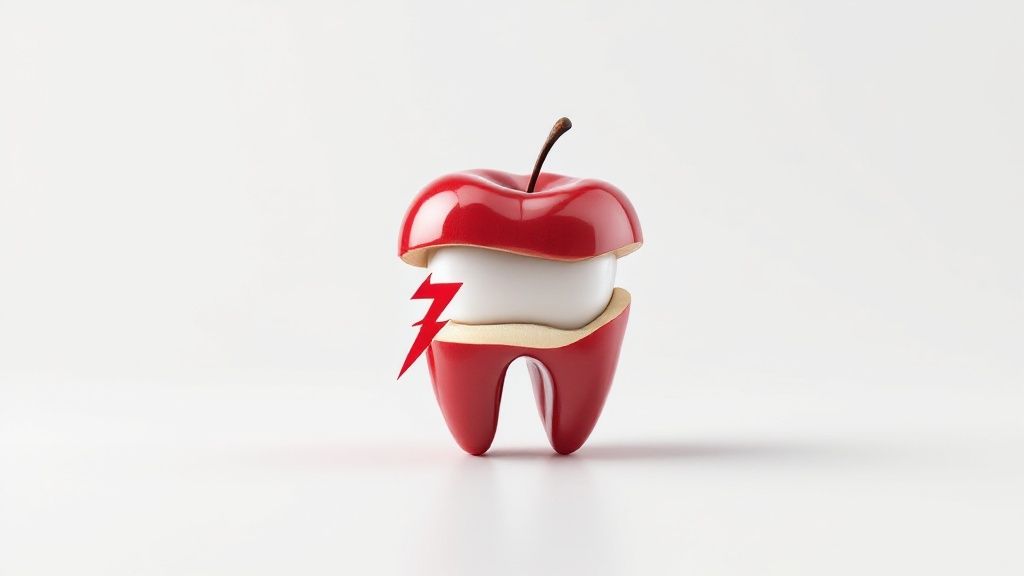
This type of focused pain is a critical indicator because it points to compromised nerve tissue. The pressure from biting compresses the inflamed area inside the tooth, triggering an intense pain response from the damaged nerve. Ignoring this can lead to the infection spreading to the bone and surrounding tissues, potentially causing a painful abscess. Many patients cross the border from San Diego seeking a top-tier Tijuana dentist when they experience this level of discomfort, knowing that prompt action is essential.
Why This Pain Signals a Problem
The pain you feel when biting is more than just an annoyance; it’s a clear distress call. The nerve inside your tooth is likely dying or already dead, and the pressure is irritating the highly sensitive tissues around the tooth’s root.
- Pulpitis: This is the inflammation of the pulp. In its early, reversible stage, it might cause sensitivity. However, sharp pain upon biting often indicates irreversible pulpitis, where the pulp cannot heal and root canal therapy is necessary to save the tooth.
- Abscess Formation: The pain could also be due to an abscess, which is a pocket of pus forming at the root tip. The pressure from biting pushes the tooth down into this infected pocket, causing excruciating pain.
Actionable Steps to Take
If biting down causes sharp pain, it’s a significant sign you might need a root canal. Take immediate, practical steps to manage the situation and prevent further complications.
- Avoid Chewing on the Affected Side: Immediately shift chewing to the opposite side of your mouth to prevent aggravating the damaged nerve.
- Document Your Symptoms: Note when the pain occurs, its intensity (e.g., sharp, dull, throbbing), and what triggers it. This information is invaluable for your dentist’s diagnosis.
- Use Temporary Pain Relief: Over-the-counter anti-inflammatory medications like ibuprofen can help manage the pain, but they are not a long-term solution.
- Schedule an Emergency Appointment: This symptom warrants immediate dental attention. Contact a reputable clinic, like those in Tijuana known for affordable and high-quality care, to get a diagnosis and treatment plan right away.
2. Prolonged Sensitivity to Hot and Cold Temperatures: A Root Canal Sign Treated by a Tijuana Dentist
A brief flash of sensitivity when eating ice cream is common, but when that discomfort lingers long after the food or drink is gone, it’s a major red flag. This prolonged, dull, or sharp ache in response to hot or cold temperatures is one of the classic signs you need a root canal. If the pain from a hot coffee or a cold drink lasts for 30 seconds or more, it often indicates that the pulp inside your tooth is damaged, inflamed, or infected. This is a clear signal that the tooth’s nerve is unhealthy and struggling to function correctly. For patients exploring the cost of full mouth restoration in Mexico, treating such underlying issues is a vital first step.
The reason for this extended pain is that the inflamed or infected pulp can no longer regulate its response to temperature changes. The nerve tissue becomes hypersensitive and sends continuous pain signals to your brain, turning simple pleasures like a morning coffee into a dreaded experience. This symptom often progressively worsens, and ignoring it can lead to more severe infection and pain. When this level of sensitivity arises, seeking prompt evaluation from a trusted Tijuana dentist is crucial to prevent further damage and save the tooth. Addressing this could be part of a larger plan for affordable dental implants in Tijuana, ensuring your mouth is healthy before restoration begins.
Why This Pain Signals a Problem
This lingering sensitivity is a direct communication from a compromised tooth nerve. A healthy nerve reacts to temperature but recovers almost instantly. A damaged nerve cannot.
- Irreversible Pulpitis: This is the most common cause. The pulp tissue is so inflamed that it cannot heal on its own. The prolonged pain response to both hot and cold stimuli is a textbook symptom, indicating the need for root canal therapy to remove the damaged tissue.
- Nerve Damage: Deep decay, trauma, or a crack in the tooth can expose and damage the pulp. This damage disrupts the nerve’s ability to handle temperature shifts, resulting in the lingering ache that signals a serious underlying issue.
Actionable Steps to Take
If you’re experiencing a lasting ache after a hot or cold stimulus, don’t wait for it to get worse. This is a clear sign your tooth needs professional attention.
- Avoid Extreme Temperatures: Stick to lukewarm food and beverages to avoid triggering the pain. This will provide temporary comfort while you seek a diagnosis.
- Time Your Sensitivity: When you do experience the pain, pay close attention to how long it lasts. Telling your dentist, “The pain lasted for a minute after drinking cold water,” is much more helpful than saying, “It hurts with cold.”
- Use a Soft-Bristled Toothbrush: Brush gently with lukewarm water to minimize irritation to the sensitive tooth.
- Schedule a Dental Evaluation Immediately: This symptom will not resolve itself. Contact your dentist for an urgent appointment to determine the cause and get the necessary treatment before the infection can spread. For more information, you can explore the causes of tooth sensitivity and why you shouldn’t ignore it.
3. Discoloration of the Tooth
While many people associate tooth discoloration with surface stains from coffee or wine, a distinct darkening of a single tooth is a serious warning sign. If a tooth begins to turn gray, brown, or even black, it often indicates a problem deep within the pulp. This internal discoloration happens when the nerve and blood vessels inside the tooth die due to trauma or infection. As the inner tissue breaks down, it releases pigments that stain the tooth’s dentin from the inside out, creating a lifeless, dark appearance that cannot be polished away.
This type of intrinsic staining is a clear sign that the tooth’s nerve is no longer healthy, even if there is no pain. The death of the pulp, known as necrosis, creates an environment where bacteria can thrive, leading to infection that can spread to the jawbone and cause an abscess. Many patients from Southern California seek out a trusted Tijuana dentist when they notice such discoloration, understanding that it signifies underlying damage that requires professional evaluation and treatment to prevent more severe complications. A root canal can save the tooth, and a veneer or crown can restore its natural color as part of a larger treatment plan.
Why This Discoloration Signals a Problem
A dark, discolored tooth is essentially a visual alarm bell. Unlike external stains that can be addressed with whitening treatments, this internal change points directly to pulp death, a primary reason for needing a root canal.
- Pulp Necrosis: This is the death of the pulp tissue. It can be caused by a deep cavity that reaches the pulp or by trauma, like a blow to the mouth, that severs the tooth’s blood supply. The byproducts of the decomposing tissue are what cause the dark staining.
- Internal Bleeding: Trauma can also cause bleeding inside the tooth. Just as a bruise on the skin changes color, trapped blood products inside the tooth can lead to a dark, permanent stain.
Actionable Steps to Take
If you notice one of your teeth changing color, especially to a grayish or dark hue, don’t dismiss it. Taking proactive steps is crucial for saving the tooth.
- Document the Change: Take clear photos of the tooth in good lighting. Monitor it over a few weeks to see if the discoloration worsens.
- Recall Any Trauma: Think back to any accidents or injuries involving your mouth or face, even if they seemed minor at the time. This information is vital for your dentist.
- Avoid At-Home Whitening: Do not attempt to use whitening strips or gels on the discolored tooth. These products only work on surface stains and will not address the internal problem. Learn more about professional dental whitening benefits to understand the difference.
- Seek a Dental Evaluation: Schedule an appointment immediately. This is one of the key signs you need a root canal, and early intervention can prevent the spread of infection and potential tooth loss.
4. Swelling and Tenderness in Nearby Gums
When the gum tissue surrounding a specific tooth becomes swollen, puffy, or tender to the touch, it’s often more than just a minor irritation. This localized inflammation is one of the most visible signs you need a root canal, signaling that an infection brewing inside your tooth’s pulp has begun to spread. The swelling is your body’s immune response fighting off bacteria that have escaped through the tip of the tooth’s root, indicating a serious underlying problem that requires immediate attention from a qualified dental professional.
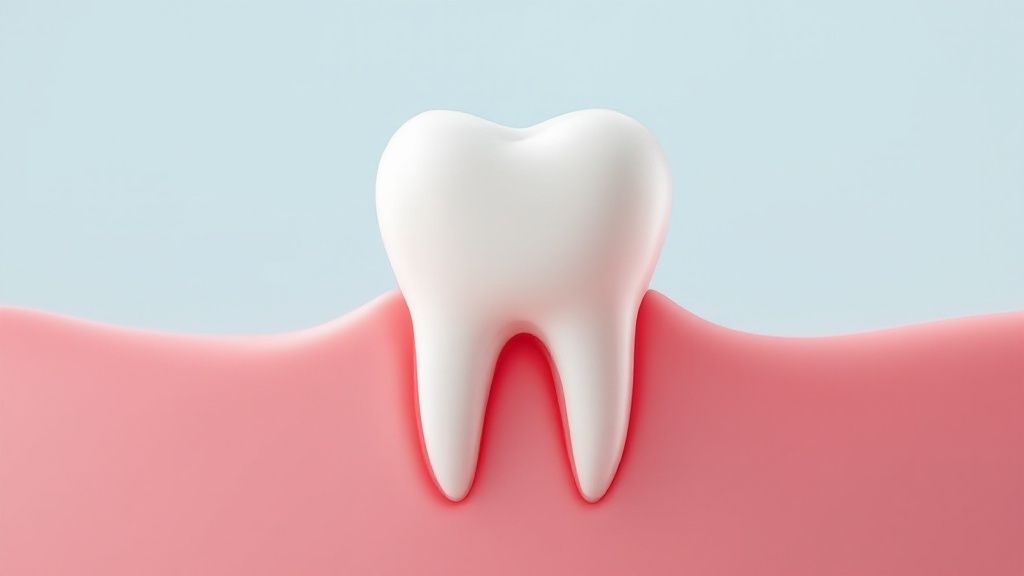
This symptom can manifest in several ways, from a small, pimple-like bump on the gum known as a fistula or abscess, to more generalized puffiness around the tooth. This is a critical warning because it shows the infection is no longer contained within the tooth and is now affecting the surrounding bone and periodontal tissues. Ignoring this can lead to bone loss, the infection spreading to other parts of your body, and eventually, the loss of the tooth. When this occurs, more complex treatments like dental implants Tijuana may become the only option.
Why This Swelling Signals a Problem
Gum swelling linked to a tooth infection is a clear sign that your body is fighting a losing battle. The infection has breached the tooth’s defenses and is establishing a foothold in the surrounding jawbone.
- Periapical Abscess: The most common cause is a periapical abscess, a collection of pus that forms at the root tip. This creates pressure that can lead to a visible, often painful, bump on the gums. Sometimes, this abscess will drain, providing temporary relief, but the infection remains and will continue to cause problems.
- Infection Spreading: The swelling signifies that the bacteria from the infected pulp have moved into the periodontal ligament and alveolar bone. This is a serious condition that, if left untreated, can have systemic health implications.
Actionable Steps to Take
If you notice persistent swelling or a bump on your gums, you must take it seriously as a potential sign you need a root canal. Here are the immediate steps you should follow.
- Rinse with Warm Salt Water: Dissolve half a teaspoon of salt in a glass of warm water and rinse your mouth gently. This can help reduce inflammation and provide temporary relief from the tenderness.
- Avoid Poking the Area: Do not press, poke, or try to “pop” any bump on your gums. Doing so can spread the infection and worsen the inflammation.
- Document the Changes: Take clear photos of the swollen area each day to track its size and appearance. This visual record can be extremely helpful for your dentist during the diagnosis.
- Seek Immediate Dental Care: Gum swelling is not a symptom to “wait and see” about. Contact a dentist immediately to have the tooth evaluated. This is an urgent sign that requires professional diagnosis and swift treatment to save the tooth and protect your overall health.
5. Deep Decay or Large Filling
The presence of extensive decay or an exceptionally large filling is a significant structural red flag and one of the clearest signs you need a root canal. When a cavity is left untreated, it progresses deeper into the tooth, eventually breaching the protective outer layers of enamel and dentin to reach the delicate inner pulp. This direct exposure allows bacteria to invade and infect the nerve, making root canal therapy the only way to save the tooth from extraction. This is a common issue seen by a Tijuana dentist when patients delay treatment due to cost or anxiety.
Similarly, a tooth with a very large filling has a compromised structure. Over time, the constant pressure of chewing can cause micro-fractures around the filling, or the filling material itself can irritate the nearby pulp. This sustained stress and proximity to the nerve can lead to irreversible inflammation (pulpitis), where the pulp tissue begins to die. At this stage, the tooth requires a root canal to remove the damaged pulp and prevent the infection from spreading into the jawbone. Many patients from areas like San Diego travel to Tijuana for this type of care due to the significant cost savings and proximity.
Why This Signals a Problem
A tooth’s structural integrity is crucial for protecting its inner nerve. Both deep decay and massive fillings weaken this natural defense system, leaving the pulp vulnerable.
- Bacterial Invasion: Deep decay acts as a direct highway for bacteria to enter the pulp chamber. Once inside, they multiply, causing a painful infection and abscess.
- Pulp Proximity: A large filling, especially a deep one, sits very close to the pulp. The heat generated during the filling procedure and the chemical properties of the materials can cause chronic inflammation that eventually kills the nerve. The structural weakness also increases the risk of the tooth cracking, exposing the pulp.
Actionable Steps to Take
If your dentist identifies deep decay or you have a tooth with a large, failing restoration, proactive steps are essential to avoid more severe complications.
- Do Not Delay Treatment: If decay is diagnosed, address it immediately. Delaying treatment allows the cavity to grow, turning a simple filling into a necessary root canal. Understanding that treating your cavities cannot wait is the first step toward preserving your tooth.
- Monitor Heavily Restored Teeth: Pay close attention to any tooth with a large filling. If you notice new sensitivity, discoloration, or pain, contact your dentist right away.
- Discuss Crowning Options: A tooth that requires a large filling or has just had a root canal is structurally weak. Discuss placing a dental crown with your dentist to provide long-term protection and prevent fractures.
- Schedule Regular Check-ups: Routine dental visits and X-rays are the best way to catch decay in its earliest stages, long before it has a chance to reach the pulp and require more invasive treatment.
6. Cracked or Chipped Tooth
A cracked or chipped tooth might seem like a cosmetic issue, but it can be a serious warning sign that you need a root canal. When a fracture extends deep into the tooth’s structure, it creates a direct pathway for bacteria to invade the sensitive inner pulp. This invasion leads to infection, inflammation, and significant pain, compromising the tooth’s health from the inside out. Even a hairline fracture, barely visible to the naked eye, can be enough to breach the tooth’s protective enamel and dentin layers.
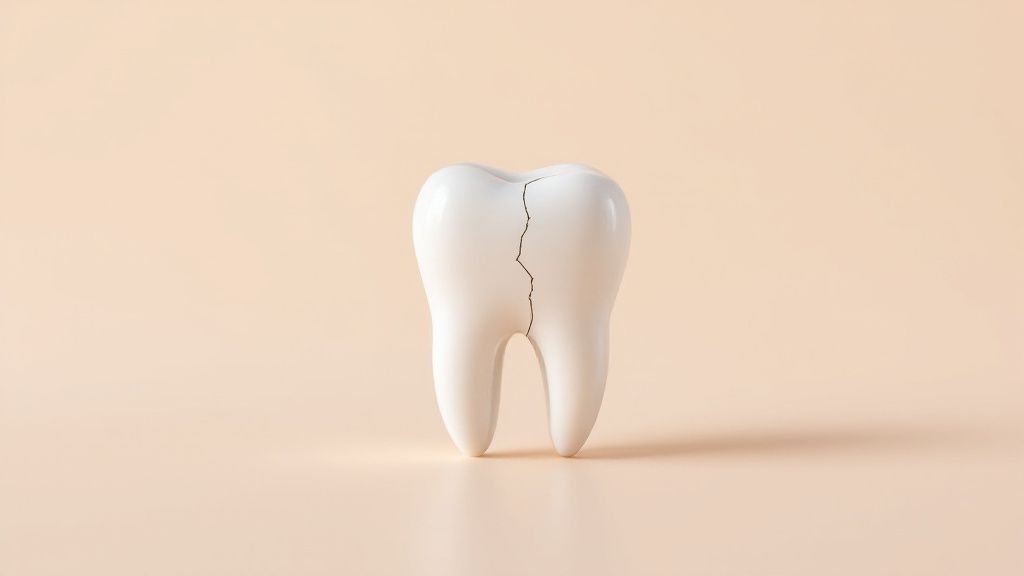
The severity and location of the crack are critical factors. A vertical crack, especially one that runs down to the root, is often more dangerous than a minor horizontal chip. When the pulp becomes infected due to a crack, the only way to save the tooth and prevent the infection from spreading to the jawbone is through root canal therapy. This procedure cleans out the infection, and often the tooth will need a crown to restore its strength and function. Many patients from Southern California choose a Tijuana dentist for this kind of restorative work due to the high-quality care and significant cost savings. The best Tijuana dentist for all on 4 will first ensure any compromised teeth are properly treated or extracted.
Why This Damage Signals a Problem
A crack is more than just a surface flaw; it’s a structural failure that exposes the tooth’s vulnerable core. The pulp, containing nerves and blood vessels, has no defense against the bacteria that constantly circulate in your mouth.
- Bacterial Invasion: Cracks act as superhighways for bacteria to travel directly to the pulp chamber, leading to a painful infection or abscess.
- Pulp Exposure: A significant chip or fracture can directly expose the pulp to your mouth’s environment, causing immediate and intense pain. This is a clear indication that the nerve is compromised.
- Hidden Damage: Some cracks, known as “craze lines,” are superficial. However, deeper cracks can be difficult to see and may only be detected on a dental X-ray after a patient reports unexplained pain.
Actionable Steps to Take
If you notice a crack or chip, or experience pain from a suspected fracture, take immediate action to protect your tooth and your health.
- Rinse Your Mouth: Gently rinse with warm salt water to help clean the area and reduce the risk of initial infection.
- Protect the Tooth: If there’s a sharp edge, you can temporarily cover it with dental wax (available at most pharmacies) to protect your tongue and cheek.
- Apply a Cold Compress: Use a cold compress on your cheek outside the affected area to help reduce any swelling and numb the pain.
- Seek Immediate Dental Evaluation: A cracked tooth is a dental emergency. It’s crucial to have it examined right away to determine the depth of the fracture and whether the pulp is involved. After a root canal, a custom crown is often necessary; you can learn more about the dental crown procedure steps here to understand how it restores your tooth’s integrity.
7. Persistent or Recurring Pimple on the Gums
Discovering a small, pimple-like bump on your gums that comes and goes can be puzzling, but it’s often one of the clearest signs you need a root canal. This bump, known as a gum boil or a parulis, is not a random irritation. It’s a fistula, which is a small drainage tunnel created by your body to release pus and pressure from an infection deep within the root of your tooth. The infection in the pulp chamber is creating an abscess, and this bump is its only escape route.
The recurring nature of this gum boil is a critical clue. It may seem to heal or disappear for days or weeks, but it inevitably returns because the source of the infection, the compromised nerve inside the tooth, remains untreated. Many patients seeking a Mexico dentist for complex procedures notice this symptom but may not realize its seriousness, especially since it can be surprisingly painless. However, ignoring it allows the infection to persist, leading to bone loss around the tooth’s root and risking the spread of infection to other areas.
Why This Pimple Signals a Problem
This seemingly small pimple is a direct window into a significant underlying issue. It signifies that an infection has become chronic and is actively trying to find an exit.
- Dental Abscess: The bump is the external opening of a dental abscess at the tip of your tooth’s root. The pus inside consists of dead white blood cells, bacteria, and tissue debris from the infected pulp.
- Chronic Infection: Unlike the sharp pain of an acute infection, a draining fistula often relieves pressure, making the tooth feel less painful. This lack of pain can be deceptive, as the chronic infection is continuously damaging the surrounding bone structure. While it can resemble other issues, it is important to distinguish it from a gingival cyst. Learn more about what is a gingival cyst and its causes on trustdentalcare.com.
Actionable Steps to Take
If you notice a recurring pimple on your gums, you must see a dentist to address the source of the infection. Here are the immediate steps you should take.
- Do Not Pop It: Resist the urge to pop or squeeze the bump. Doing so can introduce more bacteria into the area and potentially cause the infection to spread into your soft tissues.
- Rinse with Salt Water: A warm salt water rinse (half a teaspoon of salt in a glass of warm water) can help soothe the area and encourage temporary drainage, but it will not cure the infection.
- Document Its Behavior: Keep a note of when the bump appears, if it drains, and how long it lasts. This information helps your dentist confirm the diagnosis.
- Schedule a Dental Evaluation: This symptom is a definitive sign of a problem that requires professional treatment. Contact your dentist for an X-ray and examination to confirm the need for a root canal.
7 Key Signs Indicating Root Canal Need
| Sign / Symptom | 🔄 Implementation Complexity | ⚡ Resource Requirements | 📊 Expected Outcomes | 💡 Ideal Use Cases | ⭐ Key Advantages |
|---|---|---|---|---|---|
| Severe Tooth Pain When Biting or Chewing | Moderate – requires patient self-report & exam | Low – mostly clinical evaluation | High pain localization, indicates pulp compromise | Early detection of pulp damage | Clear, sharp symptom pinpointing exact tooth |
| Prolonged Sensitivity to Hot and Cold Temperatures | Low – simple patient-based observation | Low – no special tools needed | Early warning of pulp inflammation | Monitoring temperature sensitivity changes | Easily recognizable during daily activities |
| Discoloration of the Tooth | Low – visual inspection | Low – no advanced resources | Indicates pulp death even without pain | Cosmetic or trauma-related pulp necrosis | Visible sign, allows early cosmetic consultation |
| Swelling and Tenderness in Nearby Gums | Moderate – requires clinical assessment | Moderate – may need imaging or drainage | Confirms infection spread beyond pulp | Infection requiring urgent intervention | Clear visual indicator locating infection site |
| Deep Decay or Large Filling | Moderate – clinical and radiographic evaluation | Moderate – X-rays and restorative tools | Confirms need for intervention, prevents further damage | Routine dental checkups, cavity management | Preventable with regular exams, clear treatment indicator |
| Cracked or Chipped Tooth | Moderate to High – requires detailed exam & imaging | Moderate – X-rays and possible microscopy | Can preserve tooth if detected early | Trauma or wear causing structural compromise | Root canal + crown can save otherwise lost tooth |
| Persistent or Recurring Pimple on the Gums | Moderate – clinical exam, possibly imaging | Moderate – imaging and treatment needed | Indicates chronic infection requiring root canal | Chronic infections with intermittent abscesses | Provides drainage, signals urgent treatment |
Your Next Step: Why a Tijuana Dentist at Trust Dental Care is Your Best Choice
Recognizing the warning signs detailed in this article is the first crucial step toward protecting your oral health. From persistent, severe pain when you bite down to lingering sensitivity, tooth discoloration, or swollen gums, these are not symptoms to ignore. Each of these signs you need a root canal points to a serious underlying issue: an infected or inflamed pulp inside your tooth. Acting swiftly can mean the difference between saving a natural tooth and facing a more complex, costly extraction and replacement.
Ignoring these indicators allows the infection to spread, potentially leading to a painful abscess, bone loss in your jaw, or even systemic health problems. The good news is that modern root canal therapy is a straightforward, highly effective procedure designed to eliminate pain and preserve your smile. The primary obstacle for many patients, especially in the U.S. and Canada, isn’t the procedure itself but the staggering cost. This is where the landscape of dental care dramatically shifts in your favor.
The Smart Solution: High-Quality, Affordable Care in Tijuana
For patients seeking an accessible, world-class solution, a Tijuana dentist represents the pinnacle of value and quality. Located just across the border from San Diego, Tijuana has become a premier destination for dental tourism, offering advanced procedures at a fraction of U.S. prices. At Trust Dental Care, we specialize in providing exceptional treatments that are both affordable and adhere to the highest international standards. Our team includes U.S.-licensed dentists who are experts not only in endodontics (root canals) but also in complex procedures like full mouth restoration Tijuana and the revolutionary all on 4 dental implants Tijuana.
Choosing a Mexico dentist at our clinic means you no longer have to choose between your health and your finances. We leverage state-of-the-art technology, including digital X-rays and precision tools, to ensure your root canal is as comfortable and efficient as possible. By choosing us, you can save up to 75% on the cost of your treatment without compromising on safety, materials, or the expertise of your dental team. Don’t let the fear of pain or high costs prevent you from addressing these critical dental warnings. Your health is your most valuable asset, and we are here to make premium care a reality for you.
Don’t wait for the pain to become unbearable. If you are experiencing any of the signs you need a root canal, contact Trust Dental Care to schedule your free virtual consultation with a leading Tijuana dentist. Discover how our advanced, affordable treatments at Trust Dental Care can save your tooth and restore your peace of mind. Schedule your consultation with a Tijuana dentist today!