
DIY teeth whitening usually means lemon, vinegar, baking soda, charcoal, oil, or peroxide. Each method below is checked against what the American Dental Association’s whitening review reports, followed by the options a dentist can supervise.
The Short Verdict on Five Kitchen Remedies
Most kitchen remedies either do very little or lighten teeth by wearing enamel away. Acids soften the surface, gritty powders scrub it, and oil pulling has no measured whitening effect. Hydrogen peroxide is the one ingredient that truly bleaches, which is also why it is easy to overdo without a dentist checking your teeth first.
| Remedy | What it actually does | Main concern |
|---|---|---|
| Lemon juice or apple cider vinegar | Softens the outer enamel layer | Erosion that does not grow back |
| Baking soda paste | Polishes off some surface stains | Hard scrubbing wears enamel; no fluoride |
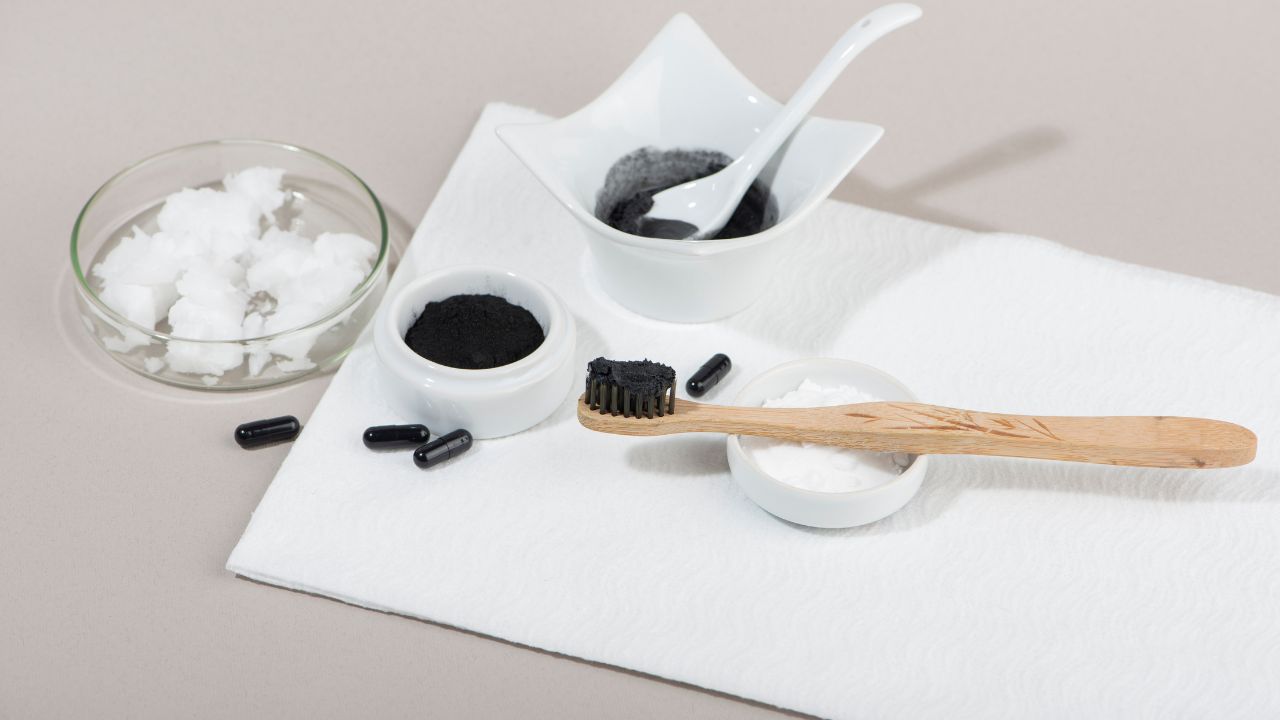
| Activated charcoal | Scrubs the surface; evidence of whitening is lacking | Abrasion that can expose yellow dentin |
| Oil pulling | No documented change in tooth color | Time spent on a method that does not whiten |
| Drugstore hydrogen peroxide | Bleaches stains inside the tooth | Sensitivity and gum irritation with overuse |
Whitening is not the only place where viral advice backfires; dentists raise similar concerns about the squirrel teeth trend.
Why Home Remedies Only Reach Surface Stains
Home remedies mainly work on stains sitting on top of the enamel, like coffee, tea, or red wine film. Color that comes from inside the tooth, including the natural yellow of dentin, only changes with a bleaching agent. That is why scrubbing harder rarely gets you the shade you are hoping for.
Surface stains versus deeper color
Extrinsic stains build up on the outside from pigmented food, drinks, or tobacco. Intrinsic stains sit within the enamel or dentin and can come from aging, fluorosis, or some medications taken while teeth were forming. Scrubs help a little with the first group and barely touch the second. Not sure what you are seeing? Here is how to tell a cavity from a stain.
Why do teeth look more yellow after scrubbing?
Because the white layer is getting thinner. Enamel is translucent, and the dentin under it is yellower. The ADA notes that as enamel thins with age, more dentin shows through. Abrasive or acidic remedies speed up that process, so teeth can look brighter for a few days and then more yellow.
Can crowns, veneers, or fillings be whitened?
No. Whitening only works on natural teeth, not on tooth-colored restorations. Bleaching the teeth around a front crown or bonding can leave it looking darker by comparison, so the shade should be planned first.
Acidic Remedies: Lemon Juice and Apple Cider Vinegar
Lemon juice and apple cider vinegar do not bleach teeth; they dissolve a thin layer of mineral from the surface. The ADA’s page on dental erosion describes acid wear as a progressive, irreversible loss of tooth mineral. Any brightening you notice is short-lived, while the lost enamel does not come back.
What does acid do to enamel?
Acid pulls minerals out of the enamel surface and leaves it softer for a while. Brushing right after, especially with a gritty paste, removes more of that weakened layer, and front edges can start to look thin.
Is diluted vinegar any safer?
Only slightly. Water lowers the strength, but it is still an acid, and the harm comes from repeated contact over weeks. Daily vinegar rinses keep teeth in frequent contact with acid, which is what raises erosion risk.
Signs your enamel may already be wearing
- Sharp twinges with cold drinks or sweets
- Front edges that look see-through
- Small dents or cupped spots on chewing surfaces
- Teeth that seem yellower even though you brush well
Abrasive Remedies: Baking Soda and Activated Charcoal
Baking soda can polish away light surface stains, while activated charcoal has no reliable proof that it whitens at all. Both work by friction, so the risk depends on how hard, how often, and how long you scrub. On teeth with receding gums, the softer root surface wears even faster than enamel.
Is baking soda safe to brush with?
In a toothpaste, usually yes. Baking soda is a mild abrasive, and toothpastes that contain it can lift coffee and tea stains. A homemade paste has no fluoride, is easy to scrub too hard with, and turns riskier when mixed with lemon. A fluoride toothpaste with baking soda is the safer swap.
What the evidence says about charcoal powder
Charcoal toothpastes, powders, and tablets are everywhere, but the ADA concludes there is not enough evidence that they whiten teeth safely and effectively. In one report it cites, a charcoal-and-salt mix left teeth with a yellow cast and deep grooves on the front surfaces.
Does the strawberry and baking soda trick work?
Not in testing. A study summarized by the ADA found no measurable whitening from a strawberry and baking soda mix, which also pairs a mild fruit acid with grit.
Oil Pulling: Low Risk to Enamel, No Proven Whitening
Oil pulling will not change the color of your teeth. The ADA’s MouthHealthy guidance on oil pulling states that no reliable studies show it whitens teeth or improves oral health. It is not harsh on enamel, but minutes spent swishing do not replace brushing twice a day with fluoride toothpaste and cleaning between teeth.
Why the ADA does not recommend it
Swishing coconut or sesame oil is a folk practice from India and South Asia that spread online with claims about whiter teeth. Because reliable research does not back those claims, the ADA does not recommend it for dental hygiene.
Is coconut oil pulling harmful?
For most people it is simply ineffective. The ADA review notes reported problems ranging from upset stomach and diarrhea to lipoid pneumonia. If you try it, keep brushing as usual.
Hydrogen Peroxide at Home: Where It Helps and Where It Hurts
Hydrogen peroxide does whiten teeth, because it breaks down colored compounds inside enamel and dentin. It also travels through the tooth toward the nerve, which explains the most common side effects the ADA lists: temporary sensitivity and gum irritation. Strength, contact time, and the health of each tooth decide whether it helps or hurts.
Is drugstore peroxide the same as dentist whitening gel?
Not quite. Drugstore bottles are usually labeled 3% and sold as antiseptic rinses, not whiteners. Professional gels are made to stay on the teeth while a dentist protects your gums. Swishing store peroxide gives little control over where it goes.
How does peroxide sensitivity feel?
Most people describe short, sharp zings with cold air or cold drinks. The ADA reports that this sensitivity is usually mild and fades after treatment ends. Pain that lingers or throbs is a reason to stop and have the tooth checked, because a cavity or crack may be letting peroxide reach the nerve.
When to see a dentist before any bleaching
- Anyone with untreated cavities or cracked teeth
- People with bleeding or swollen gums
- Anyone with receding gums or exposed roots
- People with crowns, veneers, or bonding on front teeth
Dentist-Supervised Whitening at Our Tijuana Clinic
Unlike DIY teeth whitening, supervised whitening puts a dentist in charge of the gel, the timing, and your gums. At our clinic, in-office whitening uses the Zoom system. A dentist can also point out cavities, gum problems, or restorations that would stay a different shade, so you know what to expect from the result.
What the in-clinic exam and cleaning cost
A comprehensive exam with X-rays and a treatment plan is listed at $60 on our published dental price list, and it is not free. A basic cleaning is also listed at $60. Ask during your virtual consultation which of these apply to your case.
In the chair versus at home
The ADA describes two professional routes in general: bleaching done in the dental chair and dentist-dispensed gel used at home. The option on our published price list is in-office Zoom whitening. For a closer look at the chair-side option, see Zoom teeth whitening in Tijuana.
Cost, Insurance, and Getting Here
In-office Zoom whitening at our clinic is listed from $249, and the virtual consultation is free. We accept PPO plans from Delta Dental, Cigna, Aetna, MetLife, Guardian, Humana, United Healthcare, Principal, and Ameritas. Whitening is often treated as cosmetic, so ask your insurer what applies before you book.
Does dental insurance cover whitening?
Often it does not, because most plans see whitening as cosmetic. Exams, X-rays, and cleanings are a different category, and some PPO plans include them. We accept the PPO plans listed above and can help you with the claim form; your insurer decides what it reimburses.
Getting to the clinic from the border
Transportation from the border to the clinic is free. For the return trip, carry a document accepted by U.S. Customs and Border Protection, such as a passport or passport card. Read more about transportation for dental patients in Tijuana.
Keeping Teeth Bright Without Wearing Them Down
A brighter shade lasts longer when you limit new stains and protect the enamel you have, mostly through small daily habits. If sensitivity has been a problem, our guide on whether teeth whitening hurts explains what is normal and what is not.
- Rinse with water after coffee, tea, red wine, or cola
- Use a straw for iced coffee and dark sodas
- Brush twice a day with a soft brush and fluoride toothpaste
- Skip daily scrubs with charcoal, baking soda, or citrus
- Keep regular cleanings to limit surface buildup