
Mercury Amalgam Fillings are the silver-colored restorations many adults still carry from older cavity repairs. This page explains what they are made of, what the U.S. Food and Drug Administration said in September 2020, when intact fillings should stay, and how a dentist decides if a change is clinically needed. It is education, not a plan to remove every amalgam in your mouth.
What Mercury Amalgam Fillings Are Made Of
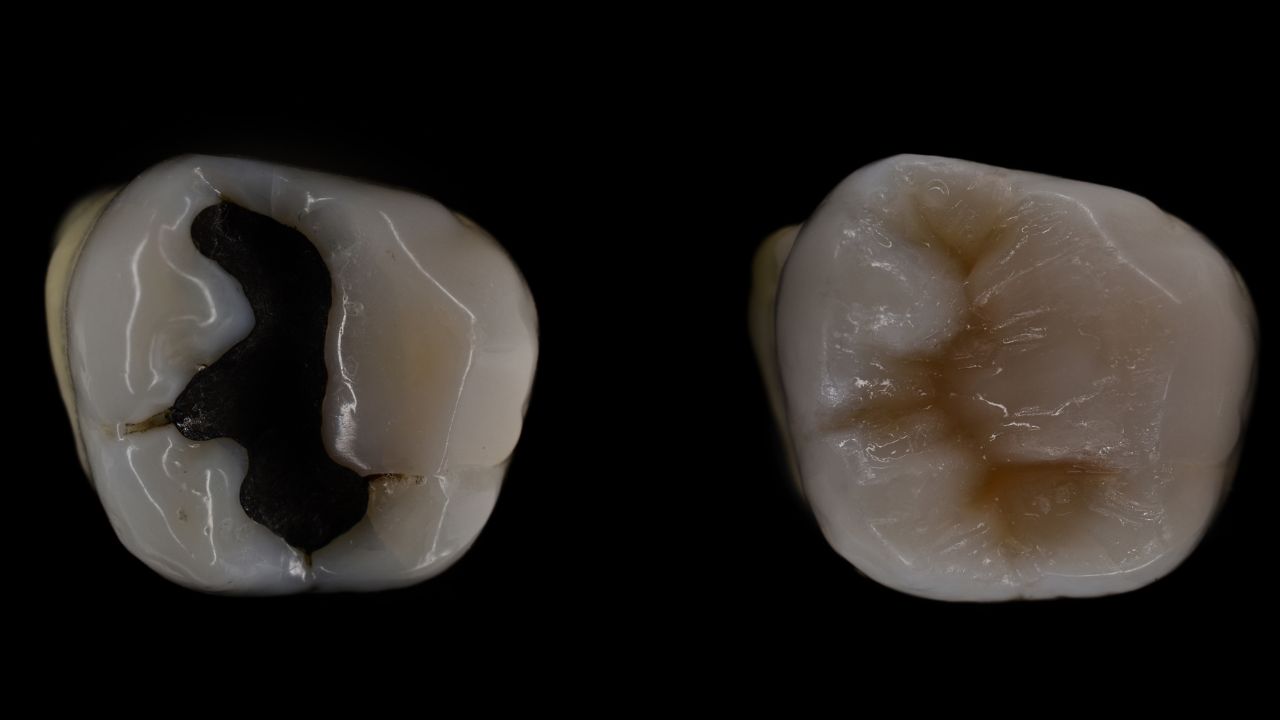
Dental amalgam is roughly half elemental mercury by weight, mixed with a powdered alloy of silver, tin, and copper. After it hardens, it is a durable metal restoration that dentists have used for more than a century. People often call it a “silver filling” because of its color, not because it is pure silver.
Mercury Amalgam Fillings can release small amounts of mercury vapor over time. How much depends on the number and age of the fillings and on habits such as grinding or heavy chewing. Swallowing tiny particles is not the main concern regulators discuss; inhaling vapor is. For most people, blood and urine mercury related to amalgam stay within ranges public-health agencies treat as low risk, though the picture is less clear for certain groups.
Are silver fillings the same as mercury fillings?
Yes, in everyday language. The dark metallic fillings that look silver are usually dental amalgam, and mercury is a required part of that mix. Tooth-colored options use different chemistry and do not contain that mercury alloy.
Do amalgam fillings always leak dangerous amounts of mercury?
No. Trace vapor is expected, and levels vary. The FDA states that studies in the general population do not show conclusive evidence that amalgam causes harmful health effects for most people. That is different from saying vapor is zero, and it is different from ignoring higher-risk groups.
What the FDA Said About Mercury Amalgam Fillings in 2020
On September 24, 2020, the FDA updated its advice for people who may face greater risk from mercury vapor. The agency recommended that those groups avoid getting new amalgam whenever possible and appropriate, and that they discuss non-mercury alternatives—such as composite resin or glass ionomer—when a new filling is needed and those materials fit the tooth.
The higher-risk groups named by the FDA include people who are pregnant or planning pregnancy, nursing parents, children (especially under age six), people with pre-existing neurological disease, people with impaired kidney function, and people with known heightened sensitivity or allergy to mercury or other amalgam components. The patient page on the FDA’s dental amalgam information for patients lists those groups and explains the limits of the evidence.
- Pregnant people and those planning pregnancy
- Nursing parents and their infants
- Children, especially younger than six
- People with certain neurological diseases
- People with impaired kidney function
- People with known mercury or amalgam-component sensitivity
The same guidance is summarized in the FDA’s September 2020 press announcement. Uncertainties remain for long-term exposure in those groups. That is why the agency tightened counseling language without telling every adult to strip out sound fillings.
Does the FDA say amalgam is banned for everyone?
No. The 2020 update focuses on counseling and material choice for higher-risk patients when a new restoration is planned. It does not order dentists to stop all amalgam use in every adult who is not in those groups.
Why Intact Mercury Amalgam Fillings Usually Stay
If a filling is intact, seals well, and your dentist finds no decay underneath, the FDA does not recommend removal just to reduce mercury. Cutting out a sound amalgam can release a temporary spike of vapor and remove healthy tooth structure. For people in higher-risk groups, intact fillings still should not be removed only to prevent a disease, unless a clinician decides removal is medically necessary.
The American Dental Association’s amalgam overview describes amalgam as a safe, durable, and affordable restorative option when it is clinically appropriate, while supporting a phasedown of use for environmental and practical reasons. ADA materials also stress discussing benefits and risks of all restorative choices with the patient. Neither FDA nor ADA frames elective stripping of sound amalgam as routine care.
When is removal still reasonable?
Replacement can make sense when there is recurrent decay, a crack or fracture through the filling, a broken margin, an allergic response documented by a clinician, or a restorative plan that already requires rebuilding that tooth. Those are tooth-specific reasons. Fear of mercury alone is not the same as a clinical failure.
Can removal expose you to more mercury vapor?
Yes, briefly. Placement and removal are the moments when vapor release is often highest. That is one reason regulators warn against removing intact amalgam without a medical or dental reason.
Alternatives When a New Filling Is Needed
When a cavity must be restored or an old filling has failed, dentists commonly discuss tooth-colored composite resin and, in some small lesions, glass ionomer. Composites can match shade and often conserve more tooth on placement, but they can be more technique-sensitive and may wear differently on heavy-load back teeth. Glass ionomers suit selected small restorations and can release fluoride over time. Amalgam can still be discussed for large posterior repairs when moisture control is hard or bite forces are high—except when you are in an FDA higher-risk group and a suitable alternative fits.
No single material wins every tooth. Longevity depends on decay risk, bite, hygiene, and how the restoration is placed. This page does not invent a clinic price for composite fillings; the public fee list does not publish a composite filling line item, so any quote belongs in a written plan after an exam.
Is a white filling automatically safer for every patient?
Not automatically. Resin materials avoid amalgam mercury, which matters for higher-risk groups and for patients who prefer that trade-off. They also carry their own limits, including possible sensitivity to certain monomers and variable longevity in high-stress spots. Your health history and the tooth’s size and location should drive the choice.
How Trust Dental Care Reviews Old Fillings
At Trust Dental Care, a U.S.-licensed dentist can start with a free virtual consult so you can share photos, symptoms, and questions before you travel. That consult does not replace an in-person exam. On the published fee list, a comprehensive exam with X-rays and a treatment plan is listed at $60. The visit maps decay, cracks, margins, and bite—not a blanket order to remove every example of Mercury Amalgam Fillings.
If you are coming from north of the border, the office offers a free transfer from the border for scheduled visits. That ride is logistics support. It is not a clinical result and it does not change how a tooth must be restored. Material choices are discussed tooth by tooth after the exam, without unverified branded removal claims on this page.
When decay is the real problem under or beside an old restoration, treating it early usually stays simpler than waiting. The clinic’s guide on why treating cavities cannot wait covers how decay progresses. For scheduling or paperwork help, contact the clinic.
Can a U.S. PPO plan help with restorative work here?
The office can help you complete claim forms for Delta Dental, Cigna, Aetna, MetLife, Guardian, Humana, United Healthcare, Principal, Ameritas, and most PPO plans. That is paperwork help. It is not a promise your insurer will pay a specific filling benefit.
A Practical Decision Checklist for Mercury Amalgam Fillings
Use this list before you agree to replace amalgam for mercury concerns alone:
- Has a dentist found decay, a crack, a failing margin, or a documented allergy?
- Are you in an FDA higher-risk group and planning a new restoration?
- Have you weighed vapor exposure during elective removal of an intact filling?
- Do you have a written plan that names the tooth, the reason, and the material?
- Have you avoided treatment claims you cannot verify on the office’s own service pages?
If the filling is sound and you are not changing it for a clinical reason, monitoring at regular exams is the usual path. If something hurts, chips, or traps floss, that is a reason to be seen—not a reason to attempt DIY removal.