
Dental implants, including advanced options like All on 4 dental implants, represent a significant investment in your health and confidence. Whether you’re considering a single implant or a full mouth restoration with crowns and veneers, understanding how to protect your smile is crucial. Many patients seek affordable, high-quality care from a Tijuana dentist or other clinics in Mexico, and while success rates are high with experienced professionals, being proactive about aftercare is non-negotiable.
Knowing the early dental implant failure signs is the most powerful tool you have for ensuring a lasting result. Recognizing a subtle warning sign can mean the difference between a simple, quick adjustment and a more complex, costly intervention. This guide is designed to empower you with that knowledge. We will detail the specific symptoms you must not ignore, from persistent pain and implant looseness to changes in your gums or bite. By understanding these critical signs, you can take swift action to protect your investment and maintain the healthy, beautiful smile you deserve for years to come. We’ll explore what these warnings mean and outline the immediate next steps you should take.
While some degree of discomfort and soreness is a normal part of the healing process after dental implant surgery, this initial pain should gradually subside. However, severe or persistent pain that lasts beyond the first 7-14 days is a significant red flag and one of the most immediate dental implant failure signs. This type of pain is distinct from typical post-operative soreness; it may be a deep, throbbing ache, a sharp, shooting sensation when you bite, or a constant pain that disrupts your daily life and doesn’t improve with standard pain medication.

This prolonged pain often indicates an underlying problem, such as an infection at the implant site, nerve impingement, or a failure of the implant to integrate with the jawbone (osseointegration). Ignoring it can lead to more complex issues, making early intervention critical.
It’s crucial to distinguish between expected healing discomfort and a genuine warning sign.
If you experience persistent or escalating pain, immediate and structured action is necessary.
Whether you received a full mouth restoration in Mexico or a single implant locally, persistent pain is a universal sign that requires professional evaluation to protect your investment and your oral health.
A properly integrated dental implant should feel completely stable and immovable, functioning just like a natural tooth root. Therefore, any detectable movement, wobbling, or looseness of the implant post or the crown attached to it is one of the most definitive dental implant failure signs. This mobility indicates a severe problem, such as a failed osseointegration process where the implant never fused with the jawbone, or a mechanical complication with the implant components.
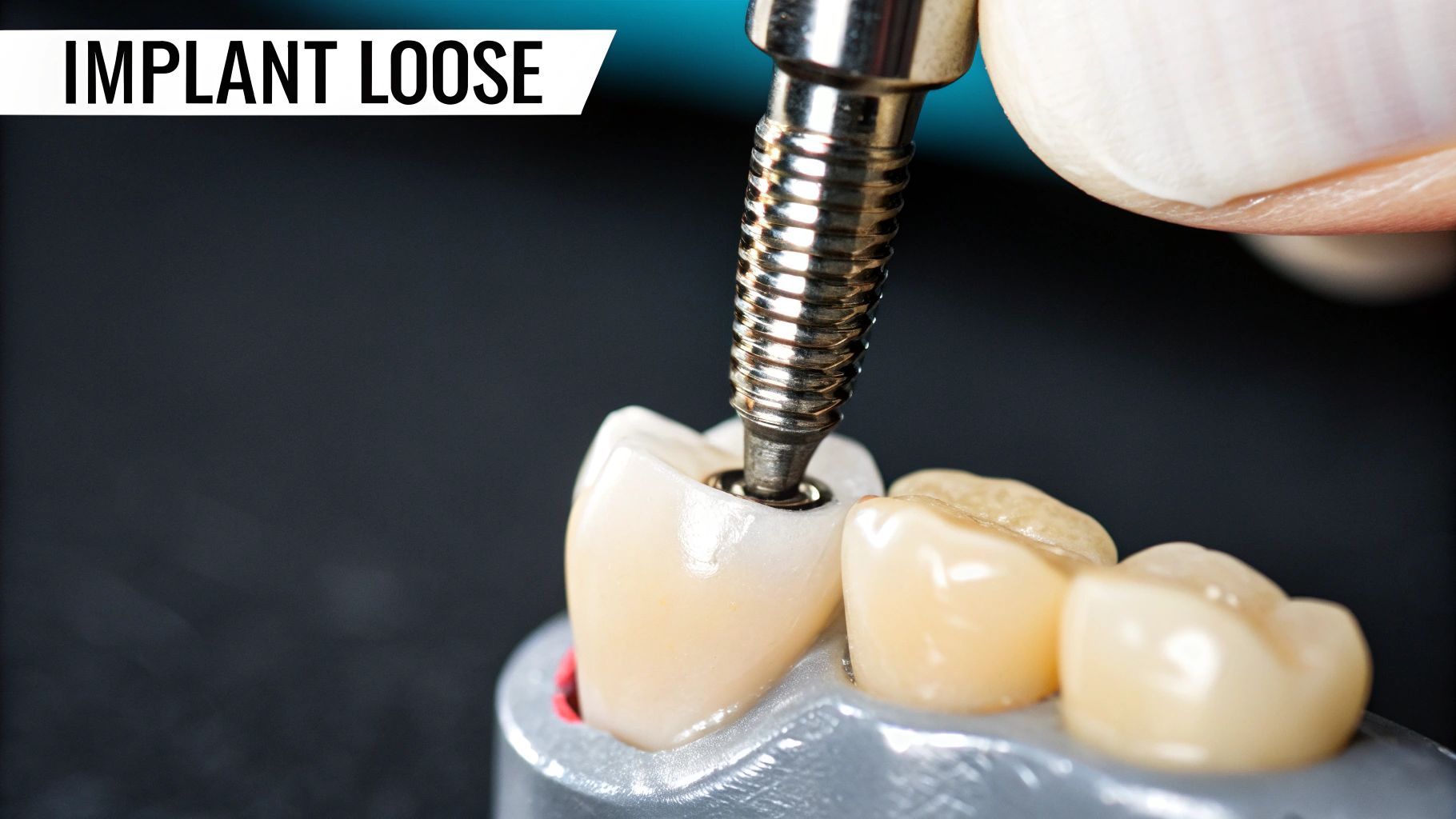
The feeling can be subtle at first but often becomes more noticeable over time. A healthy implant, whether part of a full mouth restoration or a single tooth replacement, should feel rock-solid. Looseness signifies that the foundational support of the implant is compromised, requiring immediate professional attention to prevent further bone loss or damage.
It’s vital to determine what exactly is moving, as the cause and treatment can differ significantly.
If you detect any movement in your implant, you must act quickly to address the root cause.
Whether your dental work was done in Mexico or elsewhere, a mobile implant is a universal sign that the foundation of your dental restoration is at risk and requires immediate expert care.
While some initial swelling is a normal reaction to the surgical procedure, it should peak within the first few days and then steadily resolve. However, persistent or recurring inflammation around the gum tissue of a dental implant is a critical warning sign. This is one of the most common dental implant failure signs, indicating a deeper problem that requires immediate professional attention. The affected area may appear puffy, red, and feel warm or tender to the touch, signaling an active inflammatory response long after the initial healing period has passed.
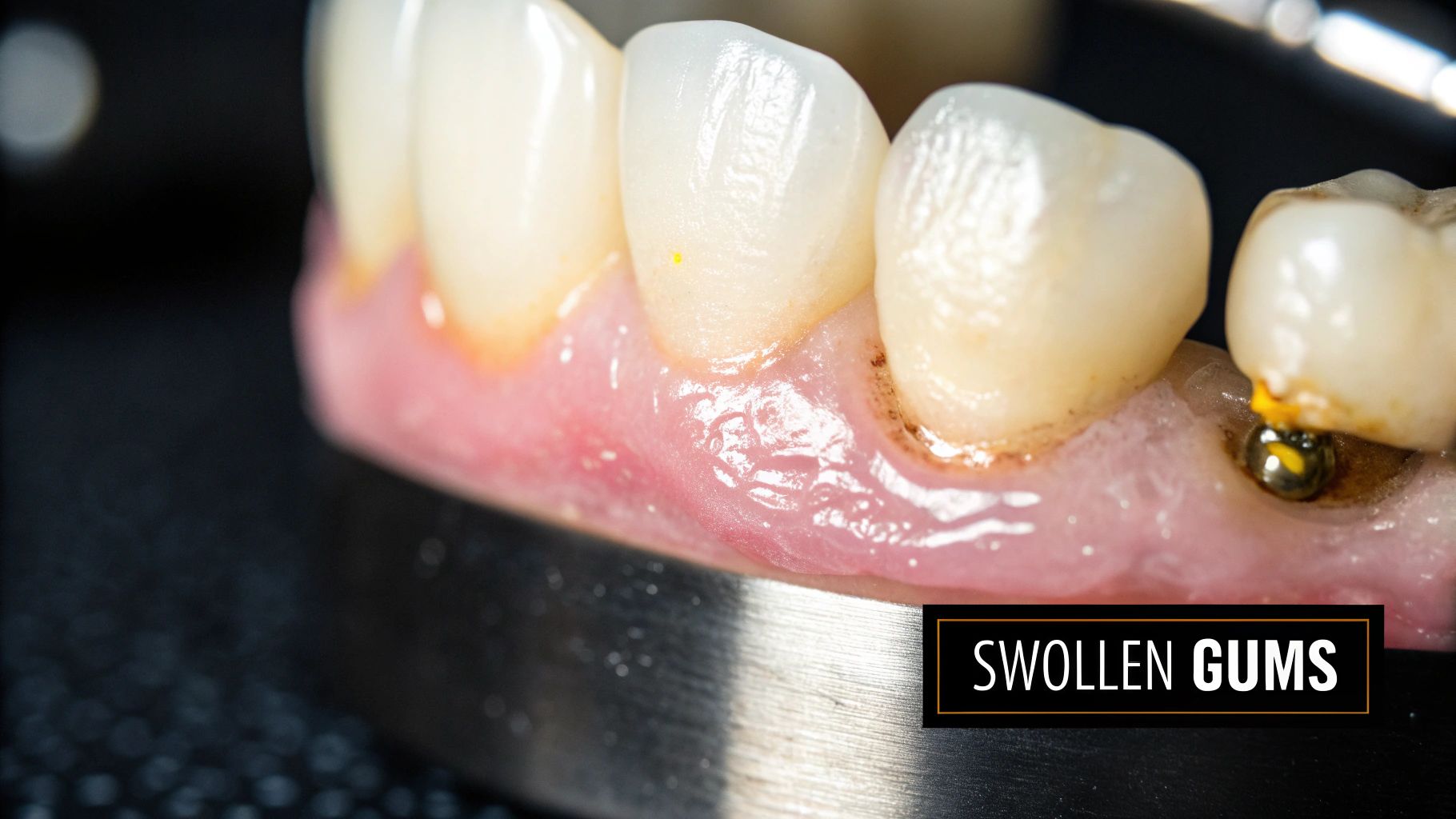
This kind of late-stage swelling often points to peri-implantitis, an inflammatory disease similar to gum disease that affects the tissues surrounding a dental implant. If left untreated, peri-implantitis can lead to the progressive loss of the supporting jawbone and the ultimate failure of the implant itself. It is a serious concern for any type of implant, from a single tooth to a complex full mouth restoration.
Knowing what to expect during healing helps you identify problems early. It’s vital to distinguish between normal post-op effects and a true warning sign.
If you notice ongoing or new swelling around an implant, you must take proactive steps to address it.
Whether you received All-on-4 dental implants in Mexico or a single implant elsewhere, abnormal swelling is a universal signal that your oral health and implant investment are at risk.
The presence of any fluid discharge, especially pus, coming from the gum tissue surrounding your dental implant is a definitive and serious warning sign. This discharge, known as suppuration, is a clear indicator of an active bacterial infection. The fluid may appear white, yellow, or be tinged with blood, and it is often accompanied by a foul taste or bad breath. This is one of the most critical dental implant failure signs because it points directly to peri-implantitis, an inflammatory condition that attacks the bone supporting the implant.
An infection at the implant site means your body is actively fighting bacteria that can destroy the bone-to-implant bond (osseointegration). If left untreated, this infection will lead to bone loss, implant loosening, and ultimately, the complete failure of the implant. Prompt professional intervention is essential to save the implant and prevent the infection from spreading.
It’s vital to recognize what constitutes a dangerous discharge versus normal post-surgical fluids.
If you notice pus or any unusual discharge around an implant, you must act swiftly and methodically.
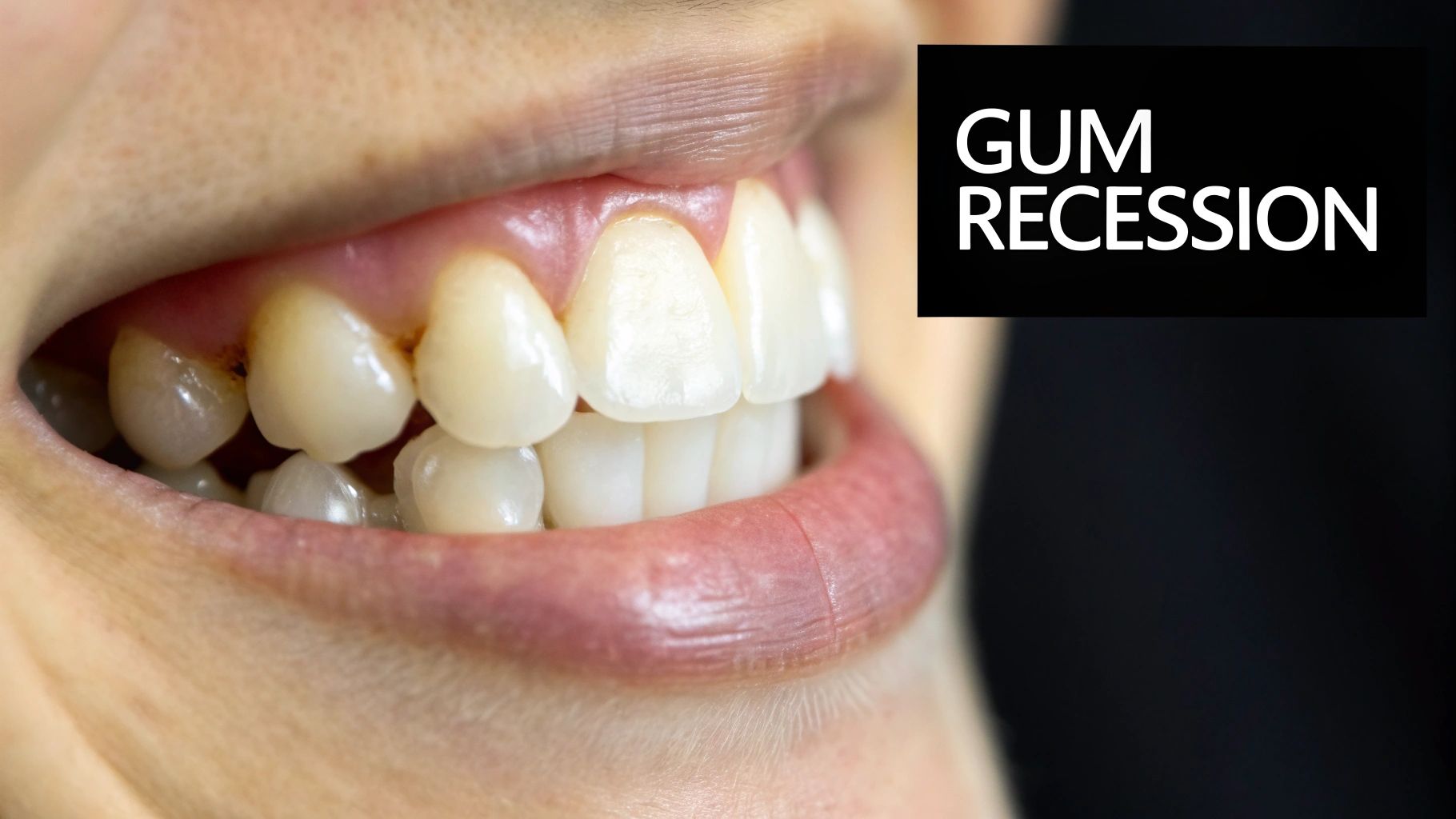
While minor changes in gum contours are expected as your mouth heals and adapts, significant gum recession around a dental implant is a serious concern. This is when the gum tissue pulls away, exposing more of the dental crown or, in advanced cases, the metallic implant post itself. This is a critical dental implant failure sign because healthy gums should form a tight, protective seal around the implant.
Progressive gum recession often points to underlying inflammation, such as peri-implantitis, a destructive disease similar to gum disease that affects implants. It can also be caused by poor oral hygiene, excessive brushing force, or biomechanical stress from an improperly placed implant. This issue compromises both the aesthetics and long-term stability of the implant.
It’s vital to differentiate between normal tissue remodeling and a developing problem that requires intervention.
If you notice your gums receding from your implant, taking proactive steps is crucial to prevent further damage and potential implant loss.
Whether you’ve invested in a complex full mouth restoration or a single implant, healthy gums are non-negotiable for success. Addressing recession early is the best way to safeguard your smile and your health.
A successful dental implant should function just like a natural tooth, allowing you to eat, speak, and smile with complete confidence. When you suddenly experience difficulty chewing, jaw fatigue, or a sensation that your bite has changed, it is a crucial warning and one of the most common dental implant failure signs. This isn’t just a matter of comfort; it points directly to potential problems with the implant’s stability or the prosthetic crown attached to it. The issue may present as an inability to bite into hard foods, a feeling that the implant crown is “high” and hits first, or a general awkwardness when your teeth come together.
These symptoms can indicate that the implant has failed to integrate with the jawbone, has become loose, or that the final restoration (the crown) was not positioned correctly. Ignoring these changes can lead to damage to the implant, opposing teeth, or even the temporomandibular joint (TMJ) due to an imbalanced bite.
It is vital to distinguish between the initial adjustment period and a genuine mechanical or biological problem.
If you notice any persistent changes in your chewing ability or bite alignment, taking methodical steps is essential for a proper diagnosis.
A proper bite is fundamental to the long-term success of any full mouth restoration. If chewing feels wrong, it’s a clear signal that something needs to be addressed to protect your new smile. When considering options, it is helpful to explore all avenues; you can learn more about different tooth replacement options and what to expect from each.
| Issue | Implementation Complexity 🔄 | Resource Requirements ⚡ | Expected Outcomes 📊 | Ideal Use Cases 💡 | Key Advantages ⭐ |
|---|---|---|---|---|---|
| Severe or Persistent Pain | Low – patient monitoring | Low – patient self-reporting | Early detection of implant failure, prevents complications | Post-implant surgery beyond 2 weeks | Easily recognizable; prompts timely action |
| Implant Mobility or Looseness | Moderate – requires clinical exam | Moderate – professional checkup | Definitive diagnosis of implant failure; requires urgent care | Routine dental exams; when mobility noticed | Clear, objective sign; allows early intervention |
| Swelling and Inflammation | Low – visible symptom | Low to moderate – patient care | Early indicator of infection or peri-implantitis | Persistent gum swelling post-surgery | Visible and monitorable; manageable if early |
| Pus or Discharge from Implant | Moderate – clinical assessment | High – urgent professional care | Confirms active infection; necessitates aggressive treatment | Presence of discharge or bad odor around implant | Clear infection marker; guides immediate treatment |
| Gum Recession Around Implant | Moderate – clinical evaluation | Moderate – ongoing professional care | Can be stabilized if treated early; may require surgical intervention | Visible or progressing gum recession | Early visual sign; responds to therapy |
| Difficulty Chewing or Bite Changes | Moderate – functional assessment | Moderate – dental adjustment | Identifies mechanical issues; improves function and comfort | Changes in bite or chewing function | Functional indicator; can guide corrective care |
Understanding the potential dental implant failure signs is your first and most powerful line of defense in protecting your investment in a healthy, functional smile. Throughout this guide, we’ve detailed the critical warning signs, from persistent pain and implant mobility to gum inflammation and difficulty chewing. Recognizing these symptoms early is not about causing alarm; it’s about empowering you to take swift, decisive action.
Ignoring a loose implant or dismissing ongoing swelling can turn a manageable issue into a complex problem, potentially leading to bone loss or the complete loss of the implant. The key takeaway is that your vigilance, combined with professional expertise, is the formula for long-term success. Your dental implant is a sophisticated medical device, and like any advanced technology, it requires proper monitoring and care.
If you experience any of the symptoms discussed, your immediate priority is to contact a dental professional. Do not wait for the problem to worsen. Early diagnosis is crucial for salvaging the implant and preventing more invasive and costly treatments down the line. A specialist can determine the root cause, whether it’s an infection like peri-implantitis, a mechanical issue with the abutment or crown, or a failure of the implant to integrate with the jawbone (osseointegration).
For patients who have invested in significant restorative work, such as All on 4 dental implants or full mouth restorations, this proactive approach is even more critical. These complex procedures require specialized care and maintenance. Seeking a consultation with a dentist experienced in these treatments is non-negotiable.
For many patients in the U.S. and Canada, accessing this level of specialized care can be prohibitively expensive. This is where exploring options with a Mexico dentist, particularly in a trusted hub like Tijuana, becomes a strategic advantage. Clinics in Tijuana are renowned for providing high-quality, affordable solutions for complex cases, including salvaging failing implants and performing intricate full mouth restorations with veneers and crowns.
By partnering with a reputable Tijuana dentist, you gain access to:
Ultimately, the goal is to maintain the beautiful, confident smile you worked hard to achieve. Being an informed and proactive patient is your greatest asset. By recognizing the signs of trouble and partnering with a trusted dental team, whether locally or in a specialized center like Tijuana, you are taking the most important step toward ensuring your dental implants last a lifetime.
Are you concerned about your dental implant or considering a full mouth restoration? The U.S.-licensed specialists at Trust Dental Care in Tijuana are experts in diagnosing and treating complex implant cases, using advanced technology to ensure the best possible outcomes. Contact Trust Dental Care today to schedule a consultation and take the first step toward securing your lasting smile.