
Imagine you break a tooth, or an old crown falls off, the week of an event you cannot reschedule: a wedding, a work trip, a family photo. With a traditional crown, the usual answer is a temporary cap and a two-week wait. With CEREC one-visit technology, the final ceramic crown can be designed, milled, and placed in a single appointment. This guide explains how it works, its real advantages and limitations, and when it is the right choice.
What Is a One-Visit CEREC Crown?
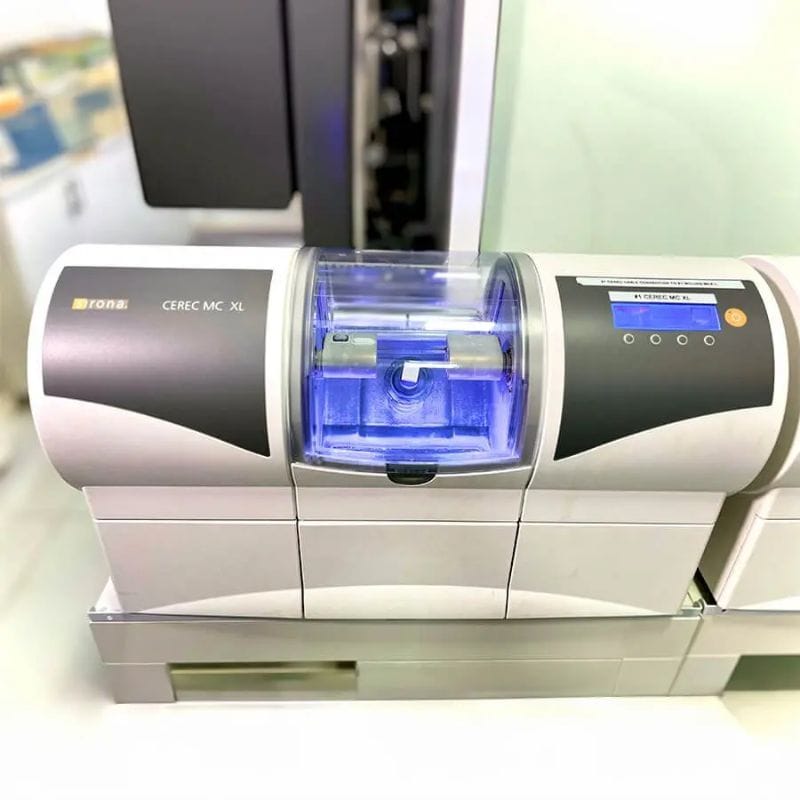
CEREC (Chairside Economical Restoration of Esthetic Ceramics) is a CAD/CAM system that designs and mills a ceramic crown right in the dental office. Instead of taking physical impressions and sending them to an external lab, the dentist scans the prepared tooth with an intraoral camera, designs the crown on a computer, and mills it from a solid ceramic block while you wait. The result is a permanent, metal-free restoration placed the same day.
Top 5 Pros of One-Visit CEREC Crowns
1. Quick tooth restoration
With a traditional crown, you wear a temporary for days or weeks, following a strict diet and chewing carefully to keep it in place. A one-visit crown eliminates that waiting period entirely: you leave the office with the final restoration already bonded.
2. Lower risk of injury while waiting
Temporary crowns do not always fit well and can loosen, which sometimes injures the gum or the prepared tooth. Skipping the temporary phase removes that risk. CEREC crowns also typically require less drilling, which preserves more of the natural tooth structure.
3. Protection against further decay from day one
A temporary crown that falls out leaves the prepared tooth exposed and vulnerable to decay. A same-day crown seals and protects the tooth from the first day and, with proper care, can last for many years.
4. A comfortable, precise fit
Temporary crowns are made of resin and rarely fit perfectly. CEREC crowns are milled from ceramic based on a digital scan of the tooth, which allows a customized fit and a natural feel when biting and speaking.
5. Fewer appointments, lower overall cost
Cutting the treatment from two or three visits to one reduces appointment fees, time off work, and travel costs. Patients comparing prices between countries can check the clinic’s published fee list for current figures instead of relying on percentage claims.
Cons of One-Visit CEREC Crowns
1. Porcelain-fused-to-metal crowns can be more durable
CEREC crowns are milled from a ceramic block. Traditional crowns can also be made from metal or porcelain fused to metal, and metal-based restorations resist fracture and wear better under heavy loads. For patients with severe bruxism, a conventional option may be the more suitable recommendation.
2. Fractures below the gum line
If a tooth fractures below the gum line, the intraoral camera cannot capture the margins accurately. In those cases, a conventional crown with traditional impressions is usually the better approach.
Are CEREC Crowns Suitable for Molars?
Yes, in most cases. Ceramic crowns perform well on molars, and their shade can be matched to neighboring teeth when placed in visible areas. Suitability depends on bite forces and the condition of the remaining tooth, which is why the evaluation includes imaging before a material is recommended.
How the One-Visit CEREC Process Works: 5 Steps
In the United States, the conventional process often takes two to three visits spread over several weeks. With in-office milling technology, the full procedure is completed in a single appointment:
- The tooth is prepared and shaped.
- A digital scan of the tooth is taken with the intraoral camera.
- The crown is designed on the computer to match your bite and neighboring teeth.
- The crown is milled from a solid ceramic block right in the office.
- The crown is fitted, adjusted, and permanently cemented.
Getting Your CEREC Crowns in Tijuana
Trust Dental Care offers dental crowns in Tijuana with one-visit CEREC technology, English-speaking staff, and metal-free materials, in Zona Río, minutes from the San Ysidro border. Fewer visits also mean fewer trips across the border. To find out whether a same-day crown fits your case, contact the clinic to request an evaluation.
Frequently Asked Questions About One-Visit CEREC Crowns