
US patients often research veneers in Mexico because ceramic and composite smile makeovers in Tijuana can cost less than comparable care a few miles north—while still depending on licensed clinicians, materials, digital design, and sterilization standards. At Trust Dental Care in Zona Río, cases are planned with a written treatment plan after exam and imaging, not on border-crossing alone.
This guide explains materials, a typical two-visit timeline for US travelers, safety checks to ask for, and how to read fees against the clinic’s published dental prices in Tijuana. For deeper material detail, see our pillar on porcelain veneers in Tijuana and the broader cosmetic dentistry in Tijuana overview.
Curious how veneers can refine perceived face shape? Read how veneers change face shape for planning notes and face-shape matching guidance.
Why US Patients Consider Veneers in Mexico
US patients consider veneers in Mexico mainly for lower fees. The fee per tooth is often lower than in many US cities, and Tijuana is a short drive from Southern California. The decision should still rest on materials, the dentist’s credentials, and a written treatment plan, not on price alone.
Every year, patients from California and other US states travel to Tijuana for cosmetic veneers when domestic quotes for a full set feel out of reach. In clinic, we routinely see travelers who were quoted roughly $15,000–$25,000 for ten porcelain units in major US cities and want a transparent comparison before they book.
One California teacher, for example, arrived after a San Diego quote above $20,000 for a full porcelain set. After virtual screening and two in-person visits, her E-max case was completed under a written plan with fees tied to the published list—illustrating how savings come from operating costs and logistics, not from inventing lower sticker prices in a blog table.
How to Read Veneer Fees Without Stale Tables
Read veneer fees by checking the clinic’s current fee list, not older comparison charts. Confirm what each quote includes: exam, X-rays, temporaries, lab work, and follow-up adjustments. Our current per-unit fees are on the dental prices in Tijuana page, and your final quote depends on how many teeth are treated.
Published clinic fees change; always confirm on the live fee list rather than relying on old comparison charts. As of the current dental prices in Tijuana page:
- Veneers: from $599 per unit
- E-max veneer: from $620 per unit
- 6+ crowns or veneers: from $500 per unit on qualifying multi-unit plans
- Smile makeover package (6 crowns or veneers): see the current package rate on the fee list
US retail ranges for porcelain/E-max often run roughly $1,200–$2,500 per tooth in many metro markets; your savings percentage depends on material count, prep complexity, and whether adjunctive care is needed. Prefer linking the fee list over hardcoding tables that go stale.
What This Guide Covers
This guide covers four things you can verify before booking. First, the materials, such as porcelain, E-max, or composite. Second, the steps from virtual consult to final bonding. Third, safety checks like credentials and sterilization. Fourth, how to read fees and insurance paperwork before you travel to Tijuana for veneers.
Traveling for dental care is a YMYL decision. The sections below focus on facts you can verify:
- Materials: porcelain/E-max versus composite—tradeoffs in longevity, staining, and visits
- Process: virtual consult, border logistics, digital design, prep, lab work, and final bond
- Safety checks: credentials, FDA/ADA-grade materials, CBCT/CAD-CAM when indicated, sterilization
- Costs: how to use the fee list and insurance paperwork without assuming reimbursement
For travel context, see why many US patients choose Tijuana for dental care.
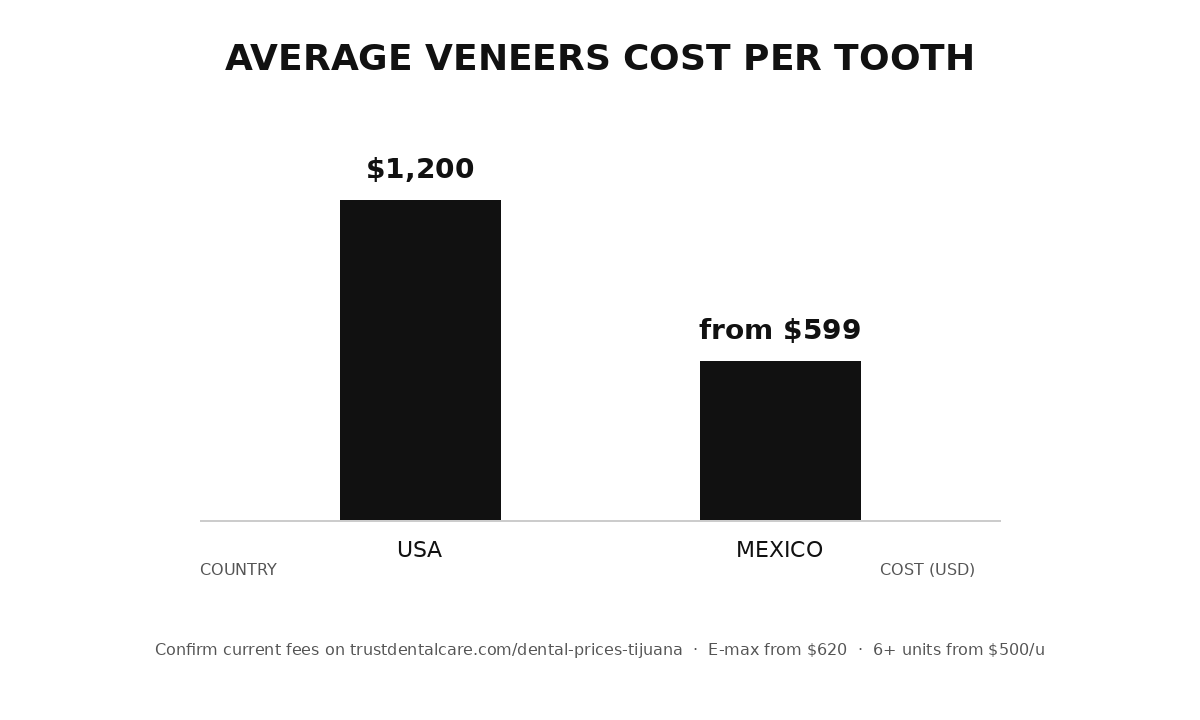
Average veneers cost per tooth — Mexico figures from the dental prices in Tijuana list (from $599; E-max from $620).
Veneer Materials: Porcelain (E-max) vs Composite
Material choice drives visit count, maintenance, and fee tier. At Trust Dental Care you can discuss the same ceramic families used in many US cosmetic practices; price differences reflect local costs, not a different “grade” invented for tourism marketing. Compare options in our types of dental veneers guide and the porcelain pillar linked above.

Porcelain (E-max) Veneers
E-max lithium disilicate is widely used when patients want high translucency and stain resistance. Placement typically requires removing a thin enamel layer so the shell sits flush; that prep makes porcelain cases irreversible and usually multi-visit.
- Aesthetics: light-handling similar to enamel when shade-matched carefully
- Durability: with appropriate bite management, many porcelain cases last 10–20 years; individual results vary
- Stain resistance: glazed ceramic resists coffee/tea staining better than most resins
Official E-max veneer fees start from $620 on the clinic list—confirm before you budget.
Composite Veneers
Composite is layered and sculpted chairside. It can address chips, small gaps, or mild discoloration, often with fewer visits and a lower fee tier than ceramic. It is more porous, so polishing or replacement every several years is common.
Clinic note: urgent front-tooth chips are sometimes restored with composite in a single visit when enamel and bite allow—useful when a wedding or event is days away—but porcelain remains the longer-wear option for full smile redesigns.
| Feature | Porcelain (E-max) | Composite |
|---|---|---|
| Material | High-grade ceramic | Tooth-colored resin |
| Typical lifespan | Often 10–20+ years with care | Often 5–7 years before refresh |
| Stain resistance | High | Needs more maintenance |
| Visits | Usually 2+ visits | Often same-day possible |
| Fees | See list (E-max from $620) | Ask for current composite quote |
Step-by-Step Veneer Journey in Tijuana
Most US porcelain cases follow a predictable path: remote screening, one prep visit with temporaries, lab fabrication, then a bond visit. Logistics from San Diego are short; many patients use clinic border shuttle options when offered.

Step 1: Virtual Consultation
Share smile goals, health history, and photos. You receive a preliminary range and a list of questions for your in-person exam—not a final fee until imaging and a written plan are complete. Schedule a consultation at trustdentalcare.com to start.
Step 2: Travel to Tijuana
Bring a valid passport for US re-entry by land. For San Diego–area travelers, the clinic can coordinate complimentary border transportation when available. Practical planning tips are in how to plan a dental trip to Tijuana from California.
Step 3: Digital Design and Prep
- Digital records: intraoral scans (and CBCT when indicated) map teeth and bite for smile design and mock-ups.
- Preparation: for porcelain, about 0.5 mm of enamel is typically reduced so veneers sit naturally at the gumline.
- Temporaries: provisional veneers protect teeth and let you test shape/length before the finals are milled.
From clinical experience at this practice, the digital preview appointment is when most patients feel the plan become concrete—seeing proposed length and shade on-screen before enamel reduction proceeds.
Step 4: In-House Lab Fabrication
An on-site CAD/CAM workflow can shorten turnaround versus shipping impressions to an outside lab. Same-day or next-day ceramic is possible for some units; full-arch aesthetic cases still follow the written schedule your dentist sets.
Step 5: Final Fitting and Bonding
- Remove temporaries and clean the prepared teeth
- Try each veneer for fit, shade, and occlusion before cementation
- Bond with resin cement under curing light; adjust and polish
This two-visit pattern is how many US patients complete porcelain work without a long stay. Outcomes still hinge on case selection and maintenance—not on marketing slogans.
Quality and Safety Checks for Dental Work in Mexico
Dental travel can be appropriate when you verify people, materials, and infection control—not when you choose solely on the lowest online number. For a focused safety checklist, read is it safe to get dental veneers in Mexico.

Credentials to Verify
Ask for professional licenses, continuing education, and cosmetic case experience. Trust Dental Care’s clinical leadership includes U.S.-licensed dentists and AACD membership; Mexico professional license details are listed on the author bio and clinic About pages. Treat credentials as documents to review, not as a promise of a specific aesthetic outcome.
Materials Traceability
Request brand/lot information for ceramics. This clinic’s policy is to use FDA- and ADA-recognized material categories such as E-max ceramics and medical-grade zirconia where indicated—not anonymous “generic” blocks. Document what is placed in your chart.
- No unnamed substitutes: materials should be identifiable in your record
- Traceable lots: porcelain blocks from known manufacturers with documented indications
Technology Used in Planning
CBCT adds 3D context when bite, roots, or bone questions matter. CAD/CAM milling supports precise ceramic contours under dentist supervision. Since 2012, this clinic has placed more than 15,000 veneers across cosmetic cases—an operational volume figure patients can ask the team to contextualize during consult, not a guarantee for any one smile.
Sterilization
Ask how instruments are autoclaved and how single-use items are handled. Hospital-grade autoclaves and documented cycles are baseline expectations for surgical and cosmetic suites serving cross-border patients.
How to Choose a Clinic for Veneers in Mexico
Choose a clinic for veneers in Mexico by checking eight points before you book. Confirm the dentist’s license and cosmetic training, sterilization, and material brands. Review before-and-after cases and patient reviews, and ask for a written, itemized treatment plan. A clear consultation and aftercare plan matter as much as the fee per tooth.
- Experience: ask how many veneer cases the dentist completes and see examples similar to your smile.
- Sterilization: ask how instruments are autoclaved and how single-use items are handled.
- Materials: ask which brands are used, such as Ivoclar e.max, and request that information in writing.
- Itemized quote: confirm it lists the exam, X-rays, temporaries, lab work, and follow-up adjustments.
- Portfolio and reviews: compare before-and-after photos with independent patient reviews.
- Consultation: make sure the dentist explains what veneers can and cannot change in your case.
- Logistics: plan for two visits, usually one to two weeks apart, and ask about transportation help.
- Aftercare policy: ask in writing what happens if a veneer chips or debonds.
Budgeting a Smile Makeover Against the Fee List
Per-tooth marketing numbers mislead when your plan needs ten or more units, bite equilibration, or whitening of opposing teeth. Use the live fee list and a written plan.
Illustrative math only (confirm live fees): ten E-max units at from $620 each would start near $6,200 before multi-unit discounts; qualifying 6+ plans list from $500 per unit. US metro quotes for ten porcelain veneers commonly span $15,000–$25,000. Package promotions (for example, six crowns/veneers) appear on the prices page when active—do not budget from outdated blog tables that understate current ceramic fees.
Insurance, Financing, and Policies
- US PPO paperwork: itemized receipts for out-of-network filing; reimbursement is not guaranteed
- Payment options: cards and listed financing partners per the prices page
- Price-match policy: ask the front desk for current terms if you have a comparable written quote
Bundling veneers with other needed care in one trip can reduce travel overhead; each procedure still needs its own diagnosis. More cost context: how much do veneers cost.
This article is for general information. It does not diagnose your case and does not replace an in-person exam, imaging review, and a written treatment plan.