
All-on-4 vs All-on-6 vs All-on-8 is a choice between three ways to anchor one fixed arch of teeth: 4, 6, or 8 implants. All three replace a full arch of missing or failing teeth with a fixed prosthesis. They are not the same option with different price tags. The implant count changes how chewing forces spread, how much bone is required, and how much backup the arch has if one implant is lost. This guide compares the three protocols on clinical fit, cost logic, and long-term care at Trust Dental Care in Tijuana.
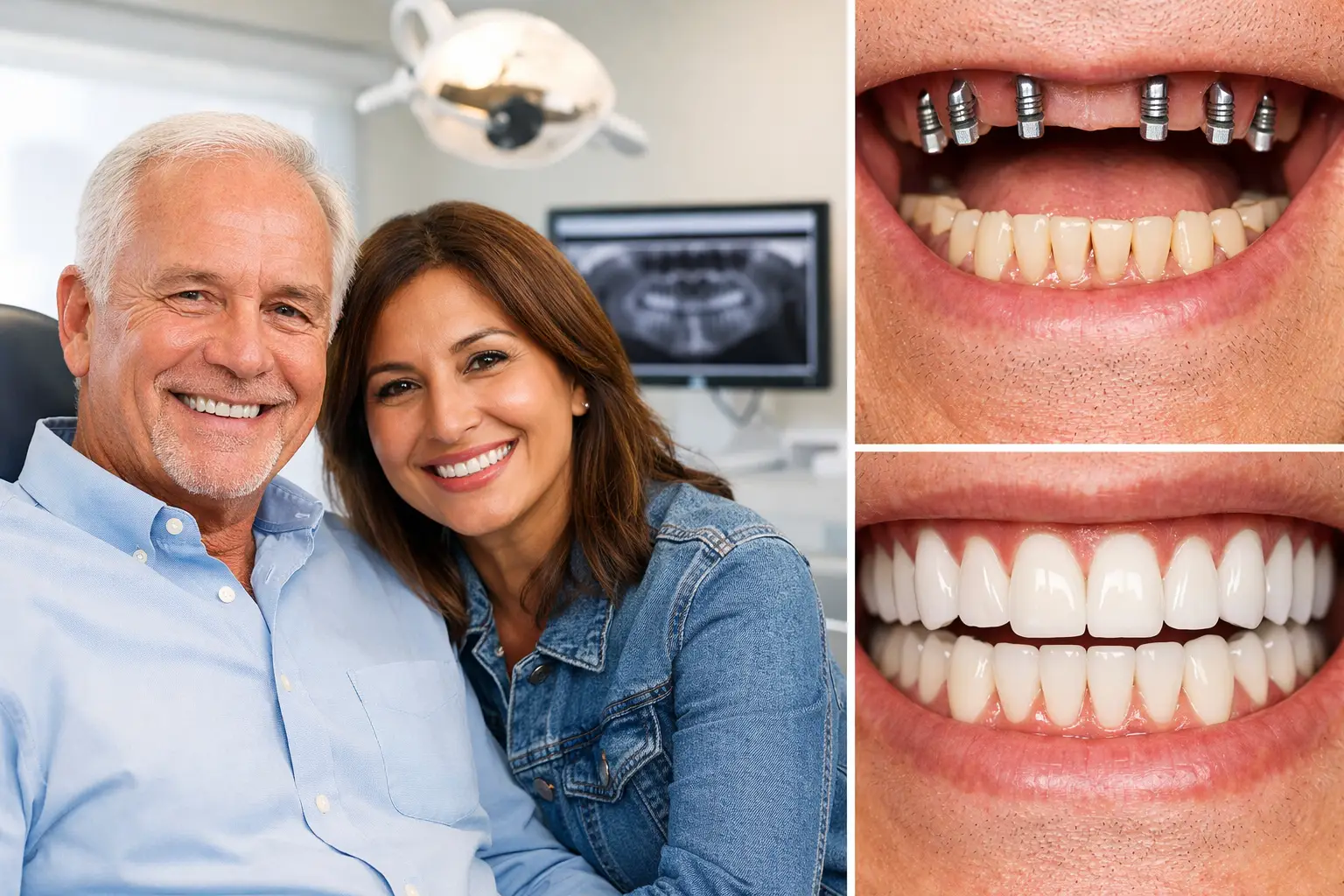
All-on-4 vs All-on-6 vs All-on-8 at a Glance
| Protocol (per arch) | Implants | Typical fit |
|---|---|---|
| All-on-4 | 4 | Reduced bone; angled back implants can avoid grafting in many cases |
| All-on-6 | 6 | Good bone volume; wider force distribution |
| All-on-8 | 8 | Abundant bone; eight anchor points spread force and add backup |
Current complete-package and placement-only fees for all three protocols are kept in one place: the full mouth dental implants cost guide and the clinic’s dental prices in Tijuana fee list.
How do the costs compare?
Each step up in implant count costs more, because it adds implants, components, and surgical time. What the extra implants buy clinically is force distribution. Chewing loads spread across more anchor points, which reduces stress per implant and gives backup if one implant is ever lost. For the current fee of each protocol, including what a complete package covers versus placement-only, see the full mouth implant cost guide.
Which One Fits Which Patient?
- Bone volume decides first. All-on-4 was engineered for reduced bone: two posterior implants placed at an angle avoid grafting in many cases. All-on-6 and All-on-8 need more available bone, confirmed with X-rays at the first visit.
- Bite force and bruxism matter. Heavy biters and grinders often benefit from more anchor points.
- Redundancy preferences. With four implants, losing one compromises the arch. With six or eight, the prosthesis can often be maintained while one site heals.
- Budget is a legitimate input. An All-on-4 that gets done beats an All-on-8 that stays unaffordable. All three are fixed, functional solutions.
- Existing hardware changes the plan. Old implants or a failing hybrid bridge are reviewed first, so bring your prior records and X-rays to the exam.
How does the exam decide between 4, 6, and 8 implants?
The exam decides between 4, 6, and 8 implants by checking your bone, bite, and health history against what each protocol needs. At Trust Dental Care, the in-person consultation costs $60 and includes an evaluation, full X-rays, and intraoral photos. Dr. Cirenia Aparicio Miranda reviews the findings with you. The dentist looks at five points:
- Bone height and width, especially in the back of the jaw.
- Gum health and any active infection that needs care first.
- Bite force, grinding, and the opposing arch.
- Existing implants, bridges, or dentures that change the plan.
- General health factors such as diabetes or smoking.
The written plan then names the protocol, the arches treated, and each fee-list line before surgery. If you want to share photos and records before traveling, a virtual consultation is available. The final choice is confirmed in person.
Questions to Ask Before You Choose a Protocol
A clear answer to each of these questions makes All-on-4 vs All-on-6 vs All-on-8 quotes from any clinic easier to compare:
- How many implants do you recommend per arch, and why?
- Does the quote cover a complete package or placement-only?
- Is bone grafting or any extraction included, or listed separately?
- What material is the final fixed denture made of?
- What happens if one implant needs to be replaced later?
- What does follow-up look like after you return home?
Ask for the answers in writing. Compare quotes only when each one lists the same phases, from extractions to the final teeth.
What Stays the Same Across All Three
What stays the same across all three protocols is the 5-step workflow: exam, written plan, surgery, healing, and final teeth. The final teeth come from the clinic’s own laboratory. At Trust Dental Care, it starts with an exam with X-rays and a written plan. Extractions and placement happen in one surgical phase. A temporary prosthesis is worn during a healing period set in your plan. The All-on-6 guide goes deeper on the middle option.
Daily Care Is the Same for All Three
Home care does not change with the implant count. Clean around the fixed teeth every day with a water flosser or floss threaders and a non-abrasive toothpaste. Keep regular maintenance visits so the dentist can check the gums, the screws, and the bite. The FDA guide to dental implants notes that regular cleaning of the implant and nearby teeth is very important for long-term success. If a screw feels loose or a tooth chips after you return home, send clear photos to the clinic. The team reviews them and schedules a visit.
The Bottom Line
The right protocol is the one your bone supports and your budget can sustain. That choice is made after an exam and X-rays, not from a price table alone. Request a written treatment plan, and the comparison stops being abstract.