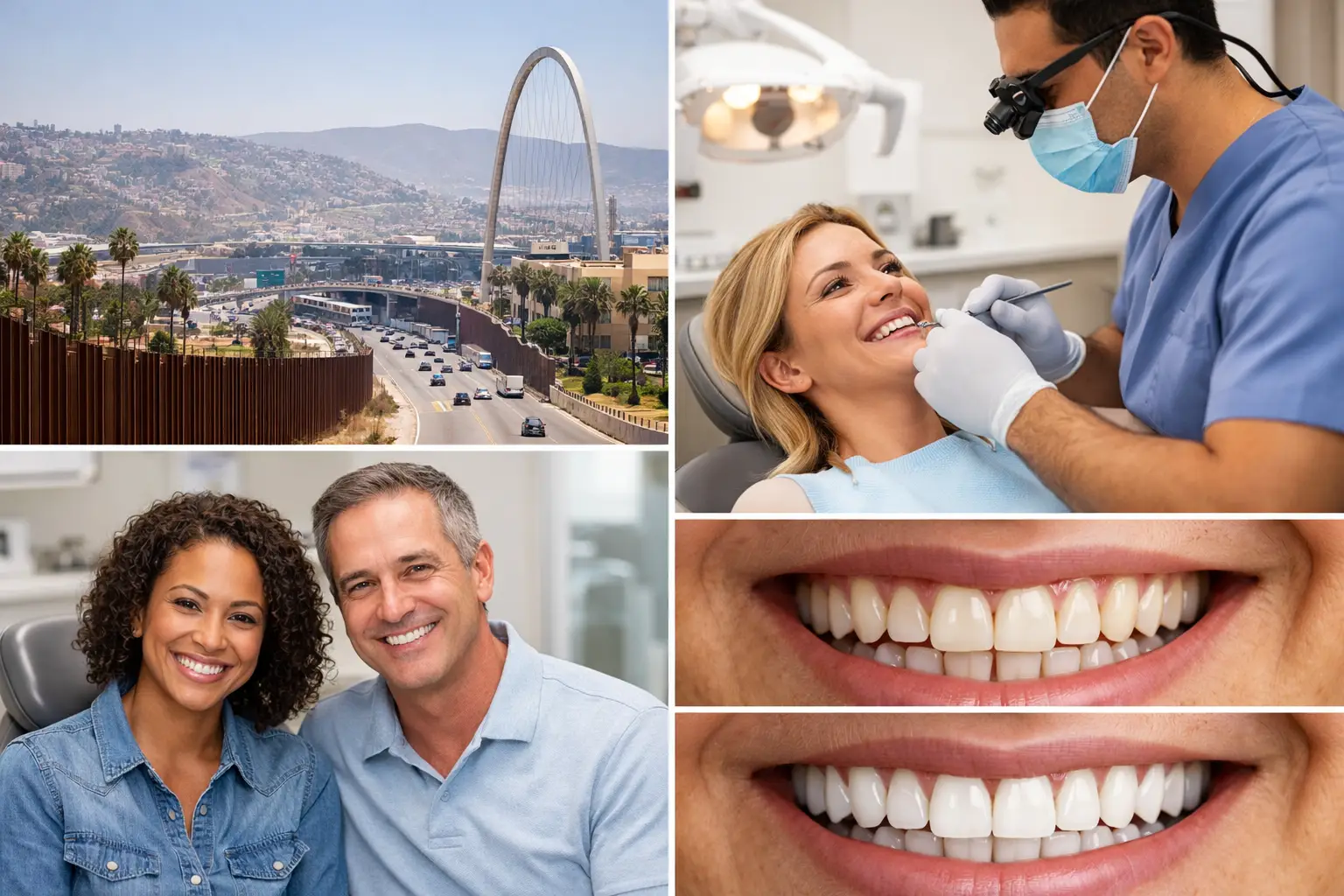
Medical tourism for dental care, often called dental tourism in Mexico, has grown because many patients in the U.S. and Canada face high fees or limited coverage at home. Below you will find costs, destinations, how to choose a clinic, the main risks, and what your trip looks like.
Why do patients travel to Mexico for dental care?
Cost is the main reason. Lower rent, wages, and lab fees let many Mexican clinics charge less than U.S. offices for the same type of treatment, and short drives from California, Arizona, and Texas make return visits practical. Other common reasons include:
- Shorter waits for appointments
- Bilingual teams used to U.S. patients
- The chance to group several treatments into one trip
Lower fees without skipping steps
Lower fees should come from lower operating costs, not from shortcuts in care. In Tijuana, rent, staff wages, and training costs are generally lower than in Southern California, which explains much of the difference. A careful clinic still takes X-rays, explains your options, and gives you a written plan before treatment starts.
If a quote seems far below the rest, ask what it leaves out. Missing imaging, temporary teeth, or follow-up visits often appear later as extra charges.
You can protect yourself by asking for an itemized plan in writing. It lets you compare clinics fairly and see exactly what you are paying for.
Shorter waits and flexible scheduling
Shorter waits are a real benefit for many patients. In Tijuana, you can often book an exam within days instead of waiting weeks for a specialist at home.
Clinics that treat many U.S. patients are used to grouping treatments into fewer visits. That can mean a cleaning, an exam, and a filling on the same day.
This flexibility helps if you have limited time off work or care for family. Ask the coordinator to build the schedule around your dates.
Is it worth the trip for small treatments?
Yes, it can be worth the trip for small treatments, especially if you live near the border. A short drive from San Diego costs far less than a flight, so even a cleaning or filling can make sense.
For patients who must fly, small treatments alone may not offset travel costs. In that case, many people combine several needs into one visit.
A common approach is to start with an exam and cleaning. You get to know the clinic first, then decide about bigger work with more confidence.
How much does dental care cost in Tijuana?
Dental care in Tijuana is priced per treatment, and your final cost depends on your exam and plan. At Trust Dental Care, an exam with X-rays starts from $60 and a single implant placement from $799, according to plan. Full-arch packages cost more because they include several stages.
Sample fees from our fee list
Sample fees are published on our Dental Prices Tijuana fee list, updated as of October 2026. The table below shows common treatments so you can plan a realistic budget.
Prices are a starting point, not a final quote. Your written plan confirms which treatments you need after the exam and imaging.
Keep this table handy when you compare offers. It makes it easier to spot quotes that leave out key steps.
| Treatment | Listed fee (USD) |
|---|---|
| Comprehensive exam + X-rays + treatment plan | $60 |
| Basic cleaning / deep cleaning (full mouth) | $60 / $200 |
| Root canal treatment | $350 |
| E-max crown / zirconia crown | $599 / $650 |
| Dental implant (placement only) | $799 |
| Full dental implant | $1,999 |
| All-on-4 complete package | $10,499 |
| All-on-6 complete package | $13,499 |
How implant quotes are built
Implant quotes are built from separate lines: the implant post, the abutment, and the crown. “Placement only” covers just the post, while the abutment (from $399) and implant crown (from $650) are added on top.
Full-arch packages work differently. The All-on-4 complete package bundles extractions, four implants, temporary and final teeth, and transportation from the border.
Always ask which base a quote uses. Two prices that look very different may simply include different steps.
How do you compare a U.S. estimate?
Match the same items line by line. Check whether each quote includes imaging, extractions, bone grafts, temporary teeth, and the final crown or bridge.
Ask both offices for treatment codes if possible. Codes make it clear when two quotes describe the same procedure.
Once both lists match, the difference you see is real. That gives you a fair basis for your decision.
Which Mexican cities are known for dental tourism?
Tijuana, Los Algodones, Mexicali, and Cancún are the Mexican cities most often linked to dental tourism. Border towns suit short visits and staged treatment, while resort cities suit patients who want to add a vacation. The right fit depends on where you live, how many visits you need, and your budget.
Tijuana for California patients
Tijuana is a practical choice for California patients because it sits right next to San Diego. Many people cross by car, on foot, or with clinic transportation.
Being close makes multi-visit care easier. Implants, for example, usually need a second trip after healing, and a short drive keeps that manageable.
You can often finish an appointment and sleep at home the same night. That comfort matters during recovery.
Los Algodones, Mexicali, and Cancún
Los Algodones, Mexicali, and Cancún each serve a different group of patients. Los Algodones, near Yuma, Arizona, has many dental offices for its size and is popular for day trips.
Mexicali, across from Calexico, is convenient for patients in the Imperial Valley. It works much like Tijuana for short visits.
Cancún is reached by direct flights and attracts patients who want to combine treatment and travel. Longer flights make repeat visits harder, so it suits single-trip plans.
How do you choose a trusted dental clinic in Mexico?
Start with the dentist who will treat you. Ask for each dentist’s name, license number, and training in your procedure, and request an itemized written plan before you pay. Then compare these points between clinics:
- Written treatment plans
- Sterilization practices
- Imaging and technology
- Follow-up care after you return home
Check licenses and training
Every dentist in Mexico holds a professional license number, called a cédula profesional. Ask for it, along with any specialty training in implants, surgery, or prosthetics.
You can confirm license numbers through Mexico’s public registry of professional licenses. A clinic that shares them openly is a good sign.
Ask who will actually perform your procedure. That person should be the one whose training you checked.
Which credentials and memberships should you verify?
Credentials and memberships are worth verifying with documents, not just a logo on a website. Ask the clinic to show proof of anything it lists, and check that it applies to the dentist who will treat you.
A membership is not the same as a license. The cédula profesional is the legal requirement, while associations and certifications show extra training or quality processes.
Use this checklist when you compare clinics:
- Education from a dental school recognized by the American Dental Association (ADA) or an equivalent body
- Membership in the Asociación Dental Mexicana (ADM)
- Implant training or membership, such as the International Congress of Oral Implantologists (ICOI)
- ISO certification for clinic quality or sterilization processes
If a clinic cannot show a credential it advertises, treat that as a reason to keep comparing.
Questions to ask before you book
The right questions before you book help you avoid surprises. Use this list during your consultation and write down the answers.
Clear, specific answers show a clinic that plans carefully. Vague answers are worth a second look.
Requirements to confirm:
- An itemized plan with the number of visits
- The imaging the dentist will use to plan implant cases
- The crown materials and labs used
- A contact person after you go home
- Written warranty or follow-up terms
For patients who prefer biocompatible materials, our guide on choosing a biodental or holistic dentist in Tijuana covers extra questions.
Red flags to watch for
Red flags include pressure to decide the same day and refusal to share license numbers. Vague quotes and no written plan are also warning signs.
Be careful with offers that seem built around a single low price. Good care is planned around your mouth, not a promotion.
Trust your instincts. A careful clinic welcomes your questions and gives you time to think.
What are the risks of dental tourism in Mexico, and how do you lower them?
The main risks of dental tourism are uneven quality, harder follow-up, and travel delays, and planning lowers each one. The U.S. Centers for Disease Control and Prevention lists questions to review before any treatment abroad, including infection control and continuity of care.
Quality varies between clinics
Quality varies between clinics in Mexico, just as it does in the U.S. Not every office follows the same sterilization and safety routines.
Ask how instruments are cleaned and whether single-use items are used. A clear answer shows the team takes infection control seriously.
The CDC page on medical tourism is a helpful checklist. It covers vaccines, records, and questions to ask before you book.
Planning follow-up care from home
Follow-up care from home works well when you plan it before treatment. Ask the clinic how they handle questions, photos, and adjustments after you leave.
Many issues can be solved with instructions or a short return visit. Keep the clinic’s contact details where you can find them easily.
It also helps to keep a local dentist informed. Bring home copies of your X-rays and treatment notes so anyone can see what was done.
Travel and recovery factors
Travel can affect healing, so plan your schedule around recovery. Long flights, border waits, and flying soon after surgery all add strain.
Your dentist will tell you when it is reasonable to drive or fly. Follow that advice even if you feel fine.
Leave buffer time in your plans. An extra night can make the trip home much more comfortable.
Keep the first days after surgery quiet. Rest, stick to soft foods, and stay close enough to come back for a check if something feels off. Save longer outings, like a drive to Valle de Guadalupe or the coast, for a later visit or for when your dentist says you are ready.
What does a dental trip to Tijuana look like?
Plan for three stages: planning, treatment, and recovery. Most single-visit treatments fit a day trip, while implants usually need two trips a few months apart. At Trust Dental Care, implant cases are planned with the imaging your dentist selects before surgery.
Before your trip
Before your trip, the goal is a clear plan and simple logistics. Most of this can be done by phone, email, or a virtual consultation.
Doing these steps early reduces stress on treatment day. You arrive knowing what will happen and what it will cost.
Steps to follow:
- Request a virtual consultation and send recent X-rays or photos.
- Review the itemized plan against the published fee list.
- Bring a valid passport or passport card to re-enter the U.S.
- Arrange border transportation or a pickup time.
- Plan to arrive at least one day before your first appointment.
- Keep copies of your treatment plan, X-rays, and receipts for insurance claims.
What should your trip budget include besides treatment?
Your trip budget should include hotel nights, meals, parking on the U.S. side, time off work, and a second trip if you are getting implants. Add these up before you compare a Tijuana quote with one from home.
If your treatment takes more than one day, our team can help you book a hotel near the clinic. Plan for soft foods during the first days after surgery. Transportation from the border to our clinic is free, so the main ride you plan is the one to San Ysidro.
During your visit
During your visit, you start with an exam and, for implants, the imaging your dentist needs to plan the case. The dentist reviews the plan with you before any treatment begins.
You should always know what comes next. Ask about anesthesia, how long each step takes, and what you will feel afterward.
If anything is unclear, do not hesitate to ask the same question twice.
After you return home
After you return home, follow your written aftercare instructions closely. They cover eating, cleaning, and medicines for the first days.
Keep any follow-up appointments, including the second trip for implants. Healing between stages is part of the plan.
If something feels off, contact the clinic right away. For implant cases, see our overview of dental implants and the All-on-4 treatment, or read 5 reasons patients choose dental work in Mexico.
What does Trust Dental Care offer cross-border patients?
Trust Dental Care offers cross-border patients a clinic in Zona Río, Tijuana, a short ride from the San Ysidro crossing. Clinical care is led by Dr. Cirenia Aparicio Miranda, and the team explains the Medical Fast Pass lane for your return. Key details:
- Address: Edmundo O. Gorman 10401-A, Zona Urbana Río Tijuana, 22010 Tijuana, B.C.
- Hours: Monday to Friday 9:00 a.m. to 6:00 p.m.; Saturday 9:00 a.m. to 2:00 p.m.
- Contact: +1 (619) 866-6060 · info@trustdentalcare.com
- Payment: cash, Visa, MasterCard, or American Express
- Insurance: U.S. PPO plans such as Delta Dental, Cigna, Aetna, MetLife, Guardian, Humana, United Healthcare, Principal, and Ameritas; your insurer decides the benefits
Which treatments and guides help you plan your trip?
These treatment pages and guides help you plan dental tourism in Mexico in more detail. Each one explains the steps, visits, and questions for a specific treatment.
- Dental implants in Tijuana
- All-on-4 full-arch implants
- Root canal in Tijuana
- Dental crowns in Tijuana
- Porcelain veneers in Tijuana
- Dentures in Tijuana
- Facts to consider about a dentist near the border
- Transportation from the border
- Dental prices in Tijuana
Is medical tourism for dental care in Mexico right for you?
Yes, medical tourism for dental care in Mexico can be right for you if you plan ahead and choose a clinic carefully. It works well if you live within driving distance, can schedule more than one visit, and want itemized pricing. It may not suit you if you need urgent care or cannot travel after surgery.
When you are ready, contact our team to request your personalized treatment plan, or call +1 (619) 866-6060.