
Bruxism is the medical term for clenching or grinding your teeth. Below are the two types, the signs, common triggers, diagnosis, and the options that protect your teeth.
Awake Bruxism vs. Sleep Bruxism
Bruxism comes in two forms. Awake bruxism is clenching or grinding while you are awake, often during stress or deep concentration. Sleep bruxism happens during sleep and is not under conscious control. Some people have one type and some have both, and each one calls for a different first step.
| Feature | Awake bruxism | Sleep bruxism |
|---|---|---|
| When it happens | During the day, often under stress or deep focus | During sleep, often around brief arousals |
| Awareness | Often unnoticed until someone points it out | Not under conscious control |
| Common clues | Clenched teeth at a desk or in traffic | Grinding sounds and morning jaw fatigue |
| First steps | Awareness and stress care | Dental exam and a fitted guard |
Is bruxism a habit or a disorder?
In otherwise healthy people, researchers describe bruxism as a muscle behavior, not a disease. It can be harmless or raise the risk of worn teeth and jaw pain. Sometimes it signals another problem, such as sleep apnea.
Is jaw clenching the same as bruxism?
Yes. Clenching means holding the teeth together and tightening the jaw. Grinding means sliding them against each other. Both count. Clenching leaves less visible wear, but the American Academy of Oral Medicine notes it can still strain the muscles and jaw joint. Many people catch it during a tense movie, a deadline, or a long drive.
How common is teeth grinding?
Very common. In a 2021 American Dental Association survey, more than 70% of dentists reported signs of grinding or clenching in their patients. Many people do not know they grind until a partner or dentist notices.
Signs Your Teeth or Jaw Are Under Strain
The most common signs are worn or chipped teeth, a sore or tired jaw, and dull headaches near the temples. Symptoms are often worse in the morning after sleep bruxism. The National Institute of Dental and Craniofacial Research groups the signs by teeth, jaw, and head.
- Flattened, chipped, cracked, or loose teeth
- Worn enamel and new tooth sensitivity
- Tight jaw muscles, or a jaw that pops or clicks
- Pain in the jaw, face, neck, or near the ear
- Grinding sounds that a sleep partner can hear
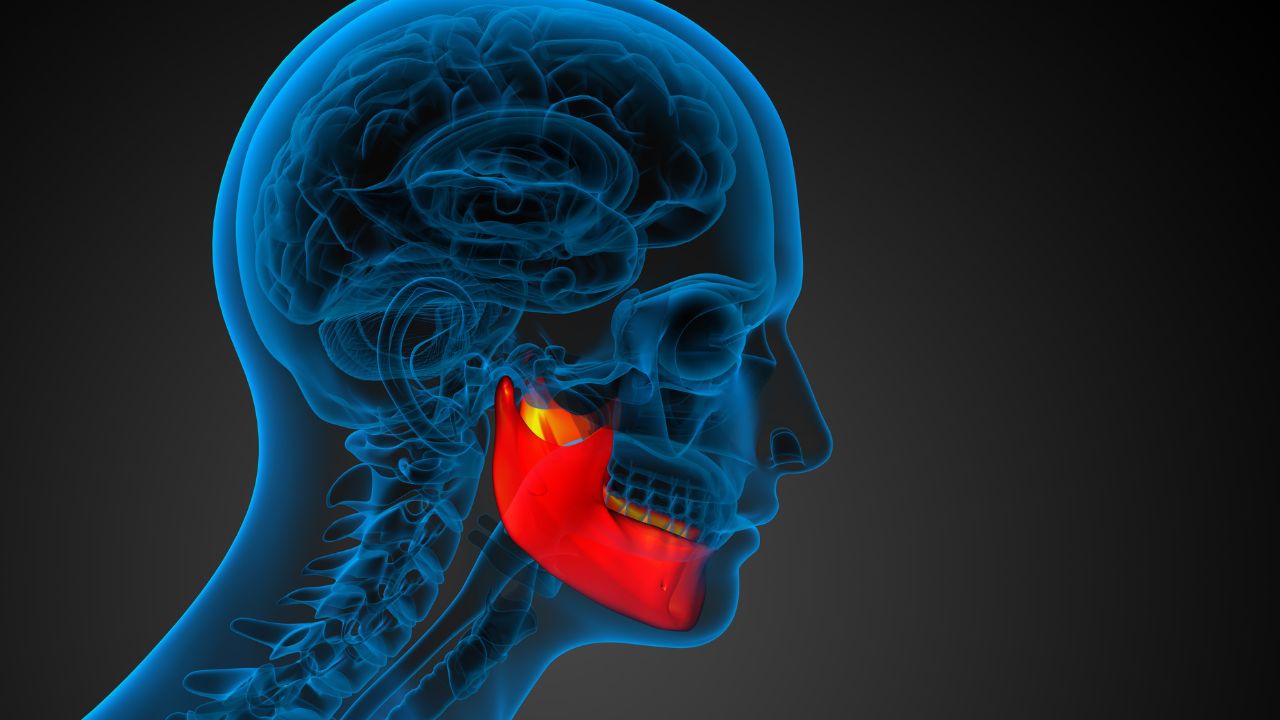
Why does your jaw feel tight in the morning?
During sleep bruxism, the jaw muscles can work hard for long stretches. That overuse shows up as morning stiffness or soreness that eases later. A jaw that locks on waking deserves a prompt exam.
Can grinding cause ear pain or headaches?
It can. The jaw joint sits just in front of the ear, so jaw pain may feel like an earache even when the ear is healthy. Clenching can also trigger tension headaches at the temples.
Could jaw pain come from something else?
Yes. Temporomandibular joint (TMJ) disorders, arthritis, sinus problems, infections, gum disease, and injuries can all cause jaw pain. That is why an exam comes before any treatment plan.
What Triggers Teeth Grinding
No single cause explains it. It usually comes from a mix of stress, sleep factors, habits, medicines, and genetics. Awake clenching links most closely to emotions and focus, while sleep grinding links more to brief arousals during sleep. Common contributors include:
- Stress, anxiety, anger, or frustration
- Caffeine, alcohol, and smoking
- Some medicines for depression, seizures, or ADHD (do not stop one without asking the prescriber)
- A family history of grinding
- Conditions such as sleep apnea, acid reflux, or Parkinson’s disease
Does stress cause teeth grinding?
Stress is one of the strongest links, especially for awake clenching. It often travels with clenched fists or tight shoulders. Managing stress will not fix every case, but it can ease how often you clench.
Is a misaligned bite to blame?
Older advice blamed the bite. Studies have not shown a clear link for sleep bruxism, so the American Academy of Oral Medicine advises against grinding down teeth or placing crowns to stop it. Crooked or missing teeth may still need care for other reasons.
The Link Between Sleep Bruxism and Sleep Apnea
People who grind during sleep are more likely to snore or have sleep apnea, where breathing pauses during sleep. Cleveland Clinic notes that the two often appear together, but it is still unclear which one drives the other. Treating the sleep disorder may help the grinding.
A sleep study (polysomnography), ordered by a sleep physician, helps when grinding comes with loud snoring, breathing pauses, or heavy daytime sleepiness.
How a Dentist Confirms Bruxism
Most cases are diagnosed with a history and an exam. The dentist looks for worn or cracked teeth, damaged fillings, and tender jaw muscles, and listens for joint sounds. X-rays help check the teeth and bone. A sleep study is added when a sleep disorder is suspected.
At Trust Dental Care, you can start with a virtual consultation to share symptoms and photos before you travel. It does not replace the in-person exam, which includes X-rays and a written plan and is listed at $60 on the published fee list.
What should you bring to the appointment?
Bring notes on when the pain shows up, a list of your medicines and supplements, and anything a sleep partner has noticed. Those details help separate awake clenching from sleep grinding.
Does tooth wear always mean active grinding?
Not always. Bruxism tends to come and go over the years, so wear can be old. A dentist may compare your teeth over several visits before suggesting treatment.
Treatment Options That Protect Your Teeth
Many mild cases need no treatment at all. When care is needed, the goal is to protect the teeth and ease jaw pain, because no single method reliably stops bruxism. A dentist or physician may suggest one or more of these options:
- A dentist-fitted night guard or occlusal splint worn during sleep
- Stress management, such as exercise, meditation, or counseling
- Daytime habit changes and jaw-rest reminders
- Treatment of a related sleep disorder
- Short-term medicine, such as a muscle relaxant, prescribed by a physician
Custom night guard or store-bought guard?
A custom guard made from a mold of your teeth gives the closest fit, according to the American Dental Association. Store-bought guards may not protect as well, and sports guards are a different design. Any guard protects the teeth but may not stop the grinding itself.
What does a relaxed jaw position look like?
Lips closed, teeth slightly apart, and the tip of your tongue resting lightly behind your upper front teeth. Phone reminders can prompt a quick check during the day. This habit targets awake clenching, not sleep grinding.
Does Botox stop teeth grinding?
Not reliably. The FDA has not approved Botox for bruxism, so any use is off-label. Some physicians consider it for severe cases that resist other care. The effect fades, often within three to four months.
Can you stop grinding on your own?
Awake clenching often improves once you notice it and practice the jaw-rest position. Sleep grinding is different, because awareness cannot control it. Less evening caffeine and alcohol, no smoking, and regular sleep may still help.
Repairing Teeth Worn Down by Grinding
When wear causes sensitivity, chipped edges, or trouble chewing, a dentist may smooth the chewing surfaces or rebuild teeth with crowns. Repair fixes the damage, not the cause, so protection is usually planned alongside it to keep new work from wearing down too.
Trust Dental Care offers CEREC same-day crowns. On the published fee list, E-max crowns start at $599 and zirconia crowns at $650. The dental crowns page explains the materials, and broader care is on the general dentistry page.
Will new crowns stop the grinding?
No. Crowns restore worn teeth but do not change the behavior, and reshaping the bite to stop bruxism is not recommended. Mild wear without pain is often just watched, while cracks or sensitivity are reasons to restore sooner.
Bruxism in Children
Children often grind their teeth, and many outgrow it by adolescence. Because their jaws grow quickly, it does not always cause lasting damage. In kids, mouth irritation, allergies, or teeth that do not line up can play a role. If you notice grinding, mention it at your child’s next dental visit.
When to Book a Dental Visit
Book an exam when signs keep coming back or damage shows up. Occasional, mild clenching may need nothing more than awareness and stress care. These signs, however, deserve a dental visit soon:
- Jaw pain or headaches on most mornings
- Chipped, flattened, or loose teeth
- A jaw that locks or will not open fully
- Tooth sensitivity with no clear cause
- Snoring or breathing pauses during sleep (also see a physician)
The clinic provides free transportation from the border. U.S. PPO plans are accepted, including Delta Dental, Cigna, Aetna, MetLife, Guardian, Humana, United Healthcare, Principal, and Ameritas; your insurer decides the benefits. Call (619) 866-6060, Monday to Friday 9 a.m. to 6 p.m. or Saturday 9 a.m. to 2 p.m., or use the contact page.